MSM 690: Bringing Back the Ancient Art . . .

Summary:

Shawn and Troy talk about AI in education. Dave has the first part of a three part series on Data Science.

Jokes:

I keep falling off my bike and injuring myself.

  • It’s a really vicious cycle.

What did 50 Cent do when he was hungry? 

  • 58

Thoughts from the desk of someone with a terrible cold…

An empty tissue box…

  • is nothing to sneeze at…

There’s a gang going through our town, systematically shoplifting clothes in size order.

  • The police believe they’re still at large.

Nothing embarrasses a psychic more than throwing them a surprise party.


I can’t figure out why Marvel hasn’t put any advertisements on the Incredible Hulk.

  • He’s basically a giant banner.

I’ve got an addiction to Cheddar cheese.

  • It’s only mild though.

Chocolate comes from cocoa, which is a tree.

That makes it a plant.

Therefore, chocolate is salad.


What do you call a funny mosquito?

  • Malarious!

There’s only one rule in learning English.

  • Their our know rules.

Waiter, this coffee tastes like mud!

  • Yes sir, it’s fresh ground.

I made a pizza with liver. Nobody liked it…

  • So I had to deliver it.

Today’s top fact: 

  • 50% of Canada is A.

My boss at Pixar and I got into a fight over our lack of new movies.

  • But then we made Up.

I started a band called 999 Megabytes…

We still haven’t gotten a gig yet.


I threw a party for all the workers who helped build my house.

The door guy showed up late…

  • but he really knew how to make an entrance.

I have a profound fear of speed bumps…

  • but I’m slowly getting over it.

Middle School Science Minute  

by Dave Bydlowski (k12science or davidbydlowski@mac.com)

K12Science Podcast:  Data Science Education, Part 1

I was recently reading the November-December 2025 issue of “The Science Teacher”, a publication of the National Science Teaching Association.

In this issue, I read a featured article written Matthias Fisher, Cody Pritchard, Zhen Xu, and Joshua Rosenberg. They wrote an article entitled, “Finding Your Way into Data Science Education as a Science Teacher.”

This is the first podcast of three podcasts on the topics of Data, Data Science, and Data Science Education.  In this article, the authors aimed to support science teachers without backgrounds in data science. by addressing three major challenges:  

1.  The lack of training to teach data science.  

2. The difficulty of designing relevant and engaging data science lessons.  

3. The challenge of teaching data science with limited technological resources.  

In this podcast I address challenge #1. 

https://k12science.net/data-science-education-part-1/

Reports from the Front Lines

The Social Web

‪Keep Indiana Learning‬ ‪@keepinlearning.bsky.social‬

Did you catch the latest episode of “Other Duties As Assigned?” It’s a good one where Principal Brent Schwanekamp shares how to “build culture 5 minutes at a time.” Check it out – www.youtube.com/live/3OJuCIr… #EduSky

‪Keep Indiana Learning‬ ‪@keepinlearning.bsky.social‬

“Let’s put educator fingerprints all over AI.” Sounds like a great idea! Check out this fantastic conversation our Innovation Coaches hosted with Author Richard Culatta – www.youtube.com/live/MFg8fXm… #EduSky

‪Dublin City University‬   ‪@dublincityuni.bsky.social‬

How children are thinking about work and careers from a very young age. Piece by Aisling Murray Fleming  @guidance-aisling.bsky.social, Assistant Professor in the School of Human Development

@dcuioe.bsky.social, for @rtebrainstorm.bsky.social. Read more: launch.dcu.ie/4akh91D #RTEBrainstorm

‪Eric Curts‬ ‪@ericcurts.bsky.social‬

💎 New EduGem: www.edugems.ai/gem/story-wr… 📖 Story Writer – Create high-quality, engaging stories tailored to your specific classroom needs and content #EduSky #EduSkyAI #EdTech #GoogleEDU  Infographic:  https://cdn.bsky.app/img/feed_fullsize/plain/did:plc:bojmet4wbfkvvy5tnojvzlai/bafkreiep75t46uqp2iresqidcg4soioulj4g3ymjqnzguowhkpkr2dvjli@jpeg  

Resources:  

AXIS The Culture Translator

Antisocial Media

What it is: Remember when your social media feed was mostly made up of people you actually knew? Well, New York Magazine (paywalled) wrote about how algorithms could be making us more individualistic, instead of connecting us like tech companies promised they would.

Why it matters: “Don’t believe everything you see on the internet” was once a common adage from parents to their children, and it is perhaps more relevant today than it has ever been. But as our algorithms become more tailored, each of us grows more convinced that what we are seeing is true, and that it is other people who have been duped. A leaked Meta memo from 2022 laid out its short-form content strategy, aimed at competing with TikTok, which focused on shifting from “social” to “unconnected” content. The results? Today, no person’s algorithm is like another’s; each person’s feed is a unique silo of their interests, political leanings, and everything in between. Instead of being a place to connect with others, social media has become hyperspecific and insular.  

My Short Answer

My Short Answer turns writing into a fun game activity.  5 different games to choose from.  Some are competitive and some are cooperative.  Never thought my kids would request to do this activity, but they do!  www.myshortanswer.com  

Web Spotlight: 

How To Strengthen Your Kids’ Brains in 12 Weeks, According to a Neurologist

https://www.newsweek.com/how-strengthen-your-kids-brains-12-weeks-neurologist-11345528

Finite Eyes: The Book

https://matthewcheney.net/blog/finite-eyes-the-book/

https://matthewcheney.net/books/finite-eyes/

The Secrets Behind 5 Optical Illusions

Optical illusions are more than just magic tricks for the eyes — they’re a fascinating peek into the mysterious workings of the brain. At their core, these illusions are about how we interpret visual information: Our eyes take in light and send signals to the brain, but sometimes these signals get mixed up, leading to perceptions that don’t align with reality. Some optical illusions use contrast, perspective, and light refraction to deceive the brain; others work on a more complex cognitive level, tapping into the subconscious mind.

https://interestingfacts.com/optical-illusion-secrets/

Is Educational Technology All It’s Cracked Up to Be?

https://micahblachman.beehiiv.com/p/is-educational-technology-all-it-s-cracked-up-to-be

World Math(s) Day

World Math Day is a 48-hour global contest that in its 18-year history has brought together over 10 million students who’ve answered over 1 BILLION questions. For 2026, WMD is on March 25 and we’re on a quest to make it the BIGGEST math contest ever!

https://www.3plearning.com/world-maths-day/

Random Thoughts . . .  

Melvindale Youth in Government Draft AI Bill (Very much in progress!)   

Bill No HB 1

Category: 

Delegation: Strong Middle School

Introduced By:  

 This Bill will mandate added restrictions on the use of AI in public schools. 

 THE PEOPLE OF THE STATE OF MICHIGAN ENACT:

1. Section 1:

2. All students who use AI should be supervised in school so they can only use AI 3-5 times a day. However, if they use it to cheat, they will lose the privilege to use AI. Students who are using AI are encouraging people to cheat like college kids. 

 3. Section 2:

4. If students continue to use AI throughout the year and don’t obey the policy, then AI will be banned on all devices.

5. Section 3: 

6. All kids who use AI should be supervised in school so they can only use AI 3-5 times a day. And if they use it to cheat, they will lose the privilege to use AI.

8. Section 4:

9. The state of Michigan will enforce this.

25% of Harvard students use AI in school

Who or what does it impact: 

It impacts kids who want to cheat.

Background: 

–  Information on its working

Benefits of this bill: 

This bill will benefit all teachers, ensuring that their students do not cheat. 

Drawbacks:

One drawback is that kids will have to get used to not using AI all the time. And with that being said, kids will have to start learning and paying attention more instead of their work on assignments being done for them, and all they have to do is copy something down. Though this may set a repeat in grades, as kids do not pay attention and fail classes.

Click the Play button below to listen to the show!

MSM 689: The Mythical Paper Dictionary and Your Choppelganger!

Summary:

Shawn and Troy talk about AI in the classroom, gamification of writing, and more. Dave focuses on the Museum.

Jokes:

My Laptop keeps singing “Hello”.


In a perfect world, shopping mall disputes would be settled in Food Court.


Getting a salary for being a subject of sleep research is my dream job.


You’ll never hear a billionaire say, “I feel like a million bucks! “


Why can’t you put two half dollars in your pocket?

  • Two halves make a hole, so your money will fall out.

Really understanding why Yoda chose to die, instead of answering more of Luke’s questions.


Parallel lines have so much in common. 

  • It’s a shame they’ll never meet.

You can say “Have a nice day” without any problem, but using the phrase “enjoy the next 24 hours” can sound slightly threatening.


I just bought an answering machine.

  • What should I ask it?

2026/365/16 I Finally Found Later Findlater!
“Findlater” with an arrow pointing left on a road sign. A road extends throughout the image.

Findlater, Saskatchewan, Canada 


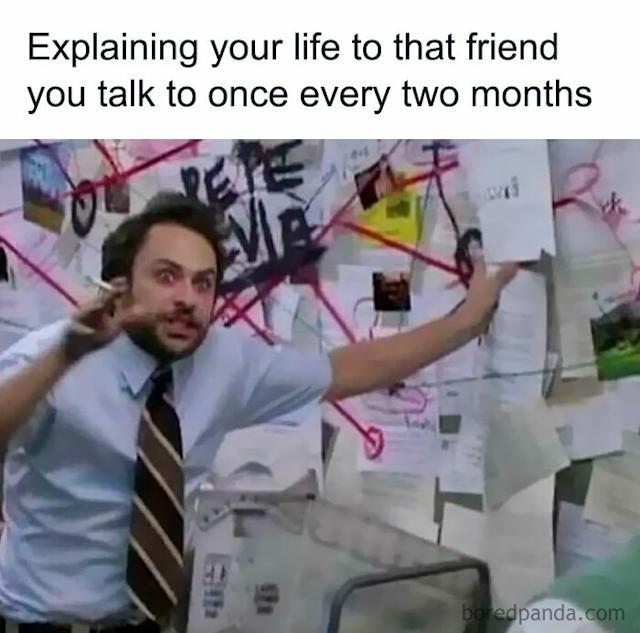
"Explaining your life to that friend you talk to once every two months" is written above a picture of a man with a "crazed" look on his face. Behind him is a bulletin board with lots of papers and red string forming a web.

Middle School Science Minute  

by Dave Bydlowski (k12science or davidbydlowski@mac.com)

K12Science Podcast:  Museum Educator

I was recently reading the November-December 2025 issue of “The Science Teacher”, a publication of the National Science Teaching Association.

In this issue, I read the section, “Career of the Month” written by Luba Vangelova. She wrote an article entitled, “Museum-Based Educator Tammy Cook-Endres.”

Museum-based science educators encourage curiosity and hands-on learning about science. Depending on their areas of expertise, they may work with children, adults, or people of all ages. The field of museum education is most suitable for people who have some teaching experience, enjoy working with people, and can inspire a love of science.

https://k12science.net/museum-educator/

Reports from the Front Lines

The Social Web

Susie Dent  @susie_dent

I love how the word ‘atone’ wears its heart on its sleeve. It began as ‘at one’, because to atone is to bring back unity. Atonement is really ‘at-one-ment’. In the same way, ‘alone’ began as ‘all one’.

Rick Wormeli  @rickwormeli2

This one from Carl Hendrick really has me thinking — and valuing the time spent reading it: The Algorithmic Turn: The Emerging Evidence On AI Tutoring That’s Hard to Ignore https://open.substack.com/pub/carlhendri

‪Ron King‬ ‪@mthman.bsky.social‬

Good morning from a 29° #PNW #PNWONDERLAND

‪Eric Curts‬ ‪@ericcurts.bsky.social‬

Back home from another amazing FETC! It was so wonderful to get to learn with so many amazing educators, catch up with old friends, and make new ones. All of the resources from all of my sessions can be found at www.controlaltachieve.com/2026/01/fetc… #EduSky #FETC #EdTech

Strategies:  

Plan, Learn & Present Faster with NotebookLM and Gemini 3 Together

1. Streamlined Research and Information Synthesis

2. Professional-Grade Content Creation

3. Enhanced Learning and Training Tools

4. Competitive Analysis Made Simple

5. Integration with Gemini for Interactive Outputs

6. Customization and Accessibility

7. Applications in Marketing and Strategic Planning

https://www.geeky-gadgets.com/notebooklm-gemini-integration-2026/

Resources:

Two Truths and AI

Two Truths & AI is an interactive digital literacy game for grades K–12 that teaches students to identify AI-generated content and develop critical media literacy skills. Through an engaging, 60-second challenge, students try to distinguish between real and AI-generated movie posters. It’s a fun way for students to test their AI detective skills, while also building their critical thinking muscles.

https://www.commonsense.org/two-truths-and-ai 

Visual Guides for Educators

Part of the work I do focuses on simplifying complex educational ideas, synthesizing research and practice, and turning them into clear, classroom-ready visuals. I design these posters to support teachers, educators, and researchers who want quick, reliable references they can actually use.

Below is a sample of the visuals I created this year. Each one distills a concept, framework, or strategy into a format that works for professional learning, teaching, and discussion.

Please note all visuals and guides shared here are licensed under the Creative Commons Attribution–NonCommercial–ShareAlike 4.0 International License and may be used for educational purposes only. Selling, redistributing for profit, or other commercial uses are not allowed.

https://medkharbach.com/visuals/

LangGuesser

Guess the language’s country by its accent

https://www.langguesser.com

Reach My Teach

Web Spotlight: 

Trevor Muir

One of the great gifts of the 21st century is that you never have to be bored again. All you have to do at a red light or in line at the grocery store is pull out the supercomputer in your pocket and pass the time with emails, headlines, or puppy videos. 

And one of the great curses of the 21st century is that you never have to be bored again. 

https://www.trevormuir.com/e/BAh7BjoWZW1haWxfZGVsaXZlcnlfaWRsKwgNYGEBCQA=–06992ce8de886605fa362b941e4680ca8de7087a

My Short Answer

Short Answer is grounded in research based best practice in formative assessment and writing instruction. Our theory of change below explains how teachers and students can use Short Answer to improve learning outcomes. This theory guides the development of Short Answer. You can read more about it below and check out our efforts to study this theory in our efficacy portfolio.

https://myshortanswer.com

AXIS The Culture Translator

Slang of the Week:

Choppelganger

A hybrid of two words, choppelganger combines the slang term “chopped” with “doppelganger.” If someone is “chopped,” it means they’re unattractive or undesirable (a definition you can find in our updated Parent Guide to Teen Slang!), and a doppelganger is someone with an uncanny resemblance to someone else. Put together, choppelganger basically means someone who looks like someone else but is uglier, like a cheap knock-off. So fathers, if someone calls you Brad Pitt’s choppelganger, it might not be a compliment.  

Random Thoughts . . .  

Click the Play button below to listen to the show!

MSM 688: Offloading the Cognitive Load

Summary:

Shawn and Troy talk about AI, standards and benchmarks, and more. Dave has a better approach to Science Fairs.

Jokes:

Did you know you can sing “The Lion Sleeps Tonight” whenever you feel like it? 

  • It’s literally a whim away.

Tenor: two hours before a Nooner.


When do cats enjoy Simon and Garfunkel?

  • When they’re feline groovy.

Lloyd is forming a no-audition singing group—The OK Chorale.


I listen to Ragtime when washing dishes for the sinkopation.


A rock guitarist plays five chords in front of 5,000 people. A jazz guitarist plays five thousand chords in front of 5 people.


If you drive a Subaru backwards, what are you?


Person crazy about old TV shows about maids:

  • Hazelnut.


Middle School Science Minute  

by Dave Bydlowski (k12science or davidbydlowski@mac.com)

K12Science Podcast:  A Better Approach to Science Fairs

I was recently reading the November-December 2025 issue of “Science and Children”, a publication of the National Science Teaching Association.

In this issue, I read the section, “Science 101” written by Matt Bobrowsky. He wrote an article entitled, “Q: How Can I Make Science Investigations More Creative?”

Many teachers do not like science fairs, but there are many ways to have a science festival that avoids most of the issues that impact students, teachers, and families. A science fair can be redesigned to be less stressful and more genuinely educational by shifting the focus from competition to learning.

https://k12science.net/a-better-approach-to-science-fairs/

Reports from the Front Lines

  • Back to School Blues
  • The End of the Textbook?
  • AI Perspectives

The Social Web

Ed Hidalgo  @EdHidalgoSD

Things students say… via an exit ticket. “The new thing I learned is a common career language.” #RIASEC #WellBeing

AMLE@AMLE

In addition to the volumes of research based materials you’ll find at http://amle.org, AMLE is also a network of more than 35,000 middle level professionals who benefit from sharing best practice. Here’s a tip from a member of our Early Career Educators Committee: we’re accepting applications to volunteer for committee positions through January 16th: http://amle.org/getinvolved

‪Keep Indiana Learning‬ ‪@keepinlearning.bsky.social‬

Actionable steps for HEA 1634 implementation are here! Keep Indiana Learning’s Courtney Flessner details the 5 things every school needs to consider for effective Tier 2 & 3 math support. Start preparing today! Learn more: youtube.com/live/f4SQ_io… #EduSky

‪Eric Curts‬ ‪@ericcurts.bsky.social‬

Big thanks to @aiforhumans.bsky.social for mentioning my NotebookLM Graphic Novel project – www.controlaltachieve.com/2026/01/grap… – on their latest episode – www.youtube.com/watch?v=e4Z3… – I watch the show every week and it was awesome to be a small part of it! #EduSky #EduSkyAI #EdTech

Strategies:

Save the Student Essay

How do you learn philosophy? By doing it, of course. You read great texts and understand opposing philosophical views. Then you try to form a view yourself—initially through reflection and dialogue but eventually, and more seriously, by thinking and rethinking on the page.

To do philosophy the right way, the “slow cook” method is recommended. You let ideas stew, unattended, bubbling up to the surface once they’re ready.

Yet at this point it’s educational malpractice for professors to blithely assign slow-cooked (take-home) essays. You’re playing your students. You’re playing yourself.

https://openquestionsblog.substack.com/p/save-the-student-essay

Learning by getting it wrong (on purpose)

This isn’t about learning through failure or productive failure or productive struggle

or any of those failing approaches that let kids flail.

It’s more a possible extension of retrieval practice with hints of interleaving.

For years, cognitive science has told us something that still feels counterintuitive in classrooms: trying to remember (retrieval practice) beats rereading, even when it feels harder. Retrieval practice has earned its reputation as one of the most reliable learning strategies we have. 

https://paulkirschner173727.substack.com/p/learning-by-getting-it-wrong-on-purpose

Resources:

Tamagotchigogy: A Pedagogical Framework of Care, Feedback, and Responsiveness

Tamagotchigogy is a new pedagogical framework that uses the Tamagotchi digital pet as a metaphor for learning itself. It emphasizes care, feedback, responsiveness, and engagement as essential to sustaining cognitive and emotional growth. This article outlines the theoretical foundations, instructional implications, and practical applications of Tamagotchigogy. Drawing from constructivism, self-regulated learning, Universal Design for Learning (UDL), care ethics in education, and active learning research, Tamagotchigogy proposes a learner-centered approach that repositions teaching as a responsive act of developmental stewardship.

https://geoffcain.com/blog/tamagotchigogy-a-pedagogical-framework-of-care-feedback-and-responsiveness/

AXIS The Culture Translator

2026 Teen Dictionary

Have you ever 100% felt like you definitely needed a secret decoder ring to understand teen culture? You’re not alone! Culture moves fast. Like — blink-and-it’s-a-new-slang-word fast…BRUH!… Sorry, that was so cheugy of us, we apologize.  Don’t worry, as always, AXIS HAS YOU!

Link:  Teen Translation Power Pack

Web Spotlight: 

Standard Ebooks

Standard Ebooks is a volunteer-driven effort to produce a collection of high quality, carefully formatted, accessible, open source, and free public domain ebooks that meet or exceed the quality of commercially produced ebooks. The text and cover art in our ebooks are already believed to be in the U.S. public domain, and Standard Ebooks dedicates its own work to the public domain, thus releasing the entirety of each ebook file into the public domain. All the ebooks we produce are distributed free of cost and free of U.S. copyright restrictions.

Standard Ebooks is organized as a “low-profit L.L.C.,” or “L3C,” a kind of legal entity that blends the charitable focus of a traditional not-for-profit with the ease of organization and maintenance of a regular L.L.C. Our only source of income is donations from readers like you.

https://standardebooks.org/ebooks

We Need to Talk About How We Talk About ‘AI’

“AI” is not your friend. Nor is it an intelligent tutor, an empathetic ear, or a helpful assistant. It can not “make up” facts, and it does not make “mistakes”. 

The problem with anthropomorphic descriptions is that they risk masking important limitations of probabilistic automation systems, which make them fundamentally different from human cognition.

Rephrasing the language we use to describe these interactions is truly swimming upstream, because not only do the companies selling these systems describe them as communicators, they also make many design choices to support this illusion.

People may form friendly feelings towards inanimate objects or technology, but they are entirely unidirectional — surely, we would not call a child’s plush toy a friend of theirs without at least a prefix of “imaginary”.

A more deliberate and thoughtful way forward is to talk about “AI” systems in terms of what we use systems to do, often specifying input and/or output. That is, talk about functionalities that serve our purposes, rather than “capabilities” of the system. Rather than saying a model is “good at” something (suggesting the model has skills) we can talk about what it is “good for”. Who is using the model to do something, and what are they using it to do?

https://www.techpolicy.press/we-need-to-talk-about-how-we-talk-about-ai

‘I feel free’: Australia’s social media ban, one month on

https://www.bbc.com/news/articles/c0mpmgn3jv2o

https://archive.is/QHWZ2

Reading Whole Books, and “Miracles” in Education

https://nataliewexler.substack.com/p/reading-whole-books-and-miracles

Random Thoughts . . .  

Click the Play button below to listen to the show!

MSM 687: AI, I Want To Know

Summary:

Shawn and Troy talk more about AI and break. Dave looks beyond our earthly planet. 

Jokes:

An author who wrote from his basement had a best cellar.


Wasn’t one of The Mamas and the Papas a Rolling Stone?


I always regret making a good first impression because there’s no way I can keep that up!


What’s the worst part about being a cross-eyed teacher?

They can’t control their pupils!


As a child, it was my dream to make a perfect bar of soap, but somehow it just slipped away…


A man stumbles upon a lamp, and a genie pops out and offers him three wishes.

Man: For my first wish, I’d like to be rich.

Genie: Alright, Rich, what’s your second wish?


The worst part about parallel parking is the witnesses.

  • They always make you feel like you’re on trial.

A shoplifter stole an entire case of Red Bull from my store today. I have no idea how he can sleep at night.


Our new IT guy just moved here from Australia.

He comes from a LAN down under.


Two images side by side, first is a caucasian blonde woman, smiling, with the text "This is your A.I. girlfriend". 

The second image is a stack of 4 computer parts, GPU, circuit board, etc., with the text "This is your A.I. girlfriend without makeup."

Middle School Science Minute

by Dave Bydlowski (k12science or davidbydlowski@mac.com)

K12Science Podcast: Life Beyond Earth

I was recently reading the November-December 2025 issue of “Science Scope”, a publication of the National Science Teaching Association.

In this issue, I read the section, “Scope on the Skies” written by Bob Riddle. He wrote an article entitled, “Is Anyone Home?”

We have always been curious about life beyond Earth, but we still do not have a definitive answer about that life beyond Earth. In a “big picture” sense, what we learn because of our curiosity, our intelligence, and certainly our technology offers us a chance to shape our future and, as educators, to increase our student’s curiosity and appreciation for the magnitude of the universe and the possibilities of life beyond Earth.

https://k12science.net/life-beyond-earth/

Reports from the Front Lines

  • Moving Web Hosts
    • Mail
    • DNS
  • Nesting

The Social Web

H5P  @H5PTechnology

 Harness the Magic of Open Source with H5P!  Dreaming of crafting interactive videos, engaging quizzes, dynamic presentations, and so much more—all without a single line of code? H5P is your golden ticket to creativity!  The best part? It’s open source! 

Matt Miller   @jmattmiller

Pedagogy over tools!  Matt Miller, Holly Clark, and Ken Shelton discuss the future of AI. The big takeaway: stay skeptical, be transparent, and use AI to build rigor, not just shortcuts. Don’t miss out: Join for free at http://DitchSummit.com!

AMLE  @AMLE

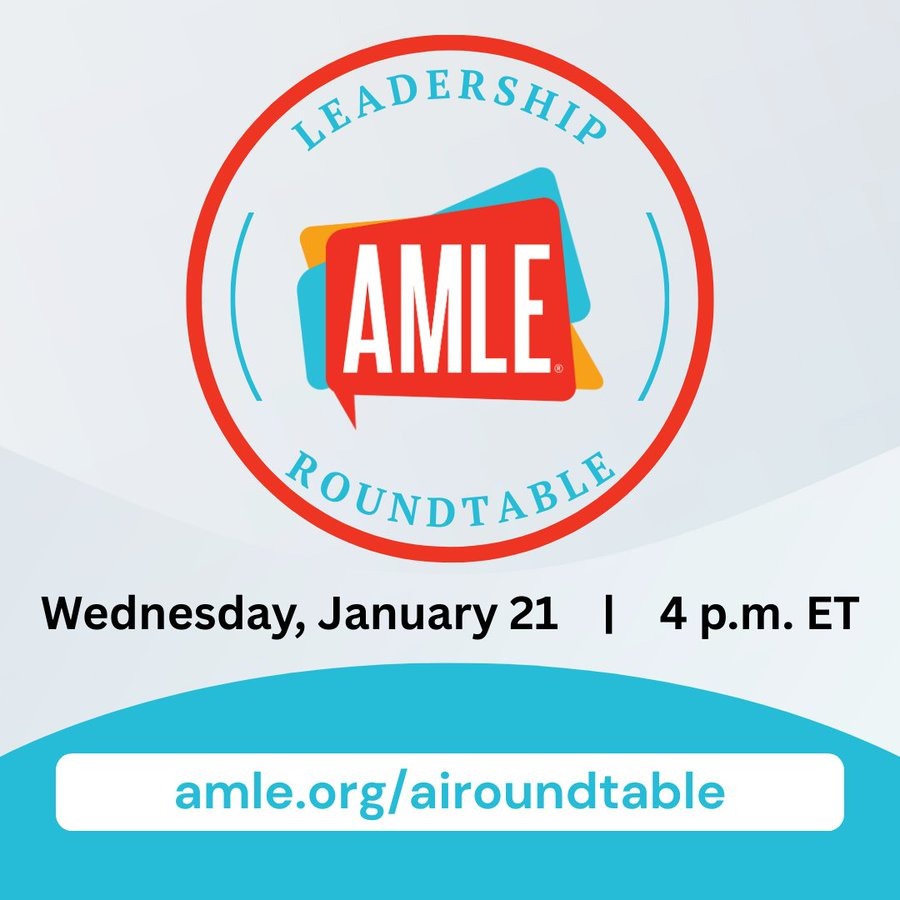
AMLE members are invited to a free Leadership Roundtable on AI in education, happening Wednesday, January 21, 2026, from 4–5 p.m. ET. Join the conversation with middle school media specialist Barb McCarty as we explore practical implications of AI for middle level educators.

Leadership Roundtable. Wednesday, January 21, 2026 at 4 p.m. ET. (https://amle.org/airoundtable)

AI Policy Paper

Resources:  

Killed by Google

  1. Dark Web Reports
  2. Tables by A120

https://killedbygoogle.com

How To Teach With No Resources

Imagine walking into class to find there’s no textbook, no projector, no printer, and not even a whiteboard marker that works. Most teachers would panic. But the truth is, you don’t need any of it. Great lessons don’t depend on stuff — they depend on you, your students, and a few flexible ideas you can pull from your back pocket.

Why teaching with no resources works

Here’s why the magic happens when you strip everything back:

  • It builds connection. Students interact with you and each other, not a page.
  • It develops independence. They learn to listen, speak, and think instead of fill in blanks.
  • It grows your confidence. Once you can run a lesson anywhere, you’re unstoppable.
  • It deepens learning. Active recall and personalisation beat passive reading every time.

https://www.barefootteflteacher.com/p/how-to-teach-with-no-resources

AXIS The Culture Translator

Five Conversation Starters for 2026

  • What’s one thing you hope changes in 2026?
  • What’s one thing you hope stays the same?
  • What’s something new you’d love to learn or try this year?
  • What’s one thing you’re excited about for 2026?
  • Is there anything you’re nervous or worried about for the new year?

Web Spotlight: 

Public Domain Day

https://web.law.duke.edu/cspd/publicdomainday/2026

A 1 Percent Solution to the Looming A.I. Job Apocalypse

The fund could be run by an independent nonprofit that would coordinate with corporations to ensure that the skills being developed are exactly what are needed. This is a big task, but it is doable; over the past 15 years, online learning platforms have shown that it can be done for academic learning, and many of the same principles apply for skill training.

https://archive.is/uTkVt

Random Thoughts . . .  

Click the Play button below to listen to the show!