MSM 268: Twitter never stops….One linkey dink.

Presented in collaboration with the Association for Middle Level Education.

Jokes You Can Use:

Q. What do you call a ginger bread man with one leg?

A. Limp biscuit


Q. How do you know when a woman is going to say something smart?

A. It will start with “He said…”


What did the tired chess player do?

He took the knight off

Q: What do you get when you cross Bambi with a ghost?

A: Bamboo.


Q: What’s a haunted chicken?

A: Poultry-geist.


Q: Why did the monster eat a light bulb?

A: Because he was in need of a light snack.


Q: Why are most monsters covered in wrinkles?-

A: Have you ever tried to iron a monster?


Q: What kind of mistakes do ghosts make?

A: Boo boos.


Q: Why couldn’t Dracula’s wife get to sleep?

A: Because of his coffin.


Q: Why do mummies make excellent spies?

A: They’re good at keeping things under wraps.

Eileen Award:

  • Twitter:  Mark Maudlin, Kip

  • Email: Aaron Atwood


Advisory:

Cost of things:

Students are probably pretty aware of Facebook. Recently, Facebook purchased “WhatsApp” for $19 billion. What could they have purchased with that instead?

http://twentytwowords.com/things-that-are-cheaper-than-facebooks-new-acquisition-whatsapp-like-iceland-for-instance/


Visiting America

What would you tell visitors from other countries about America?

http://mentalfloss.com/article/55140/10-japanese-travel-tips-visiting-america


Would it be OK to have a dance restricted by grades?

http://www.washingtonpost.com/local/education/top-grades-open-the-door-to-school-dance-in-montgomery/2014/02/03/3bb75640-89df-11e3-916e-e01534b1e132_story.html?wprss=rss_Copy%20of%20local-alexandria-social


How Real are Videos

http://www.youtube.com/watch?v=5qrGOi41iwE

Elie Wiesel’s Acceptance Speech

  • We must always take sides. Neutrality helps the oppressor, never the victim. Silence encourages the tormentor, never the tormented. Sometimes we must interfere.

  • one person of integrity, can make a difference, a difference of life and death.

  • What all these victims need above all is to know that they are not alone; that we are not forgetting them, that when their voices are stifled we shall lend them ours, that while their freedom depends on ours, the quality of our freedom depends on theirs.

http://www.nobelprize.org/nobel_prizes/peace/laureates/1986/wiesel-acceptance.html

Middle School Science Minute

by Dave Bydlowski (k12science or davidbydlowski@mac.com)


MIDDLE SCHOOL SCIENCE MINUTE-LABELING CONTAINERS


I was recently reading the December, 2013 issue of Science Scope, a magazine written for Middle School Science Teachers, published by the National Science Teachers Association.  In this issue, I was reading the safety question of the month, written by Ken Roy, director of environmental health and safety for Glastonbury Public Schools in Glastonbury, CT.

The question is:

If I transfer a chemical from its original container to a secondary container, what information do I need on the label of the new container?

http://k12science.net/Podcast/Podcast/Entries/2014/1/10_Middle_School_Science_Minute-Labeling_Containers.html

From the Twitterverse:

* Graphite ‏@Graphite

Teachers, we want to thank you this weekend! Review 1 edtech tool for a $10 gift card or 2 tools for a $25 gift card:

* LaMuth Middle School ‏@LaMuthMS

Highlights of #OMLA2014 including award winners and @RickWormeli handouts. Only missing Sound of Music demo http://ohiomla.org/annual-state-conference/ …

* Scott Newcomb ‏@SNewco 1h

So, you have an iPad…now what? http://www.themobilenative.org/2013/12/so-you-have-ipad.html … #mlearning #edchat

* Digital Learning Day ‏@OfficialDLDay 2h

WOW great chart! @playgroundupris @MelanyStowe Personalization- Differentiation- Individualization #satchat pic.twitter.com/nYYh0SQIoM

* Oakland Schools ‏@OaklandSchools 2h

MI Educators: Margaret Heritage WORKSHOP on “Formative Assessment: An Enabler of Learning” 2/28 http://tinyurl.com/ldwyg6j  #MichEd

* Jerry Blumengarten ‏@cybraryman1

My Exit Slips page http://cybraryman.com/exitslips.html  #satchat

* Maria Popova ‏@brainpicker

The science of how mind-wandering and “positive constructive daydreaming” boost our creativity and social skills http://j.mp/1fGYGXw

* Co.Exist ‏@FastCoExist 5h

This New Girl-Powered Engineering Toy Asks Kids To Design And Wire Their Own Dollhouse http://f-st.co/ugCszK9

* Charlie Love ‏@charlie_love

GameMaker Studio is free to download for a limited time http://zite.to/1p2MEj0

* Alfonso Gonzalez ‏@educatoral

The Flipped Classroom™ Is A Lie @TechedUpTeacher http://feedly.com/e/hWrZX6Tx

* Alfonso Gonzalez ‏@educatoral 10h

Stoodle: Instant Free Virtual Classroom @ktenkely http://feedly.com/e/E38afw4z

Ron King ‏@mthman

MT@rggillespie: 10 Reasons to Greet Students at Door http://goo.gl/QE6gZy  #midleved #mschat @MSMatters

#mschat every Thursday at 8:00 pm Eastern Standard Time.  And as Troy says, “The Twitter never stops!”


Strategies:

Inventing the Presidency

When the founders of the United States gathered to create the foundations of the country, they decided on three branches of government, with a president central to the executive branch. Kenneth C. Davis explains why this decision was not necessarily inevitable and what variables were up for debate.

http://ed.ted.com/lessons/inventing-the-american-presidency-kenneth-c-davis

Resources:

How to Add 450+ Fonts to Your Google Documents & Slides

To access and add custom fonts to your Google Drive Documents and Slides select “add fonts” from the bottom of the font selection menu that you’ve always used in Google Drive. Selecting “add fonts” will open up a new menu in which you can mix and match fonts to your heart’s content.

http://www.freetech4teachers.com/2014/02/how-to-add-450-fonts-to-your-google.html#.UwjH2fRdW8t


Google Newspaper Archives

Newspapers from around the world. These vary greatly in time periods as well. Lots of applications.

  • Have students research a specific time period and compare how different newspapers reported the events.

  • Have students view a single newspaper over time to see the changes in attitudes, reporting, etc.

  • Have students compare the advertisements in a variety of newspapers.

  • Have students use the newspapers accounts to develop a setting for a story.

http://news.google.com/newspapers

Video Conference Programs

This database, sponsored by Polycom, Inc., contains programs from content providers such as zoos and museums that offer ISDN or IP based videoconferencing. The Berrien County ISD has researched this information to the best of our knowledge. If you have any corrections or updates, please email them to twice.cc.board@gmail.com.

http://projects.twice.cc/vcpd/searchprogram.php

Web Spotlight:


Dating Rules
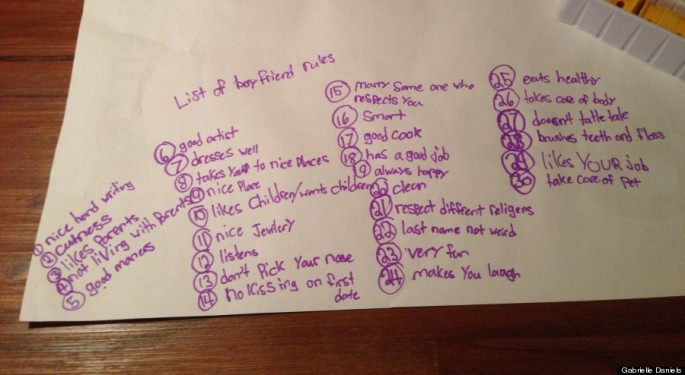
http://twentytwowords.com/30-rules-for-boyfriends-from-2-little-girls-with-very-high-standards/


Connected Educator 2014 Conference

Random Thoughts . . .

Blended Learning. Class I’m taking as a student.


MSM 265: Two things are inevitable. . .

Presented in collaboration with the Association for Middle Level Education.

Jokes You Can Use:

Before going to Europe on business, a man drives his Rolls-Royce to a downtown New York City bank and asks for an immediate loan of $5,000. The loan officer, taken aback, requests collateral. “Well then, here are the keys to my Rolls-Royce,” the man says. The loan officer promptly has the car driven into the bank’s underground parking for safe keeping and gives the man the $5,000. Two weeks later, the man walks through the bank’s doors and asks to settle up his loan and get his car back. “That will be $5,000 in principal, and $15.40 in interest,” the loan officer says. The man writes out a check and starts to walk away. “Wait, sir,” the loan officer says. “You are a millionaire. Why in the world would you need to borrow $5,000?” The man smiles, “Where else could I find a safer place to park my Rolls-Royce in Manhattan for two weeks and pay only $15.40?”


A man goes on a 2-month business trip to Europe and leaves his cat with his brother. Three days before his return he calls his brother.

Brother 1: So how is my cat doing?

Brother 2: He’s Dead

Brother 1: He’s Dead! What do you mean He’s Dead! I loved that cat. Couldn’t you think of a nicer way to tell me! I’m leaving in 3 days. You could of broke me to the news easier. You could of told me today that she got out of the house or something. Then when I called before I left you could of told me, Well, we found her but she is up on the roof and we’re having trouble getting her down. Then when I call you from the airport you could of told me, The Fire Department was there and scared her off the roof and the cat died when it hit the ground.

Brother 2: I’m sorry…you’re right…that was insensitive I won’t let it happen again.

Brother 1: Alright, alright, forget about it. Anyway, how is Mom doing?

Brother 2: She’s up on the roof and we’re having trouble getting her down.

A Spanish teacher was explaining to her class that in Spanish, unlike English, nouns are designated as either masculine or feminine.

“House” for instance, is feminine: “la casa.”

“Pencil,” however, is masculine: “el lapiz.”

A student asked, “What gender is ‘computer’?”

Instead of giving the answer, the teacher split the class into two groups, male and female, and asked them to decide for themselves whether “computer” should be a masculine or a feminine noun.

Each group was asked to give four reasons for its recommendation.


The men’s group decided that “computer” should definitely be of the feminine gender (“la computadora”) because:

1. No one but their creator understands their internal logic.

2. The native language they use to communicate with other computers is incomprehensible to everyone else.

3. Even the smallest mistakes are stored in long term memory for possible later retrieval; and

4. As soon as you make a commitment to one, you find yourself spending half your paycheck on accessories for it.

The women’s group, however, concluded that computers should be masculine (“el computador”) because:

1. In order to do anything with them, you have to turn them on.

2. They have a lot of data but still can’t think for themselves.

3. They are supposed to help you solve problems, but half the time, they ARE the problem; and

4. As soon as you commit to one, you realize that if you had waited a little longer, you could have gotten a better model.

A man was walking along a California beach and stumbled across an old lamp. He picked it up and rubbed it and out popped a genie. The genie said, “OK. You released me from the lamp, blah blah blah. This is the fourth time this month and I’m getting a little sick of these wishes so you can forget about three. You only get one wish!” The man sat and thought about it for a while and said, “I’ve always wanted to go to Hawaii but I’m scared to fly and I get very seasick. Could you build me a bridge to Hawaii so I can drive over there to visit?” The genie laughed and said, “That’s impossible. Think of the logistics of that! How would the supports ever reach the bottom of the Pacific? Think of how much concrete…how much steel!! No, think of another wish.” The man said OK and tried to think of a really good wish. Finally, he said, “I’ve been married and divorced four times. My wives always said that I don’t care and that I’m insensitive. So, I wish that I could understand women….know how they feel inside and what they’re thinking when they give me the silent treatment….know why they’re crying, know what they really want when they say ‘nothing’….know how to make them truly happy….”

The genie asked, “Do you want that bridge two lanes or four?”

Eileen Award:

  • Twitter:  Chris Gore, Rolli, Ali Spagnola


Advisory:

The Train that never stops

http://www.youtube.com/watch?v=DIeRrU4_M3Q#t=18


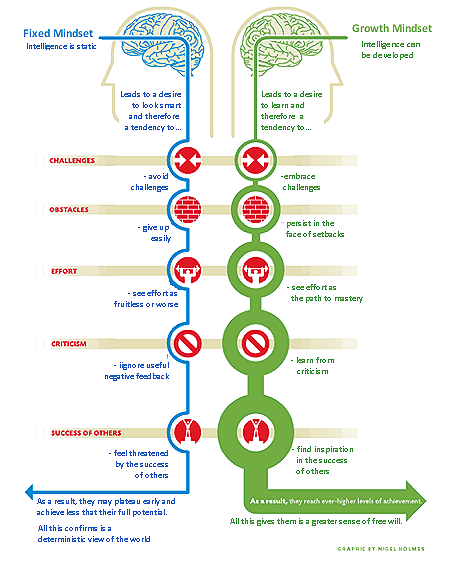
19 Saying Fixed

http://thedoghousediaries.com/5574


Middle School Science Minute

by Dave Bydlowski (k12science or davidbydlowski@mac.com)

MIDDLE SCHOOL SCIENCE MINUTE-CLASSROOM ZOO

I was recently reading the November, 2013 issue of Science Scope, a magazine written for Middle School Science Teachers, published by the National Science Teachers Association.  In this issue, I came upon an article entitled, “Classroom Zoo: Practicing Ethical Research on Animals,” written by June Poling from Portland, OR.

She developed a classroom invertebrate zoo project where students take on the role of zookeepers.

http://k12science.net/Podcast/Podcast/Entries/2013/12/13_Middle_School_Science_Minute-Classroom_Zoo.html

From the Twitterverse:

* Allison M. White ‏@allionthemove

State Ed storing student data on ‘cloud’ delayed http://www.newsday.com/long-island/state-education-project-storing-student-data-on-cloud-delayed-1.6774923 … @Newsday Heed petition @NYSA_Majority

* Todd ‏@ToddWhitaker

Should principals stop visiting classrooms? http://www.washingtonpost.com/blogs/answer-sheet/wp/2014/01/08/should-principals-stop-visiting-classrooms/ …

* Secondary Principals ‏@massp

Is your staff drowning under the waves of change? Steps to save them: http://www.ascd.org/publications/educational-leadership/oct11/vol69/num02/Not-Waving,-But-Drowning.aspx … #MichED

* Dean J. Fusto ‏@DJFTLL

A6 – LInkedIn effective when one is interactive w/ specific affinity groups such as @DruTomlin_AMLE @ASCD @TABSorg @isteconnects #satchat

* Scott McLeod ‏@mcleod

Zombie-Based (Geography) Learning

DI: Data resisters aren’t Chicken Littles #edtech

http://atthechalkface.com/2014/01/03/johnkuhntx-the-tyranny-of-the-datum/

* Theresa Reagan ‏@tee62

Finally, an Alternative to the Much-Hated QR Code http://mashable.com/2014/01/09/qr-code-clickable-paper/#lead-image:eyJzIjoidCIsImkiOiJfODcxdHhrcjB2NTlpenp1eDJveHp0MHZlaXBfIn0 … via @mashable

* Karen Bosch ‏@karlyb

How to create AR Scavenger Hunts using KlikaKlu app:

* Mike Muir ‏@mmuir

What teachers, parents, & students need to know about cyber bullying. http://www.edudemic.com/cyberbullying/

* Ryan Bretag ‏@ryanbretag

Wolfram releases Problem Generator to create practice problems http://zite.to/1gC9g57

* Arne Duncan ‏@arneduncan

Redesign of school discipline practices long overdue. Too many schools resort too quickly to exclusionary disciplinehttp://go.usa.gov/ZdxC  

* Diane Ravitch ‏@DianeRavitch

Study: NYC Charters Lose 80% of Students with Disabilities by Third Grade http://wp.me/p2odLa-6QL

#mschat every Thursday at 8:00 pm Eastern Standard Time.


Strategies:

5 Special Strategies for Teaching Tweens

Strategy 1: Teach to Developmental Needs

Strategy 2: Treat Academic Struggle as Strength

Strategy 3: Provide Multiple Pathways to Standards

Strategy 4: Give Formative Feedback

Strategy 5: Dare to Be Unconventional

http://www.middleweb.com/6641/5-strategies-for-tween-teachers/


Resources:


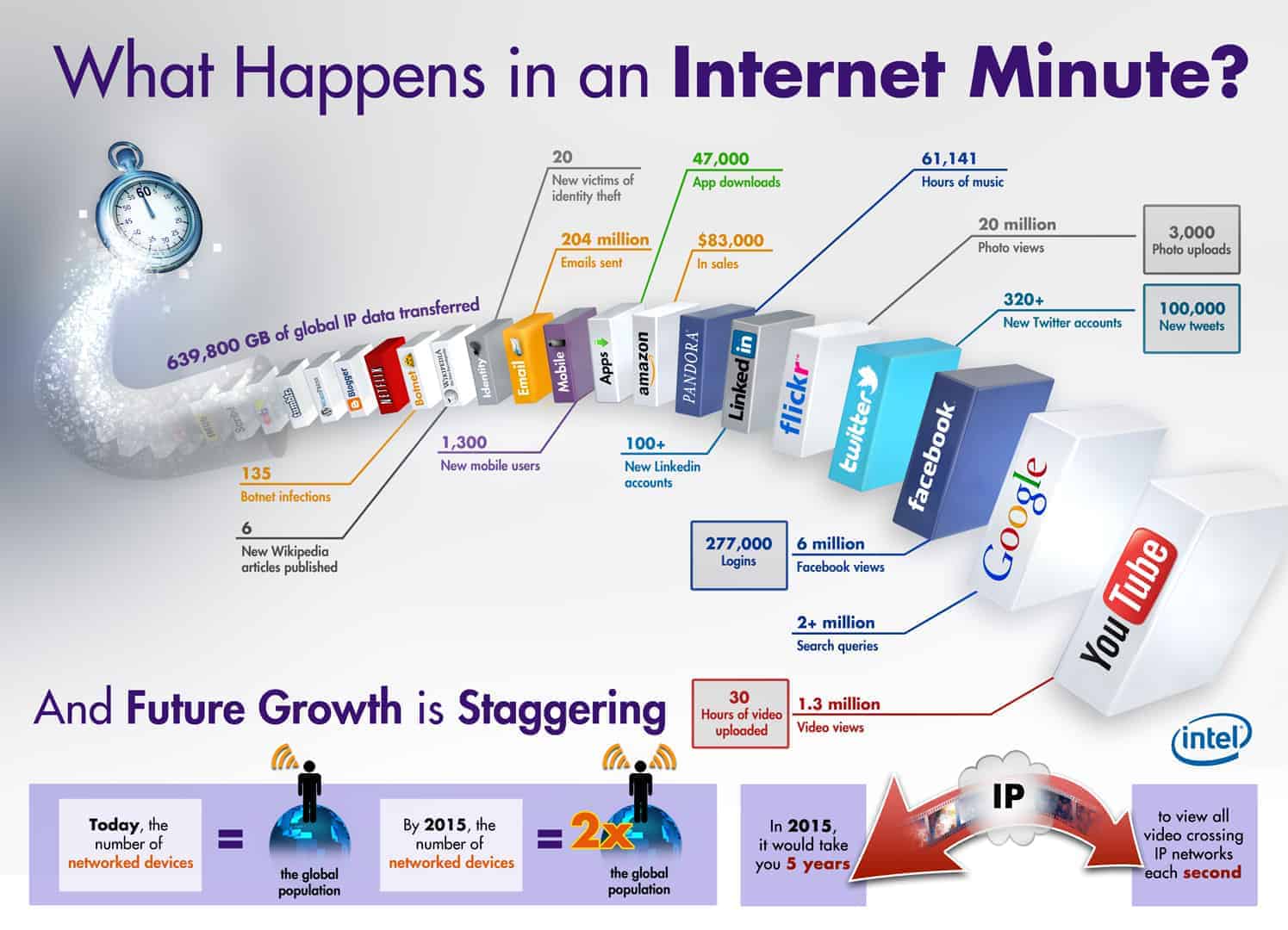
What Happens on the Internet in a Minute?

http://dailyinfographic.com/wp-content/uploads/2013/12/Internet-minute.jpg

The Principal: The Most Misunderstood Person in All of Education

A few years ago when I walked the hallways of a high school with my five-year-old niece Evie, she remarked, without prompting: “There’s the principal’s office: you only go there if you are in trouble.”

Most remarkably, those very people who did not understand what a principal did were often the first to argue for the abolition of the role.

In American public schools, the principal is the most complex and contradictory figure in the pantheon of educational leadership.

The history of the principal offers even more contradictions. Contemporary principals work in the midst of unique modern challenges of ever-changing fiscal supports, school law and policy, community values, and youth culture.

The complex role of the principal is not an accidental by-product of history; rather, the principal’s position at the nexus of educational policy and practice was an intentional component of the role when it was originally conceived.

Like other middle managers, the principal had a “dual personality,” standing “on the middle ground between management and employee,” as both a loyal sergeant to a distant supervisor and a local administrator who had to negotiate with workers in order to get the job done properly.

Through the mid-20th century, the principalship was an inconsistently defined position, as often a teacher with administrative responsibilities as an administrator who supervised teachers.

As the principalship evolved away from the classroom to the administrative office, the principal became less connected with student learning, and yet more responsible for it.

Modern principals came to have less to do with student learning and more to do with upholding administrative structures and responding to public pressures.

For all those efforts, however, the history of the principalship is marked by an increasing discrepancy between the popular image and the actual work of the position. Ironic too, is the dominant image of the principalship with an office, given the great variety, mobility, human interactions, and community relations of principals’ work.

http://www.theatlantic.com/education/archive/2013/11/the-principal-the-most-misunderstood-person-in-all-of-education/281223/


Common Core and the Food Pyramid

By Rick Hess on December 16, 2013 7:33 AM


Unlike a lot of folks, it’s because I thought (and continue to think) that the Common Core itself just doesn’t matter that much.

Standards are just a bunch of words on paper.

I always think of the food pyramid (the one that the feds unveiled decades ago, only to decide that it was offering families bad advice and needed to be revised and replaced by “food plate” that Michelle Obama has championed. Whoops.).  When the pyramid was unveiled, I’m sure some amped-up nutritionists excitedly thought it would make a huge difference when it came to health and obesity.  Turned out: not so much. Most people have never paid a whole lot of attention; after all, it’s just a bunch of suggestions assembled through a bureaucratic process. (And did I mention it was questionable advice?)

In truth, the idea that the Common Core might be a “game-changer” has little to do with the Common Core standards themselves, and everything to do with stuff attached to them, especially the adoption of common tests that make it possible to readily compare schools, programs, districts, and states (of course, the announcement that one state after another is opting out of the two testing consortia is hollowing out this promise).

But the Common Core will only make a dramatic difference if those test results are used to evaluate schools or hire, pay, or fire teachers; or if the effort serves to alter teacher preparation, revamp instructional materials, or compel teachers to change what students read and do.  And, of course, advocates have made clear that this is exactly what they have in mind.

Common Core boosters seem to suggest they’re just proposing a food pyramid. This, of course, infuriates the critics, who think (fairly enough) that what the Common Core’ites are really after is to reorder schooling, soup to nuts.

http://blogs.edweek.org/edweek/rick_hess_straight_up/2013/12/common_core_and_the_food_pyramid.html

Fighting in Teenagers Lowers Their IQ

Florida State University’s College of Criminology and Criminal Justice found that injuries sustained in fighting as a teenager lead to a significant loss of intelligence (IQ).

The study, “Serious Fighting-Related Injuries Produce a Significant Reduction in Intelligence,” was conducted by doctoral student Joseph A. Schwartz under the guidance of Professor Kevin Beaver and was published in the Journal of Adolescent Health.

The study found that adolescent boys who are hurt in just two physical fights suffer a loss of IQ that is roughly equivalent to missing an entire year of school. Girls experience a similar loss of IQ after only a single fighting-related injury.

The study used data from the National Longitudinal Study of Adolescent Health, known as Add Health. Add Health began in 1994 with a sample of 20,000 middle and high school students who were then followed through 2002 with a series of data collections. These subjects supplied information about personality traits, social relationships and the frequency of specific behaviors.

http://calorielab.com/news/2013/08/12/fighting-in-teenagers-lowers-their-iq/

Web Spotlight:


How flipping saved a teacher’s career

Four years into his fifth grade teaching career in a small rural district in Texas, Todd Nesloney felt burned out and ready to quit.

“I was tired of worksheets, tired of teaching to the test. I wanted to do something different,” he said. “At the end of my fifth year, I was anticipating leaving.”

“I was dead set on proving my kids could be just as successful by not focusing on the tests or being taught a standardized question in class. We had the highest scores in the district. Most of my students passed on the first try. It really helped solidify in my district’s mind that I could continue this.”

“I could see a passion building in my students. I could see them love learning. Before, I was just preparing them to pass the test.”

Flipping his classroom allowed Nesloney to make the time, and he now regularly scours Pinterest for inventive projects that not only relate to what he’s teaching but allow students to create a tangible end product or engage with the material in a real-life application.

http://blog.iste.org/flipping-saved-teachers-career/

MSM 264: Suffixes matter & Sunshine on the Soap Bubbles . . . Then there was a ding.

Presented in collaboration with the Association for Middle Level Education.

Jokes You Can Use:


Q. What do you call a person who goes on talking when nobody listens?

A. A teacher!

Did you hear about the thief who moved into an apartment over the Police Station?


Computers are like air conditioners. They work fine until you start opening windows.


Why was the glowworm unhappy?

Because her children were not very bright!

The drunken defendant appears yet again before the tired judge, who says, “You have been constantly appearing before me for the past twenty years.” Replied the drunk: “Can I help it if you can’t get promoted?”


“An abstract noun,” the teacher said, “is something you can think of, but you can’t touch it.

Can you give me an example of one?”

“Sure,” a teenage boy replied. “My father’s new car.”

An Antartian boy and his father were visiting a mall. They were amazed by almost everything they saw, but especially by two shiny, silver walls that could move apart and back together again.

The boy asked his father, “What is this, Father?” The father [never having seen an elevator] responded “Son, I have never seen anything like this in my life, I don’t know what it is.”

While the boy and his father were watching wide-eyed, an old lady in a wheelchair rolled up to the moving walls and pressed a button. The walls opened and the lady rolled between them into a small room.

The walls closed and the boy and his father watched small circles of lights with numbers above the walls light up. They continued to watch the circles light up in the reverse direction.

The walls opened up again and a beautiful 24-year-old woman stepped out. The father said to his son, “Go get your mother.”

Eileen Award:

  • Twitter:  Jodi Stewart, Coach Burk, Michael Carton


Advisory:

T-Rex

I’ve included a link for you to print out your own. The trick looks best through a camera. If you close one eye and move back and forth it works pretty good too.


GreenT-Rex image

http://i.imgur.com/vBDV8o5.jpg

Red T-rex

http://i.imgur.com/80DDCYy.jpg

Blue T-rex

http://i.imgur.com/Z8lZnoK.jpg

Winter Soap Bubbles

When the weather forecast announced about the unexpected cold from -9°C to -12°C last week, Washington-based photographer Angela Kelly decided to take an advantage of it in one truly creative way. Together with her 7-year-old son, Kelly combined the home-based remedies – dish soap, karo syrup, and water – and went out to blow bubbles and take pictures as they freeze and melt.

http://www.boredpanda.com/frozen-bubbles-winter-photography-angela-kelly/

Middle School Science Minute

by Dave Bydlowski (k12science or davidbydlowski@mac.com)


MIDDLE SCHOOL SCIENCE MINUTE-POWERPOINT FLASHCARDS


I was recently reading the November, 2013 issue of Science Scope, a magazine for middle school science teachers, published by the National Science Teachers Association.  I then read the article “Increasing Science Vocabulary Using PowerPoint Flash Cards.”

In order to help improve science vocabulary in the school, they did the following:

1. Explored Science-Vocabulary Acquisition

2. Implemented Vocabulary Instructional Practices

3. Implemented PowerPoint Flash Cards

4. Integrated Science Vocabulary as a School-Wide, Universal Support System.


http://k12science.net/Podcast/Podcast/Entries/2013/12/4_Middle_School_Science_Minute-PowerPoint_Flashcards.html

From the Twitterverse:

* Laura Gilchrist ‏@LauraGilchrist4

How a book really can change your life: Brain function improves for DAYS after rding a novel http://buff.ly/JyM4bK  via @VictoriaL_Day

* Larry Ferlazzo ‏@Larryferlazzo

Two Days Left To Share The Best Education-Related Book You Read This Year! http://larryferlazzo.edublogs.org/2013/12/27/two-days-left-to-share-the-best-education-related-book-you-read-this-year/#.Ur7ixvWaDqs.twitter …

* Lockie Chapman ‏@lockiechapman

Turns out there is a word for the indescribable— 38 Wonderful Foreign Words We Could Use in English http://shar.es/91dgl  via @ShareThis

* John Bernia ‏@MrBernia

Are you starting to think about your return to work? Time to step back and think “keep, stop, do.” http://mrbernia.com/2012/12/23/keep-stop-do/ …

* Wendy Lecker ‏@Wlecker

Pearson, Microsoft, and Barnes & Noble Join Forces to Form an “Online Education Dream Team”http://www.technapex.com/2013/01/pearson-microsoft-and-barnes-noble-join-forces-to-form-an-online-education-dream-team/

* Seth Berg ‏@BergsEyeView

Some quality ideas for engaging middle school readershttp://www.edutopia.org/blog/projects-engage-middle-school-readers-beth-holland

* Scott McLeod ‏@mcleod

“We want our schools to be more like those in the East, who, in turn, want to be more like us” #edreform #iaedfuture

* Maria Popova ‏@brainpicker

Judge rules Sherlock Holmes is in the public domain http://j.mp/1jRWwMm  Celebrate with how to think like Holmes http://j.mp/1hL1k1H

* Erin Klein ‏@KleinErin

20 Ways to Bring Your Textbook to Life! http://zite.to/19miVKR

#mschat every Thursday at 8:00 pm Eastern Standard Time.


Resources:

Open Library

One web page for every book ever published. It’s a lofty but achievable goal.

To build Open Library, we need hundreds of millions of book records, a wiki interface, and lots of people who are willing to contribute their time and effort to building the site.

To date, we have gathered over 20 million records from a variety of large catalogs as well as single contributions, with more on the way.

Open Library is an open project: the software is open, the data are open, the documentation is open, and we welcome your contribution. Whether you fix a typo, add a book, or write a widget–it’s all welcome. We have a small team of fantastic programmers who have accomplished a lot, but we can’t do it alone!


https://openlibrary.org/


Web Spotlight:

Turn 0 Phrase

Identify colloquial phrases.

http://turn-o-phrase.appspot.com/

‘Small typo’ casts big doubt on teacher evaluations


A single missing suffix among thousands of lines of programming code led a public school teacher in Washington, D.C., to be erroneously fired for incompetence, three teachers to miss out on $15,000 bonuses and 40 others to receive inaccurate job evaluations.

Devaney said the firm employs stringent quality control, which in this case included 40 hours of meetings to review the updated model and an analysis by independent programmers paid to comb through the code line by line. Yet no one noticed the missing suffix until yet another routine quality review took place this November — after the district had already distributed bonuses, layoff notices and evaluation scores based on the value-added data for the 2012-13 school year, Devaney said.

The recalculations produced “very small differences” in individual teachers’ scores, Devaney said. “But small differences can sometimes have big implications,” she added.

But some critics noted that it may be impossible for the district to “hold harmless” all teachers affected by the error, as Kamras intends. A study released earlier this year found that getting a poor rating prompted many teachers to leave the district or quit the profession, even though they were not fired. It’s unclear whether any of the affected teachers may have altered their career plans after receiving scores that were lower than they actually deserved.

A study that Mathematica conducted for the Department of Education in 2010 found that value-added estimates “are likely to be quite noisy.” Indeed, the study concluded that even when three years of student test data are used, as many as 50 percent of teachers will be misidentified — deemed average when they’re actually better or worse than their peers, or singled out for praise or condemnation when they’re actually average.

http://www.politico.com/story/2013/12/small-typo-casts-big-doubt-on-teacher-evaluations-education-101517.html#.UrnmXe55TWk.twitter


5 Ideas To Bring Parents Into The Learning Process

by George Couros • December 26, 2013


Here are some ways that we can build strong connections with the parents in our school communities:

  1. Use what the kids use

  2. Have an open mind

  3. Tap into parent leadership

  4. Focus on open communication

  5. Create learning opportunities

http://connectedprincipals.com/archives/9881

Why All Students Should Write: A Neurological Explanation

by Judy Willis M.D., M.Ed., radteach.com


Writing promotes the brain’s attentive focus to classwork and homework, promotes long-term memory, illuminates patterns (possibly even “aha” moment insight!), includes all students as participants, gives the brain time for reflection, and when well-guided, is a source of conceptual development and stimulus of the brain’s highest cognition.

There is an involuntary information intake filter that determines what sensory input is accepted into the brain. Input must also pass through an emotional filter, the amygdala, where the destination of that information. When stress is high, the intake filter favors information selectively admits information related to perceived threat, virtually ignoring other sensory input.

Writing can include individual journaling, formal research-style formatted reports of student experimentation and data analysis, newspaper editorials about the evidence for environmental problems and a plan for intervention. Writing can be shared with varying degrees of scaffolding for students who need to build confidence, such as class blogs or wikis with code names known only by the teacher.

http://www.teachthought.com/literacy-2/why-all-students-should-write-a-neurological-explanation-for-literacy/

MSM 260: Hey IronMan, my shirt is still wrinkled!

Presented in collaboration with the Association for Middle Level Education.

Jokes You Can Use:

Q: Did you hear about the person who forgot to pay their exorcist?

A: They were repossessed.

“Frank, if you have 20 dollars and Bill takes away 14. What would you have?” said the teacher.

“A fight!” answers Frank.


Four best friends met at the hospital since their wives were giving births to their babies. The nurse comes up to the first man and says, “Congratulations, you got twins.” The man said “How strange, I’m the manager of Minnesota Twins.” After awhile the nurse comes up to the second man and says, “Congratulations, you got triplets.” Man was like “Hmmm, strange I worked as a director for the “3 musketeers.” Finally, the nurse comes up to the third man and says

“Congratulations, you got twins x2.” Man is happy and says, “Ironic, I work for the hotel “4 Seasons.” All three of them are happy until they see their last buddy jumping all over the place, cursing God and banging his head on the wall. They asked him what’s wrong and he answered, “What’s wrong? I work for 7up”!


A court jester is thrown into jail for telling terrible jokes.

~What did he say after the guard locked him up?

O-PUN the door!


A man walks into the psychiatrist’s office with a zucchini up his nose, a cucumber in his left ear, and a breadstick in his right ear. He says, “What is wrong with me?

The psychiatrist replies, “You are not eating properly.”

Why was the glowworm unhappy?

Because her children were not very bright!


Q:Why did the football coach go to the bank?

A:He wanted to get his quarter-back!!!


Why did the author write his novel in the basement?

He wanted to write a best cellar.


A family was having dinner and the little boy said,”Dad I don’t like the

holes in the cheese!” Well son, eat the cheese and leave the holes on the

side of the plate.

Eileen Award:

  • Twitter: Ben Kuhlman, Lauren Martin, Colleen Skiles, Danielle Davis-Cripe, Lou Ann Gvist

  • Happy Birthday:  Todd Whitaker


Advisory:

Ashton Kutcher Acceptance Speech – Teen Choice Awards 2013

http://www.youtube.com/watch?v=zuBSRC1zpHw

What If Superheroes Had Part-Time Jobs

Have students pick a SuperHero (or create one). Then have them decide upon a part time job (or alternate) job. Students could draw or write the story about the SuperHero.

http://laughingsquid.com/what-if-superheroes-had-part-time-jobs/

Middle School Science Minute

by Dave Bydlowski (k12science or davidbydlowski@mac.com)

MIDDLE SCHOOL SCIENCE MINUTE-SCIENCE SONGS


I was recently reading the September, 2013 issue of Science Scope, a magazine written for Middle School Science Teachers, published by the National Science Teachers Association.  In this issue, I came upon an article entitled, “Songs in Service of Science,” written by Kathryn Hoffman.  Within the article, she explains how science songs can be beneficial to students.  At the end of the podcast, I sing two of the songs from the article.  They are:

  • The Linnaean Levels of Classification

  • Cellular Respiration.


http://k12science.net/Podcast/Podcast/Entries/2013/10/18_Middle_School_Science_Minute-Science_Songs.html


From the Twitterverse:

Faculty meetings need less direct instruction and more “play time” and facilitation. Make it a maker/creator time. #satchat

* edutopia ‏@edutopia 26m

Get outside this weekend! Check out 50+ resources for active learning: http://edut.to/17zA70Q  #PEchat #edchat

* Maggie ‏@march4teachers 1h

Common Core Standards: Ten Colossal Errors http://blogs.edweek.org/teachers/living-in-dialogue/2013/11/common_core_standards_ten_colo.html?cmp=SOC-SHR-TW … via @educationweek

* Scott McLeod ‏@mcleod 2h

New York’s Teacher of the Year Is Not Rated “Highly Effective” #edreform #iaedfuture #ialegis

* Larry Ferlazzo ‏@Larryferlazzo 2h

Microsoft Eliminates Its Own Destructive VAM Rankings; However, Gates Still Seems Focused On Using It For Us http://larryferlazzo.edublogs.org/2013/11/16/microsoft-eliminates-its-own-destructive-vam-rankings-however-gates-still-seems-focused-on-using-it-for-us/#.Uod5-drGHPQ.twitter …

* Scott McLeod ‏@mcleod 3h

Kahoot! | Game-based blended learning & classroom response system

#mschat every Thursday at 8:00 pm Eastern Standard Time.


Strategies:

Learn the Address


To celebrate the 150th anniversary of the Gettysburg Address, documentarian Ken Burns, along with numerous partners, has launched a national effort to encourage everyone in America to video record themselves reading or reciting the speech.The collection of recordings housed on this site will continue to grow as more and more people are inspired by the power of history and take the challenge to LEARN THE ADDRESS.


Share Your Gettysburg Address

How to Participate

It’s easy! Just follow these three simple steps:

  1. Download or print the words to the Gettysburg Address located here and practice reading it out loud. Or if you are up for the whole challenge – memorize!

  2. Record yourself (have a friend record you) reading the speech using your computer, laptop, tablet, mobile device or digital video recorder.

  3. Upload your video to YouTube and use the form below to send us your link!

That’s it! Your video will be included among presidents, politicians, entertainers, journalists, and hundreds of others who have taken the challenge to LEARN THE ADDRESS.


http://www.learntheaddress.org/

Grade Table

http://dangerouslyirrelevant.org/2013/11/everything-thats-wrong-with-traditional-grading-in-one-table.html?utm_source=feedburner&IP=10.38.97.3&CAT=WEBLOG&USER=IPGROUP&CE=0

Bruno: Achievement Gaps Have Closed More Than You Think

One of the subtlest pitfalls, however, concerns the apparent persistence of achievement gaps between different groups of students.

To see why rising achievement matters, we can consider 8th grade reading scores. According to last week’s report, the difference between the average score for black students and the average score for white students has remained exactly the same since 1998 at 26 points.

This is the very definition of a “persistent achievement gap”. (The NAEP tweaked its methodology in 1998, so I’m omitting prior years’ scores for simplicity.)

At the same time, though, the average reading score white 8th graders has increased from 270 points to 276 points. As a result, that 26 point gap represents a (slightly) smaller fraction of white students’ overall achievement. Specifically, it means that black 8th graders have gone from scoring 90.4% as high as their white peers (on average) to scoring 90.6% as high.

In other words, the “stagnant” 26-point gap between black and white students is obscuring the fact the gap – expressed as a fraction of white student achievement – has narrowed.

http://scholasticadministrator.typepad.com/thisweekineducation/2013/11/bruno-achievement-gaps-are-closing-faster-than-you-think.html


Resources:

History in Color

Take black and white photographs from the past and add a splash of color. The impact is different.

https://www.facebook.com/HistoryInColor


Similar:

Some Lincoln and WWII pictures.  Click through the slider at the top of the page.

http://lightbox.time.com/2012/10/25/a-vibrant-past-colorizing-the-archives-of-history/#3

Optical Illusions


http://www.youtube.com/watch?v=UelJZG_bF98#t=19


eQuiz Show

Why study with eQuizShow?

  1. Creating your own quiz show takes only seconds

  2. Your quiz show will always be available

  3. No registration required

  4. Our quiz show format is ideal for reinforcing and studying topics

Really easy to use. Great if you have an Interactive Board or Projector. You can also preprint the questions and answers.


Terms and Conditions:

By using our website, you agree to these Terms & Conditions as well as our Privacy Policy.

1. eQuizShow content ownership rights

By creating and putting information into a template on our site, you acknowledge that eQuizShow.com has absolute content rights.

We may edit, delete, or redistribute your template for any reason. For instance, we may delete templates that are inactive for a period of time and/or other reasons that we see fit.

2. User content ownership rights

A user who creates a template never has the right to ask for a copy of all of the information in that template, even if eQuizShow.com decides to delete or alter the template.

A user does not have the right to delete his/her template. A user can ask eQuizShow to delete a template from our system, but eQuizShow might not comply, depending on our opinion, for any reason.

3. Private information

If a user includes private information in one or more of his/her templates, the user can ask for the entire template or templates to be removed from our system. eQuizShow can decide if they think information is considered private.

4. Spam or inappropriate content

If eQuizShow feels that a template contains sexual, gruesome, inappropriate, or spam containing material, eQuizShow will delete that template immediately.

Privacy Policy

eQuizShow will not publish user feedback without the user’s permission. Additionally, eQuizShow will not give out your email, name, or Google Profile for any reason.


eQuizShow retains all rights to user submitted content. eQuizShow can do as it wishes with this content.

http://equizshow.com/

How to participate in a Twitter Chat

http://www.coolcatteacher.com/videos/participate-twitter-chat-txeduchat/


Web Spotlight:


Rewrite of E-Rate Program Could Cover Technology Outside Schools

With the final public comment period on proposed changes to the E-rate having come to a close, one of the most intruging questions to emerge is whether the federal program should cover the costs of paying for students’ web access outside of school.

With the final public comment period on proposed changes to the E-rate having come to a close, one of the most intruging questions to emerge is whether the federal program should cover the costs of paying for students’ web access outside of school.

Sprint Corporation, the third-largest wireless carrier in the U.S., also called for the FCC to include support for off-campus access. Both companies agreed that firewall restrictions should be kept in place for publically funded projects, limiting internet use to only authorized sites.

“The E-Rate fund is already stretched and network construction is expensive,” Verizon said in its comments.  “Using E-rate to fund construction by schools or libraries—which are not best suited to building telecommunications networks in any event—will unnecessarily divert funds that other schools and libraries could use to obtain high-capacity connections. “

http://blogs.edweek.org/edweek/DigitalEducation/2013/11/as_the_final_public_comment.html


8 Universal Secrets of Motivated Learners

Deceptively simple, their advice boils down to 8 universal secrets of powerful, personalized learning. Taken together, they give us a critical lens through which we can analyze what’s going wrong—and what’s going right—as we teach and as we learn.

  1. We feel OK. Creating well-being in a learning environment is the crucial first step, according to both kids and scientists. Threats to our physical or emotional safety—from hunger to humiliation—shut down learning as we respond to more primal signals.

  2. It matters. A personal connection or a real-world issue can make all the difference to whether we care about an academic task. Offering a choice on some aspect of the work also sends its value up, and so does the chance to work on things with friends.

  3. It’s active. From constructing a model to collaborating on a puzzle, we start to “own” new information when our hands and minds engage our thinking processes more fully.

  4. It stretches us. Extreme frustration can shut down learning, but a stretch that’s both challenging and achievable gives the learner a buzz of excitement. (Don’t forget to notice small successes along the way!)

  5. We have a coach. We do much better with someone around who will help us make sure we’re getting it right—watching us practice and giving us tips, with plenty of time to learn from our mistakes.

  6. We have to use it. Doing something with information not only shows that we know it but also makes it stick in our minds. The most fun is to perform what we’ve learned or teach it to others—but even a pop quiz will do the trick.

  7. We think back on it. What did I learn? What would I do differently next time? How have I grown and changed? Making time for us to reflect on questions like these has a huge effect on deepening our learning—yet it’s the easiest thing to skip.

  8. We plan our next steps. Planning any venture—an argument, a project, even what we’re going to say next—is a creative adventure. It forces us to remember information in order to develop an idea or solve a problem. Hand us the keys to our learning and watch us take those intellectual risks!

– See more at: http://www.personalizelearning.com/2013/11/8-universal-secrets-of-motivated.html#!

http://www.personalizelearning.com/2013/11/8-universal-secrets-of-motivated.html#!

UDACITY’S SEBASTIAN THRUN, GODFATHER OF FREE ONLINE EDUCATION, CHANGES COURSE


http://www.fastcompany.com/3021473/udacity-sebastian-thrun-uphill-climb

AMLE 2013 Annual Conference

Executive Director’s Meeting:

  • Membership focused on Teachers and resources for educators, backburner Administrators and Universities.

  • Free membership option has been a HUGE hit:  10,000 new members in the first month.

Half-Baked Ideas . . .

On the go recording.


MSM 259: Think Rich, Think Candy Corn, Think Petri Dishes … Shucks, Just Think.

Presented in collaboration with the Association for Middle Level Education.

Jokes You Can Use:

SICK DAYS:

We will no longer accept a doctor statement as proof of sickness. If you are able to go to the doctor, you are able to come to work.


SURGERY:

Operations are now banned. As long as you are an employee here, you need all your organs. You should not consider removing anything. We hired you intact. To have something removed constitutes a breach of employment.


PERSONAL DAYS:

Each employee will receive 104 personal days a year. They are called Saturday and Sunday.


VACATION DAYS:

All employees will take their vacation at the same time every year. The vacation days are as follows: Jan. 1, July 4 & Dec. 25


BEREAVEMENT LEAVE:

This is no excuse for missing work. There is nothing you can do for dead friends, relatives or coworkers. Every effort should be made to have non-employees attend to the arrangements. In rare cases where employee involvement is necessary, the funeral should be scheduled in the late afternoon. We will be glad to allow you to work through your lunch hour and subsequently leave one hour early, provided your share of the work is done enough.


OUT FROM YOUR OWN DEATH:

This will be accepted as an excuse. However, we require at least two weeks notice, as it is your duty to train your own replacement.


RESTROOM USE:

Entirely too much time is being spent in the restroom. In the future, we will follow the practice of going in alphabetical order. For instance, all employees whose names begin with ‘A’ will go from 8:00 to 8:20, employees whose names begin with ‘B’ will go from 8:20 to 8:40 and so on. If you’re unable to go at your allotted time, it will be necessary to wait until the next day when your turn comes again. In extreme emergencies employees may swap their time with a coworker. Both employees’ supervisors in writing must approve this exchange. In addition, there is now a strict 3-minute time limit in the stalls. At the end of three minutes, an alarm will sound, the toilet paper roll will retract, and the stall door will open.


LUNCH BREAK:

Skinny people get an hour for lunch as they need to eat more so that they can look healthy, normal size people get 30 minutes for lunch to get a balanced meal to maintain the average figure. Fat people get 5 minutes for lunch because that’s all the time needed to drink a Slim Fast and take a diet pill. Sondra gets none.


DRESS CODE:

It is advised that you come to work dressed according to your salary, if we see you wearing $350 Prada sneakers and carrying a $600 Gucci bag we assume you are doing well financially and therefore you do not need a raise.


Thank you for your loyalty to our company. We are here to provide a positive employment experience. Therefore, all questions comments, concerns, complaints, frustrations, irritations, aggravations, insinuations, allegations, accusations, contemplations, consternations or input should be directed elsewhere. Have a nice week.


— Management


Eileen Award:


Advisory:


Myers-Briggs

Introduction to the Cognitive Style Inventory

This modest self-scoring inventory is Not a substitute for taking an MBTI ®. It is simply an introduction to personality type or psychological type. We hope it whets your appetite for learning more about the Myers and Briggs model of personality development and its message of increased human understanding.


The Style Inventory will allow you to approximate what are your MBTI Type preferences. After determining your 4 Type letters, you can jump to a number of links we have provided to help you get acquainted with the characteristics and indicators of the 16 types and verify if your type, as determined by this “unscientific” survey, seems to “fit” or not.

http://www.personalitypathways.com/type_inventory.html


Does Being Rich make you Different?

Science can explain a lot of things that I’ve always wondered about (go, science!). In this case, it explains what I’ve known for a long time but been unable to quite understand: Why do some folks who have a lot more money than others seem to be less nice and more evil to everyone around them? At 0:50, someone actually takes candy from babies. No, really. At 3:00, we start to see the science unfold before our eyes. Entire management courses could — and should — be taught with the bit starting at 4:40. http://www.whydontyoutrythis.com/2013/07/take-two-normal-people-add-money-to-just-one-of-them-and-watch-what-happens-next.html

Middle School Science Minute

by Dave Bydlowski (k12science or davidbydlowski@mac.com)

Petri Plate Disposal


I was recently reading “The NSTA Ready Reference Guide to Safer Science,” written by Ken Roy of the Glastonbury Public Schools.  In this book, Key answers questions that have been submitted by middle school science teachers.  In this podcast, Ken answers the following question:

“What is a safe way to dispose of Petri Plates used to grow mold and bacteria?”

If you would like to order Ken’s book, please visit the NSTA bookstore at:

http://nsta.org/store


http://k12science.net/Podcast/Podcast/Entries/2013/10/11_Middle_School_Science_Minute-Petri_Plate_Disposal.html

From the Twitterverse:

Any frmr teachers looking for a cool job? http://www.brainsonfire.com/blog/2013/11/01/hiring-community-manager/ …

* Scott McLeod ‏@mcleod 15m

Bizarrely Improbable Objects That Make You Think

* Wesley Fryer, Ph.D. ‏@wfryer 1h

I just watched commented on the amazing #k12online13 presentation by @fuglefun “Making and Sharing Fugleflicks” http://j.mp/1bMsmSf

* Vicki Davis ‏@coolcatteacher

BLOGGED: Student time management: a powerful demo [Video] http://shrd.by/cXT2LL  #education

* Richard Byrne ‏@rmbyrne

New post: iloggo – Another Simple iGoogle Alternative http://goo.gl/fb/oPBRT

* American History TV ‏@cspanhistory

Pres. Truman defeats Republican challenger Thomas Dewey for the presidency #onthisday 1948 in major upset. SEEN HERE: pic.twitter.com/Z6BJxGQci6

* Larry Ferlazzo ‏@Larryferlazzo 1h

RT @donalynbooks: Lexile levels as censorship? Talk among yourselves. pic.twitter.com/IeEV7q2Ski

* First Kentucky Trust ‏@FirstKYTrust 1 Nov

5 things you didn’t know about candy corn http://usat.ly/1bGsyT5  via @usatoday

* Larry Ferlazzo ‏@Larryferlazzo 2h

RT @GuardianEdu: Secret Teacher: bribing students to learn is bad education http://www.theguardian.com/teacher-network/teacher-blog/2013/nov/02/schools-bribing-students-work-bad-education … pic.twitter.com/WsZvoNTjCI

* Sue Gorman ‏@sjgorman

Vocabulary Lessons: Flipped, Collaborative & Student Centered http://p.ost.im/dhAU85  via @CTuckerEnglish #edtech #mlearning

* Matt Wachel ‏@mattwachel

It Might Be Hard To Find A Better Short Video Than This One To Portray Grit- http://larryferlazzo.edublogs.org/2013/11/01/it-might-be-hard-to-find-a-better-short-video-than-this-one-to-portray-grit/#.UnS694yvOdg.twitter … #colchat @MicheleCorbat @RodneyHetherton

* Monte Tatom ‏@drmmtatom 1 Nov

#CE13: 20 Teacher Treats http://feedly.com/k/HvZTYt  ~ #sigadm #fhuedu642 #fhuedu320 #tn_teta #edwebchat

* Monte Tatom ‏@drmmtatom 30 Oct

The Mind of a Middle Schooler: How Brains Learn http://feedly.com/k/1aF4gZC  ~ #fhupsy306 #sigadm #fhuedu508

#mschat every Thursday at 8:00 pm Eastern Standard Time.


Resources:

10 things I learned about productivity watching 70 hours of TED talks last week

  • 10. Caffeine can significantly improve your focus and energy levels, but only if you use it right.

  • 9. Seek out opinions that contradict your own.

  • 8. One of the best ways to connect with people is through humor.

  • 7. Meditation gives you perspective, allows you to process information easier, and calms you down.

  • 6. It’s worth it to be very defensive of your time.

  • 5. Listening to a TED talk, podcast, or audiobook takes about 50-75% of your attention.

  • 4. Curiosity is the most powerful thing you own.

  • 3. Step back and enjoy your successes.

  • 2. Breaks make you a lot more productive than you think.

  • 1. If you want to become inspired, surround yourself with inspiring people.

http://ayearofproductivity.com/10-things-learned-productivity-watching-70-hours-ted-talks-last-week/

SwipeSpeare

Shakespeare has all the ingredients of a big budget movie—if you can understand him.


SwipeSpeare puts the words of the Bard into plain and simple English with a Swipe of a finger!


Unlike other apps that put the original and modern side-by-side in a way that is distracting and hard to read, SwipeSpeare only shows you the modern text when you want to see it. Simply swipe your finger over the text, and the text will change; swipe it again and it will change back.


Romeo & Juliet is free.

http://www.swipespeare.com/features.html

Web Spotlight:

What poor children need in school

Most educational policy elites, whether in government or in the nonprofit sector, mean well.

Yet policymakers tend to come from a relatively privileged slice of American society.  And they tend to possess a set of beliefs and assumptions distinct to their background.

But in most cases, the fact that decision-makers inhabit a different world from students—and particularly, poor students—is a matter of great significance.

Poverty limits opportunity in all senses.  It restricts career paths, as policymakers recognize.  But it also denies young people equal time, resources, and exposure to discover their interests and foster their passions.  It constrains lives.

Schools, of course, did not create this problem.  But they do exacerbate it.  Over the past decade, well-intended policymakers concerned with closing the achievement gap have promoted policies and practices that reduce learning to something easily quantified.

Our best schools are places where children gain confidence in themselves, build healthy relationships, and develop values congruent with their own self-interest.  They are places of play and laughter and discovery.

Concerned only with the cultivation of ostensibly job-oriented knowledge and skills, they have neglected everything else that makes schools great.

Reformers need to understand that their narrow efforts to close the quantifiable “achievement gap” are creating another kind of educational inequity.  In other words, as they seek to close one gap they are opening up another.

For contemporary education reformers, improving test scores is the only measure of school quality that matters.  And they have had some modest successes in this regard.  Yet they have merely reshuffled the deck.

http://www.washingtonpost.com/blogs/answer-sheet/wp/2013/10/18/what-poor-children-need-in-school/

Half-Baked Ideas . . .

If you’re at AMLE, say, “Hi!”

A couple of observations about AMLE this year.  1.  It’s going to be colder than usual.  2.  No conference App this year.  Yea, verily.  There is much sadness . . .   3.  If you see a person wearing a Middle School Matters podcast shirt, be sure to say hello.  Hope to see you there!  (If I have MSM pencils, you can have one for free!)

MSM 257: From NanoTech to Space – Be Safe

Presented in collaboration with the Association for Middle Level Education.

Jokes You Can Use:

This past fall semester, at Duke University, there were two sophomores who were taking Organic Chemistry and who did pretty well on all of the quizzes, midterms, labs, etc. Going into the final exam, they had solid “A’s.”

These two friends were so confident going into the final that the weekend before finals week (even though the Chem. final was on Monday), they decided to go up to University of Virginia to a party with some friends.

So they did this and had a great time. However, they ended up staying longer than they planned, and they didn’t make it back to Duke until early Monday morning. Rather than taking the final then, they found Professor Aldric after the final and explained to him why they missed it. They told him that they went up to Virginia for the weekend, and had planned to come back in time to study, but that they had a flat tire on the way back and didn’t have a spare and couldn’t get help for a long time. So they were late getting back to campus.

Aldric thought this over and agreed that they could make up the final on the following day. The two guys were elated and relieved. So, they studied that night and went in the next day at the time that Aldric had told them.

He placed them in separate rooms, handed each of them a test booklet and told them to begin. They looked at the first problem, which was something simple about free radical formation and was worth 5 points. “Cool” they thought, “this is going to be easy.” They did that problem and then turned the page.

They were unprepared, however, for what they saw on the next page.

It said: (95 points) “Which tire?”


A guy was in a cave, looking for treasure. He found an old lamp, rubbed it, and a genie came out. The genie said “I will grant you three wishes, but your ex-wife will get double.” The man agreed, and said “I wish I had a mansion.” The genie granted it, and his ex-wife got two mansions. The man said “I would like a million dollars.” The genie again granted it and his ex-wife got two million dollars. Then the man said, “Scare me half to death.”


A distraught older woman is looking at herself in the mirror and crying. Her voice shakes as she says to her husband, “I’m so old. I’m so fat. I look horrible. I really need a compliment.”

Her husband, determined to quickly give his beloved the comfort she needs, exclaims, “Well, you have great eyesight!”

“Well, I finally retired my old car”, said the old man. His pal ask, “Did you junk it or trade it in?” “Naw nothing like that, I put four new Michelins on it.”

Eileen Award:

  • Twitter:  David Katz, NAESP, Student Linkup, BJ Piel, Mark Denham (Dean of the College of Liberal Arts and Education at the University of Detroit Mercy)


Advisory:


15 Ways of the Successful Self-Directed Learner

by Jeff Cobb


1. Takes initiative

2. Is comfortable with independence

3. Is persistent

4. Accepts responsibility

5. Views problems as challenges, not obstacles

6. Is capable of self-discipline

7. Has a high degree of curiosity

8. Has a strong desire to learn or change

9. Is self-confident

10. Is able to use basic study skills

11. Organizes his or her time

12. Sets an appropriate pace for learning

13. Develops a plan for completing work

14. Has a tendency to be goal-oriented

15. Enjoys learning


http://www.missiontolearn.com/2013/10/self-directed-learning-success/

Malala Yousafzai

The winner of this year’s Nobel Peace Prize will be announced on Friday, and Malala Yousafzai, the youngest nominee ever, is considered by many to be the frontrunner.

http://larryferlazzo.edublogs.org/2013/10/09/the-best-resources-on-malala-yousafzai/

http://www.thedailyshow.com/full-episodes/tue-october-8-2013-malala-yousafzai


Middle School Science Minute

by Dave Bydlowski (k12science or davidbydlowski@mac.com)


Nanotechnology Basics


I was recently reading the Summer, 2013 issue of “Science Scope,” a magazine for middle school science teachers, published by the National Science Teachers Association.  Within this issue is the monthly column, “Green Science,” written by Jessica Palliser.  This month, Jessica writes about the nanoscale and provides a basic understanding of nanotechnology basics.

From the Twitterverse:

* Daniel Pink ‏@DanielPink

Dilbert creator Scott Adams: “To put it bluntly, goals are for losers.” . . . http://on.wsj.com/165QwEb  (via @WSJ)

* Kari Catanzaro ‏@catanhistory

@mrg_3: #ICE13 Smackdown: Check out Songify! http://ow.ly/pHR2w  Turn speech into music!” Can’t wait to try with students! #tlap #edchat

* Manan Shah ‏@shahlock

@edrethink #rechat without being creative it’s not obvious if one has actually learned something

* Todd Van Horn ‏@tvanhorn39

11 Tips on Teaching Common Core Critical Vocabulary http://edut.to/1dpj5l4  via @edutopia

* Todd Van Horn ‏@tvanhorn39 17m

Using QR Codes to Differentiate Instruction http://edut.to/1bcqNS1  via @edutopia

* jake duncan ‏@duncanbilingual 42m

Here is the doc from the Tech Slam #RSCON4 session with @markbarnes19: #ce13

* Derek McCoy ‏@mccoyderek 38m

Handwriting vs. Typing: Which Skill Do Students Need Most? http://ow.ly/24VP73

* Todd Van Horn ‏@tvanhorn39 53m

25 Things Successful Educators Do Differently http://shar.es/E5bBW  via @sharethis

* Ryan Bretag ‏@ryanbretag 1h

How the iPad can turn teaching special ed ‘on its head’ http://zite.to/GScBjQ

* Lisa Neale ‏@lisaneale 3h

RT @s_bearden: RT @TeachThought: 5 Strategies For Creating A Genius Mindset In Students http://www.teachthought.com/learning/5-strategies-creating-genius-mindset-students/ … #hwdsb #plpnetwork #OntCL

* Maria Popova ‏@brainpicker 1h

The odd day jobs of famous poets, illustrated http://j.mp/GVbmzs

#mschat every Thursday at 8:00 pm Eastern Standard Time.


Resources:

The Civil War Trust

The Civil War Trust is America’s largest non-profit organization (501-C3) devoted to the preservation of our nation’s endangered Civil War battlefields. The Trust also promotes educational programs and heritage tourism initiatives to inform the public of the war’s history and the fundamental conflicts that sparked it.

http://www.civilwar.org/

9 Out Of 10 Americans Are Completely Wrong About This Mind-Blowing Fact

This pretty much speaks for itself. At 1:05, I get a rude awakening. At 1:41, he starts talking about you. At 2:24, he says a “bad” word. At 3:50, he kind of breaks my brain. At 4:50, he lets you know how broke you really are. At 5:20, he rubs it in. And at 5:50, he points out that reality isn’t close to what we think it is.

http://www.upworthy.com/9-out-of-10-americans-are-completely-wrong-about-this-mind-blowing-fact-2?g=6

Web Spotlight:

Beware of the Internet Safety Industrial Complex

Larry Magid


I got a call recently from a woman who works for a company that makes an app designed to “keep kids safe” by enabling parents to monitor their texts and social media activities. The pitch included some dire statistics such as “70 percent of kids are cyberbullied”

And it’s not just companies. Some non-profit organizations, government agencies, politicians and police departments have also exaggerated problems, presumably to attract media attention or possibly help justify their budgets. One non-profit organization has repeatedly claimed that 85 percent of teens have been cyberbullied — a number that flies in the face of all reputable research reports.

Be especially wary when you hear statements like “a disturbing trend” or a “growing problem” that aren’t accompanied by any research data. What many of these reports fail to say is that victimization of children has been on a steady decline for years.

Fake numbers

Even though I knew it was completely false, it didn’t surprise me to hear the spokesperson for the monitoring app claim that 70 percent of kids had been cyberbullied. Though not all are guilty of this, it’s not uncommon to hear such exaggerations from companies (and some agencies and non-profits) in the Internet safety space.

While any case of cyberbullying is bad, the fact is that the statistics are nowhere near as dire. The numbers vary a lot. The National Center for Educational Statistics reports that 6 percent of students in grades 6-12 experienced cyberbullying. The Centers for Disease Control found in 2011 that 16.2 percent of students had been bullied via email, chat rooms, instant messaging, websites or texting — compared to 20.1 percent who had been bullied on school property (traditional bullying) — during the 12 months prior to the survey. The Cyberbullying Research Center reports that “on average, about 24 percent of the students who have been a part of our last six studies have said they have been the victim of cyberbullying at some point in their lifetime.” Dan Olweus, who the editor of the European Journal of Development Psychology referred to as the “father of bullying research” wrote a 2012 article for that journal where he said that “claims about cyberbullying made in the media and elsewhere are greatly exaggerated and have little empirical scientific support.” Based on a three-year survey of more than 440,000 U.S. children (between 3rd and 12th grade), 4.5 percent of kids had been cyberbullied compared to 17.6 percent from that same sample who had experienced traditional bullying. An even more interesting statistic from that study is that only 2.8 percent of kids had bullied others.

There have also been a lot of false reports about the incidences of kids being sexually solicited online. During that recent pitch about the monitoring app, I was told that the woman’s own son encountered creeps online but — when I asked what happened — she said that he ignored them. It turns out that’s common. Unless kids are looking to hook up with strangers online, that’s exactly what most teens do. Parents can freak out all they want, but kids generally know how to avoid getting entangled in unwanted online relationships.

The problem — as articulated by researchers — is that some kids take extraordinary risks and the kids who take risks online are the same ones that make bad decisions in their offline lives.

Whatever the numbers are, they’re still too high but they represent a small minority of kids which is why a one-size-fits-all approach, including monitoring and filtering, doesn’t make sense.

Olweus is also concerned that fixating on cyberbullying could encourage “an unfortunate shift in the focus of anti-bullying work if digital bullying is seen as the key bullying problem in the schools.”

He worries about funneling resources in the wrong direction, while “traditional bullying — which is clearly the most prevalent and most serious problem — would be correspondingly downgraded.”

I worry about something else. One of the best ways to counter negative behavior is to show that it’s not the norm. Exaggerating cyberbullying makes it look common — in some cases we’ve seen numbers that make it look as if the majority of kids are engaged in it. If it’s common it must be normal and if it’s normal — so goes the reasoning — it must be OK.


http://www.huffingtonpost.com/larry-magid/beware-of-the-internet-safety_b_4066956.html

The Six Best YouTube URL Tricks


  • Repeat All or Part of a Video

  • Download Any Video

  • Bypass Regional Restrictions

  • Jump to a Specific Time

  • Disable Related Videos

  • Skip to the Good Parts With the Wadsworth Constant


http://lifehacker.com/the-six-best-youtube-url-tricks-1422544868


The myth of NASA’s expensive space pens

During the space race back in the 1960’s, NASA was faced with a major problem. The astronaut needed a pen that would write in the vacuum of space. NASA went to work. At a cost of $1.5 million they developed the “Astronaut Pen”. Some of you may remember. It enjoyed minor success on the commercial market.

The Russians were faced with the same dilemma.

They used a pencil.

Fantastic story, right? Except that’s not what happened. NASA originally used pencils in space but pencils tend to give off things that float in zero-g (broken leads, graphite dust, shavings) and are flammable.

After testing, NASA ordered 400 Fisher pens for use on space missions at a cost of under $1000. Russia switched to using the pens a year later.


http://kottke.org/13/10/the-myth-of-nasas-expensive-space-pens

MSM 249: In Spite of It All, Here’s a Show….

Presented in collaboration with the Association for Middle Level Education.

Jokes You Can Use:

Which farmer sits on his tractor shouting, “The end is nigh.”?

Farmer Geddon

What do you call a ghost at a hotel?

An inn spectre


What was the worst thing about Robin Hood’s house?

It had a little john.


What is Forrest Gump’s Facebook password?

1Forrest1.


Why did the paranoid guy quit Twitter?

He thought he was being followed.


What’s the scariest thing in geometry?

A vicious circle.


Why are dwarfs good at maths?

Because it’s the little things that count.


What’s ET short for?

Because he’s got little legs.


Do you know the difference between illegal and unlawful?

Unlawful means “against the law” and illegal is a sick bird.


Why was the calendar depressed?


Why are there no zebras in Czech zoos?

Stripes and Czechs don’t mix.

Eileen Award:

  • iTunes:

  • Twitter: Michael Smith, Todd VanHorn, Sue Waters, AJ Juliani, Shelley Burgess, Patrick Larkin, Lisa Linn, Alec Couros, Darin Jolly and Vicky Smart,

  • Diigo: Ron King.

  • Facebook: Kathy Rose


Advisory:

7 Word Autobiographies


http://www.brainpickings.org/index.php/2013/07/11/nypl-live-holdengraber-7-word-bios/


Middle School Science Minute

by Dave Bydlowski (k12science or davidbydlowski@mac.com)


Design Based Troubleshooting


I was recently reading the March, 2013 issue of Science Scope, a magazine for middle school science teachers, published by the National Science Teachers Association.  An article that caught my attention was:

“Troubleshooting: A bridge that connects engineering design and scientific inquiry.”  It was written by David Crismond.


This article compares classic troubleshooting versus design-based troubleshooting.  The emphasis of troubleshooting is on observing, diagnosing, explaining, and fixing.  Troubleshooting stands ready as a bridge that can link the practices of engineering design with those of scientific inquiry.

From the Twitterverse:

* Sophia.org ‏@sophia

Hey Teachers, Summer is the perfect time to get Flipped Class Certified. Try this free program & say flip flip hooray

* Nein. ‏@NeinQuarterly

Theory and praxis walk into a bar. Praxis, pointing to theory: “I’ll have what he’s thinking of having.”

* Tom Grissom ‏@tomgrissom

Surface RT for Teachers http://eiuitc.blogspot.com/2013/07/surface-rt-for-teachers-glass-half.html?view=magazine … a new journey begins

* Steven W. Anderson ‏@web20classroom 1h

From @KleinErin-Foundations Of Flipping:)

* Kyle Pace ‏@kylepace

30 Ways to use Chromebooks in the Classroom #chromebookedu #edtech https://docs.google.com/presentation/d/1GLmWQ7EJyqF-5ViHaQINkAId2mw9Qoc8KXNN0rVJglM/mobilepresent?pli=1#slide=id.gd3883805_2_18 …

* teachertime123.com ‏@teachertime123 3h

50 Impressive iPad Apps to Fuel Lifelong Learners http://www.teachertime123.com/2012/08/50-impressive-ipad-apps-to-fuel-lifelong-learners/ … via @teachertime123

* Will Richardson ‏@willrich45

RT @JosieHolford: How to learn with technology. Embrace – Unplug – Reboot. Repeat. http://flip.it/6se2F

* Kevin Cummins ‏@edgalaxy_com

The biggest collection of Titanic Education resources for teachers and students. http://www.ultimatetitanic.com/education/

* Susie Highley ‏@shighley

These Twitterville Talk posts are amazing: about as complete a wrap up of the week in chidren’s books you can find!

* Patrick Larkin ‏@patrickmlarkin

MT @baldy7: Soc. Media Has Ruined Grammar (And Other Elementary School Skills You No Longer Need) http://zite.to/1bAfvGj  via @zite #bpschat

* Michele Corbat ‏@MicheleCorbat 6h

Nine Days I Am Looking Forward To Celebrating With My Students http://wp.me/p21t9O-15t  via @colbysharp

* Joy Kirr ‏@JoyKirr 36m

#1st5days MT @LeydenTechy: First day of school ideas: 11 Ways To Get To Know Your Students with Technology http://wp.me/p1RCVK-bW  #ahsd25

* Kyle Pace ‏@kylepace 54m

60 Chrome Apps & Extensions – from @sbehmer #googlect

* Eric Sheninger ‏@NMHS_Principal 18 Jul

Love how @l_hilt has incorporated Fed-Ex Days into PD #lead30

* Monte Tatom ‏@drmmtatom 19 Jul

Analyzing the Teaching of Professional Practice ~ #fhuedu622A #fhuedu501 #highered http://www.tcrecord.org/Content.asp?ContentId=16497 …

#mschat every Thursday at 8:00 pm Eastern Standard Time.


Resources:

ISTE Videos

Lots of sessions available for your review.

http://www.youtube.com/playlist?hl=en&gl=US&client=mv-google&list=PL6aVN_9hcQEFDH57WbT4sY8xQ6Mpp5kbO&nomobile=1

Goals

When you set your goals for the fall, don’t forget your soft goals.

Even more so, we, as teachers, need to be intentional about what we want to help our students be. Thankful. Passionate. Curious. Ethical. Perseverant. Creative… and the list goes on.

Intentionally think about your soft goals because these give you a canvas upon which you will paint your class activities. They should influence the posters you select, the projects you design, and the lessons you plan. You can teach math in a way that harnesses the power of passion. You can weave lessons in that will allow students to show thankfulness to others. You can have projects that foster curiosity.


http://coolcatteacher.blogspot.com/2013/07/why-you-should-set-soft-goals-for-your.html?m=1


How to Nap


http://holykaw.alltop.com/how-to-nap-effectively-infographic?tu2=1

ColAR


Color in the book pages and then see them come to life as they pop out of the page as 3D models on your mobile

http://colarapp.com/

https://itunes.apple.com/us/app/colar-mix/id650645305?mt=8&ign-mpt=uo%3D4


RSA Videos:


Sir Kenneth Robinson – How to find your element

http://www.youtube.com/watch?v=KDhhIghXxfo


Carol Dweck – How to Help Every Child Fulfil Their Potential

http://www.youtube.com/watch?v=yyVZ0KKJuTg


Web Spotlight:

ISTE Follow Up

  • Everyone loves Instagram.

  • Pinterest is gaining popularity as a way to collect and share resources.

  • Google Glass has the biggest “wow” factor amongst the ed tech crowd since the first iPhone.

  • The shift from tools to best practices has made major strides (or maybe I just picked better sessions this year.)

  • ISTE is less about technology and more about education reform, transformation, and 21st century learning.

  • The commercialization of education is far too prominent at ISTE.

  • My best learning still takes place in unstructured situations.

  • We as teachers need to learn how to be learners again.

  • Students need to hear less talking and have more time for exploration, self-directed learning, and failure.

  • We need to take back play and bring the fun and games back to learning.

  • Teachers don’t share their work because they don’t think they have anything remarkable to share.

  • You and I are the change makers.


http://thecornerstoneforteachers.com/2013/06/big-ideas-from-iste-2013.html

The world’s most famous teacher blasts school reform

The most famous teacher in the world is not a fan of high-stakes standardized tests,  Teach For America or the Common Core State Standards.


http://www.washingtonpost.com/blogs/answer-sheet/wp/2013/07/16/the-worlds-most-famous-teacher-blasts-school-reform/?wprss=rss_education&clsrd


Music that you listen to as you work:


Wait, what about teachers?…..


http://columnfivemedia.com/work-items/sonos-infographic-working-jams-what-music-to-listen-to-on-the-job/

Half-Baked Ideas . . .

BossJock

*Pitkin County Turnaround Cart*  Hey folks, this is Shawn from Middle School Matters and I know you’re wondering, “Where in the world is Middle School Matters podcast 249?!?!”, well we had a little rain and a little thunder and as a result Troy is enjoying candle light dinners with his wife.  DTE’ll have the power on soon and when they do we’ll have another podcast for you with the usual jokes, Advisory ideas and the wonderful Mr. Dave Bydlowski.  So, see you in a few, I can hear the DTE trucks now . . . *Scheduled Podcast Cart*

Visual Notes.


MSM 247: ISTE 2013, Be a better person and Thumb Wrestling.

Presented in collaboration with the Association for Middle Level Education.

Jokes You Can Use:

There are two cows out in a field in Britain. One cow turns to the other and asks, “Are you worried about this Mad Cow disease?” The other cow responds, “Nope.” The first cow exclaims, “How can you say that? Cows all over England are getting it. I’m scared stiff!” The other cow just looks at him and says, “Mad Cow disease, why should I be worried? I’m a helicopter.”


Q: What do you call a blind deer?

A: A no-eyed deer (say it out loud)

Q: What do you call a blind deer with no legs?

A: A still no-eyed deer.

Two eggs, a sausage, and a pancake walk into a bar. The bartender says, “Sorry, we don’t serve breakfast.”

Eileen Award:

  • Twitter: Chelsy Hooper, Dianne Krause, Emily Runyan, Kelly Dumont, Matt Graves, Bob Krause, Mark Levine, Gayle Andrews

  • Facebook: Raymond Porten


Advisory:


9 Ways To Be A Better Person

1. Be Willing To Change

2. Stop Making Excuses

3. Stop Being Angry

4. Be A Role Model

5. Forgive Someone

6. Listen To People

7. Be Honest

8. Do Something You Don’t Want To

9. Surprise Someone Special


http://www.lifehack.org/articles/communication/9-ways-better-person.html


Middle School Science Minute

by Dave Bydlowski (k12science or davidbydlowski@mac.com)

Safety Contracts

I was recently reading “The NSTA Ready-Reference Guide to Safer Science, Volume 2,” written by Ken Roy.  This book is available in the National Science Teachers Association’s online store at:

http://nsta.org/store

In this podcast, I share Ken’s response to the following question:

“What can I do if a parent refuses to sign the science laboratory safety acknowledgement form?”


From the Twitterverse:

* Patrick Larkin ‏@patrickmlarkin

#ISTE13: My connected conference experience via @tomwhitby http://feedly.com/k/19Eq8b0  #edchat

* EDSITEment ‏@EDSITEment

150th anniversary of Battle of Gettysburg lesson & interactive http://edsitement.neh.gov/lesson-plan/battles-civil-war … #sschat #historyteacher #engchat #commmoncore

* Erin Klein ‏@KleinErin 10

Watch “ISTE 2013 Closing Keynote, @AdamBellow: You’re Invited to Change the World” on YouTube http://zite.to/13ePqsC

* TapToLearn ‏@taptolearn

Game-Based Learning Ideas from ISTE http://edut.to/10ULLA9  via @edutopia

* jdprickett ‏@jdprickett

The New Look Teacher Interview | Principal Greg Miller

* Aerin Guy ‏@aeringuy 26 Jun

How to Apply Design Thinking in Class, Step By Step   #education #bced

* Chris Turnbull ‏@TurnbullChris 26 Jun

My animation workshop & iPad presentation are finished! Thanks to @teamdoceri #Doceri & @Tech4Learning #Frames #ISTE13 #edtech #edtechchat

* Robert Schuetz ‏@robert_schuetz 24 Jun

The one question I’m asking at ISTE 2013 http://dangerouslyirrelevant.org/2013/06/the-one-question-im-asking-at-iste-2013.html … via @mcleod #iste13

* Tom Grissom ‏@tomgrissom 23 Jun

getting a Surface RT at #iste13 and new to Windows 8? there is a free Windows 8 Handbook in the Windows Store with useful tips & tricks

* David Warlick ‏@dwarlick 23 Jun

My ISTE Un-Presentation #iste13 http://ow.ly/mj5VP

* Kevin Cummins ‏@edgalaxy_com 23 Jun

The Ultimate Lesson Plan search engine: Over 100 reputable & non-commercial teaching sites in one search engine http://brev.is/c8j2

* MediaCore ‏@getmediacore 24 Jun

@MSMatters Great to meet you at #ISTE13 and show you our new #Moodle video plugin! Thanks for the tweet – enjoy the rest of the conference.

* Monte Tatom ‏@drmmtatom 26 Jun

3 Student Tech Trends Teachers Should Know About | Edudemic #fhuedu642 #tn_teta #sigadm ~ for @MSMatters http://www.edudemic.com/2013/06/3-student-tech-trends-teachers-should-know-about/?utm_source=feedly …

#mschat every Thursday at 8:00 pm Eastern Standard Time.


Resources:

PhotoFilmStrip

PhotoFilmStrip creates movie serial output possibilities for VCD, SVCD, DVD up to FULL-HD. Creates animated slideshows.

http://sourceforge.net/projects/photostoryx/

THE GIFT OF DOUBT

Albert O. Hirschman and the power of failure.
BY MALCOLM GLADWELL


In the mid-nineteenth century, work began on a crucial section of the railway line connecting Boston to the Hudson River.

James Hayward, one of New England’s leading railroad engineers, estimated that penetrating the Hoosac would cost, at most, a very manageable two million dollars.

Everyone was wrong. Digging through the Hoosac turned out to be a nightmare. The project cost more than ten times the budgeted estimate.

http://www.newyorker.com/arts/critics/books/2013/06/24/130624crbo_books_gladwell

Web Spotlight:

Nine Things Educators Need to Know About the Brain

The human brain wasn’t designed for industrial education.

1. The brain is a social organ.

Our brains require stimulation and connection to survive and thrive.

From a neurobiological perspective, the position of the teacher is very similar to that of the parent in building the child’s brain.

2. We have two brains.

Most tasks, though, involve contributions from both hemispheres. So, it is important to understand how to engage both in the classroom context.

3. Early learning is powerful.

4. Conscious awareness and unconscious processing occur at different speeds, often simultaneously.

Because of this, it is especially important to teach students to question their assumptions and the possible influences of past experiences and unconscious biases on their feelings and beliefs.

5. The mind, brain, and body are interwoven.

6. The brain has a short attention span and needs repetition and multiple-channel processing for deeper learning to occur.

7. Fear and stress impair learning.

Evolution has shaped our brains to err on the side of caution and to trigger fear whenever it might be remotely useful.

Success in school depends upon a student’s ability to somehow decrease their stress.

8. We analyze others but not ourselves: the primacy of projection.

Simple exercises that guide students to examine what and how what they think and feel about others may be true for themselves can open a window of self-awareness, empathy, and insight.

9. Learning is enhanced by emphasizing the big picture—and then allowing students to discover the details for themselves.

When problems are represented at higher levels of abstraction, learning can be integrated into larger schemas that enhance memory, learning, and cognitive flexibility.

http://greatergood.berkeley.edu/article/item/nine_things_educators_need_to_know_about_the_brain


HOW DO YOU KEEP PEOPLE ENGAGED?

Ownership. Give them ownership.

http://www.chrisbrogan.com/engagement/


Half-Baked Ideas . . .

Why did I want a Microsoft Surface RT? Do I still want it?

ISTE 2013 Stuff:

ISTE Keynote 2013

New branding visuals.

Launch video.

LOL the tablet icon for the presentation was a Surface tablet!

T-shirt launch.


Introduction of Jane McGonigal

Gamification

“Reality is Broken:  Why games make us better and how they change the world.” title of book.

Game designers are essentially fun engineers.


In 20 minutes we’re going to play her favorite game.  🙂

Good News:  1 Billion Gamers worldwide

Spend an hour a day on a device playing a game.

This is good news.  Really.

These 1 billion gamers make up a unique network.

Can invent.

    “I don’t think education is about centralized instruction anymore.  Rather, it is the process of establishing oneself as a node in a broad network of distributed creativity.”  Joi Ito, Director of MIT Media Lab

Perception that games are a waste of time:

300 million minutes a day playing Angry Birds (400,000 years of effort)

170 hours a year per player or 1 month of full time work every year.  Call of Duty

1 in 4 players called in sick to stay home and play Call of Duty on launch day.

71 % of U.S. workers are not engaged. in the workplace.  Gallup 2012

Unengaged workers cost U.S. companies $300 billion dollars.

The longer you stay in school, the less engaged you become.

76% in Elementary

61% in middle school

44% in High School find pleasure and purpose in school.

Most college students spend more hours playing video games than in a classroom.

7 billion hours  a week . . . of Maximum Engagement.

Games being played.

100 million hours of collective effort to make Wikipedia

3 weeks of Angry Birds game play

7 days of Call of Duty game play.

Imagine making a new Wikipedia every three days.

In the U.l 99% of boys under 18 and 94% of girls play regularly 13 to 18 year olds

92% of two-year olds play games.

“It’s inevitable.  Soon, we’ll all be gamers.”

Why are these 7 billion hours going to gaming?

Single most important thing gamers want:

10 positive emotions

10.  Joy

 9.  Relief

 8. Love

 7.  Surprise

 6.  Pride

 5.  Curiosity

 4.  Excitement

 3.  Awe and Wonder

 2.  Contentment

 1.  Creativity

Gamers are Super-Empowered Hopeful Individuals.

Magic 3:1 ratio.  Positive to negative emotions.

Limit of 12:1 positive emotions to negative emotions.  If you go above this, people around you will hate you.  LOL

Portrait series of photos of people playing games.

1.  Relish

2.  Fierce determination.

3.  Grit/Perseverance

4.  Flow Face

Happiest when we’re doing something challenging, but we have the skills for it.

5.  Epic gamer

6.  Amazement face

Gamers fail 80% of the time.

“The opposite of play isn’t work – it’s depression.”

Brain imaging shows the lighting up of neurons as people play games.

Caudate area lights up.  Same areas as drugs.  Just not for the same reasons.

Thalamus lights up.

Hippocampus lights up.

If this area lights up, the more likely the brain is to remember new information.

The more areas lit up, the more likely to accomplish a goal.

Massive Multi-player Thumb Wrestling

3-4 thumbs in a node and then play Thumb Wars.

Set a new high score for people playing thumb wars.  LOL

Two things close to her heart:

1.  Student Aspirations:

43% I plan to start my own business

42%  I will invent something that changes the world.

These two are the least positive aspirations that students tell teachers schools teach

Game:  Evoke:  If you have a problem, and you can’t solve it alone, evoke it.”  African proverb.

Designed to engage people in South Africa.

Video:  Evoke:  Solving the world’s greatest problems.

Launched in March of 2010.

10 missions in 10 weeks.

“A crash course in changing the world.”

www.urgentevoke.com  www.urgentevoke.com

Free job training in changing the future.

Create your Origin Story:  Students had to answer a qustion about themselves.

Mission every week.  (10 missions, 10 weeks)

Evoke Powers:  Gained by posting up to the web the various media evidence of your real world activities.

If you complete the 10 missions in 10 weeks, you get a World Bank certification to put on a resume.

In 10 weeks, 19,893 students in >130 countries.

50 new businesses launched from this game.

LAA Libraries build an infrastructure of Empowerment.

Franchising libraries. Sustainability assistance is provided through brainstorming.

Game:  New York Public Library

Student aspirations:  82% of Americans want to someday write a book.

Video Game Trailer:  May 20, 2011 launch date.

Find the Future:  www.nypl.org/game

10,000 applicants for 500 spots.  Lockin until they write a book.

There’s an app that would help them find these artifacts and catalog them.

Scan a barcode that they had found the item that was one of the 100.

This could be used for a trip to Greenfield village.

How did the object change the world?

e.g. Declaration of Independence:  How did this change the world?  Make your own and post it online.

1184 stories of their vision for the future.

500 authors

Lined up at 6 a.m. to hand sign the finished book.

“100 Ways to Make History Volume 1”

If you remember one thing from today:  10 Positive Emotions and look for ways to provoke them in the classroom.


MSM 246: 8, Who do we Appreciate?

Presented in collaboration with the Association for Middle Level Education.

Jokes You Can Use:

After leaving the racetrack Bill bumped into his old friend Peter on the bus.

“Say,” Peter said, “How’s it going?” “Going? You want to hear one of the most amazing things that ever happened? Tell me- what’s today’s date?”

“July seventh.” “Right. The seventh day, of the seventh month. I go to the track at seven minutes past seven. My son is seven years old today, and we live at number seven, Seventh Avenue.” “Let me guess,” Peter interrupted. “You put everything you had on the seventh horse in the seventh race.” “Right.”

“And he won!” Peter sighed.

“No. He came in seventh.”


A fellow bought a new Mercedes and was out on the interstate for a nice evening drive. The top was down, the breeze was blowing through what was left of his hair and he decided to open her up. As the needle jumped up to 80 mph, he suddenly saw flashing red and blue lights behind him. “There’s no way they can catch a Mercedes,” he thought to himself and opened her up further. The needle hit 90, 100…. Then the reality of the situation hit him. “What am I doing?” he thought and pulled over. The cop came up to him, took his license without a word and examined it and the car. “It’s been a long day, this is the end of my shift and it’s Friday the 13th. I don’t feel like more paperwork, so if you can give me an excuse for your driving that I haven’t heard before, you can go.”

The guy thinks for a second and says, “Last week my wife ran off with a cop. I was afraid you were trying to give her back!”

“Have a nice weekend,” said the officer.

Eileen Award:

  • iTunes: MSM Fan

  • Twitter: Chuck Taft, Mary Yonker Vales, Craig Frehlich

  • Diigo: Annette Duffy


Advisory:

Stupid Calculations

Take a variety of obscure thoughts and put math to them…

http://www.stupidcalculations.com/

Middle School Science Minute

by Dave Bydlowski (k12science or davidbydlowski@mac.com)


MIDDLE SCHOOL SCIENCE MINUTE-BEST 6-8 TRADE BOOKS PART 4


Each year the National Science Teachers Association announces the outstanding science trade books from grades K-12.  This list includes books published in 2012.  This is the fourth in a series of 4 podcasts that will look at the best books for grades 6 – 8.


The books included in this podcast are:

1.  The Plant Hunters: True Stories of Their Daring Adventures to the Far Corners of the Earth, by Anita Silvey

2.  The Polar Bear Scientists, by Peter Lourie

3.  Wild Horse Scientists, by Kay Frydenborg


From the Twitterverse:

* Kathy R. Cook ‏@kathycook1 19m

22 Effective Ways To Use Twitter In The Classroom http://zite.to/17QAHGl  #edtech

* Steve Reifman ‏@stevereifman

Teachers, prepare your students emotionally, physically, & academically 4 a great school day in just 10 minutes. http://tinyurl.com/morto5t

* Chris ONeal ‏@onealchris

#iste2013 #iste13 attendees take note RT@mcleod: How To Use Evernote: The Unofficial Manual

* edutopia ‏@edutopia 1h

Thought-provoking. RT @keightyeight: 5 Questions to Ask at the End of the School Year http://edut.to/18HDa75  #edchat #teachchat

* John Norton ‏@middleweb 2h

MWSmartBrief @ratzelster effective student practice; manage behavior; teach curation; WordNerds #amle #ntchat @naesp

* Larry Ferlazzo ‏@Larryferlazzo 3h

RT @DianeRavitch: Who Distorted Charlotte Danielson’s Message? http://wp.me/p2odLa-52K

* Scott McLeod ‏@mcleod 5h

Carol Burris Reviews John King’s Teacher Evaluation Plan and Finds It Wanting

* On the ClassroomWall ‏@FlyontheCWall 4h

gr8 RT @ncarroll24: Diff between Projects & Project Based Learning: http://www.edudemic.com/2013/06/the-differences-between-projects-and-project-based-learning/ … #4thchat #PBL #elemchat #edchat #5thchat Gr8…

* Monte Tatom ‏@drmmtatom 15 Jun

A Wonderful Visual on Common Core Standards for Teachers & Students #fhuedu610 #fhuedu508 http://feedproxy.google.com/~r/educatorstechnology/pDkK/~3/KEe-DOTh9f4/a-wonderful-visual-on-common-core.html …

* Monte Tatom ‏@drmmtatom 15 Jun

8 alternatives to Google Reader #fhucid #fhuedu642 #eLearning http://ilearntechnology.com/?p=5022

* Monte Tatom ‏@drmmtatom 15 Jun

27 Ways To Make Sure Students Pay Attention In Class | Edudemic #fhuedu508 #fhupsy306 http://www.edudemic.com/2013/06/27-ways-to-make-students-pay-attention-in-class/?utm_source=feedly …

* Craig Nansen ‏@cnansen 3h

Sign up for the FREE Photo Walk in San Antonio http://twitpic.com/cxjrn4  #iste13 #iste2013 http://twitpic.com/cxjskj

#mschat every Thursday at 8:00 pm Eastern Standard Time.


Resources:

HTML Tables

Copy your spreadsheet cells and, poof, an html table. This can be very helpful to quickly create HTML tables.

http://tableizer.journalistopia.com/


Teachers Training Teachers Video

Lots, and I do mean LOTS, of videos about teaching. Most are about technology and using technology as a teacher.

http://teachertrainingvideos.com/


EdGalaxy

Because of Winn Dixie Study Guide:

We have a study guide for students reading the novel.  It is an excellent resource for students to enrich their understanding of the novel as they read through it. – See more at: http://edgalaxy.com/literacy/#sthash.JDXUHz88.dpuf

http://edgalaxy.com/literacy/

Web Spotlight:

Principal: Why our new educator evaluation system is unethical

A few years ago, a student at my high school was having a terrible time passing one of the exams needed to earn a Regents Diploma.

Mary has a learning disability that truly impacts her retention and analytical thinking.

Because she was a special education student, at the time there was an easier exam available, the RCT, which she could take and then use to earn a local high school diploma instead of the Regents Diploma.

Regents Diploma serves as a motivator for our students while providing an objective (though imperfect) measure of accomplishment.

If they do not pass a test the first time, it is not awful if they take it again—we use it as a diagnostic, help them fill the learning gaps, and only the passing score goes on the transcript

…in Mary’s case, to ask her to take that test yet once again would have been tantamount to child abuse.

Mary’s story, therefore, points to a key reason why evaluating teachers and principals by test scores is wrong.

It illustrates how the problems with value-added measures of performance go well beyond the technicalities of validity and reliability.

The basic rule is this: No measure of performance used for high-stakes purposes should put the best interests of students in conflict with the best interests of the adults who serve them.

I will just point out that under that system I may be penalized if future students like Mary do not achieve a 65 on the Regents exam.

Mary and I can still make the choice to say “enough”, but it may cost me a “point”, if a majority of students who had the same middle school scores on math and English tests that she did years before, pass the test.

But I can also be less concerned about the VAM-based evaluation system because it’s very likely to be biased in favor of those like me who lead schools that have only one or two students like Mary every year.

When we have an ELL (English language learner) student with interrupted education arrive at our school, we often consider a plan that includes an extra year of high school.

…last few years “four year graduation rates” are of high importance four-year graduation rate as a high-stakes measure has resulted in the proliferation of “credit recovery” programs of dubious quality, along with teacher complaints of being pressured to pass students with poor attendance and grades, especially in schools under threat of closure.

On the one hand, they had a clear incentive to “test prep” for the recent Common Core exams, but they also knew that test prep was not the instruction that their students needed and deserved.

…in New York and in many other Race to the Top states, continue to favor “form over substance” and allow the unintended consequences of a rushed models to be put in place.

We can raise every bar and continue to add high-stakes measures. Or we can acknowledge and respond to the reality that school improvement takes time, capacity building, professional development, and financial support at the district, state and national levels.

Creating bell curves of relative educator performance may look like progress and science, but these are measures without meaning, and they do not help schools improve.

http://www.washingtonpost.com/blogs/answer-sheet/wp/2013/05/20/principal-why-our-new-educator-evaluation-system-is-unethical/


Mindset Matters

Mindset is about believing in yourself. Carol Dweck, the Lewis and Virginia Eaton Professor of Psychology and author of “Mindset” discovered in her research at Stanford that belief guides a large part of your life. Much of what you think of as your personality actually grows out of this “mindset” and could prevent you from fulfilling your potential. You can have either a fixed mindset or a growth mindset.

http://www.personalizelearning.com/2013/06/mindset-matters.html


Stabbed With a Pencil

Why are we allowing our students to use pencils in the classroom setting? Based on a Google search that I conducted recently which you can see below, I was amazed at the number of pencil stabbing incidents that take place on a yearly basis.

Don’t get me wrong, pencils are great and they do wonders for a student’s educational experience.

Yet many schools are still reluctant to infuse social media, mobile learning devices, and Web 2.0 tools as a way to engage learners because of the issues that could arise.

The point that I am trying to make is that it is no longer acceptable for school districts to prohibit mobile learning devices and social media in the school setting. I understand that these tools can be used inappropriately, but so can pencils and toilet paper.

http://bcurrie.wordpress.com/2013/02/17/stabbed-with-a-pencil/


Technology Safety

As an educator in today’s modern world, your guidance is critical for students to navigate through the intricacies of new media and cybersafety successfully. To help you teach your students to safely and ethically use their digital devices in the classroom–and throughout their communities–iKeepSafe has created the following programs:

http://www.ikeepsafe.org/educators/


Want to Improve Teaching? Listen to Students

Annie Emerson doesn’t have to wonder about what it takes to help her kindergarten students learn how to write or do math. They’ve told her.

Emerson’s students told her that they wanted more open-ended time to work on writing and math activities — which is exactly what the Florida teacher gave them. Along with adding longer blocks of time for those activities during the day, Emerson began finding ways to help students weave math problems into their lives outside of school,

Good teachers have long known the importance of knowing their students, both as learners and as individuals.

Students who are given a voice in setting goals gain ownership in what they’re learning. Teachers who listen to what students tell them they need to learn gain more than just a better understanding of the children they teach — they gain clarity on their roadmap to better teaching.

http://www.huffingtonpost.com/harriet-sanford/want-to-improve-teaching-_b_3342521.html

Half-Baked Ideas . . .

Why do I want a Microsoft Surface RT?

Pick up your Microsoft Surface RT at the Grand Hyatt Ballroom . . . for free.   Why in the world would they give away a $499.00 tablet?  Get yours here if you’re going to ISTE:  https://wicexperience.itnint.com/RegOnline/RegLogin.aspx


MSM 244: Just a second . . .

Presented in collaboration with the Association for Middle Level Education.


Jokes You Can Use:


Did you hear about the guy who died after creating an enormous spreadsheet? He Excelled himself.


An elderly couple is beginning to notice that neither of them seem to be able to remember things as well as they used to. So, they go to see their doctor, who explains that there is nothing really wrong with, just typical memory loss associated with old age. He suggests that they each get notebooks and write notes to themselves to help remember things. The couple goes home and that evening while watching T.V. the man gets up and heads for the kitchen. His wife asks if he can bring her some ice cream when he returns. He says he will, and she says he should write it down. “I’m just going to the kitchen, I’ll remember.” “Well, I want that with nuts, too.” “O.K. he says ice cream with nuts.” She asks again if he’s going to write it down. “No, I’m just going to the kitchen.” “And a Cherry on the top?” He agrees and turns toward the kitchen again and she asks again about writing it down. Now the old man is angry, “Look, old lady I’m not senile, I can remember ice cream with nuts and a cherry on top.” He goes in the kitchen for 10 minutes and when he returns he sets a plate of bacon and eggs in front of his wife. She looks up and says, “Honey, you forgot my toast.”


TEACHER: What is the chemical formula for water?

SARAH: “HIJKLMNO”!

TEACHER: What are you talking about?

SARAH: Yesterday you said its H to O!


Her husband had been slipping in and out of a coma for several months yet she stayed by his bedside every single day. When he came to, he motioned for her to come nearer. As she sat by him, he said, “You know what? You have been with me all through the bad times. When I got fired, you were there to support me. When my business fell, you were there. When I got shot, you were by my side. When we lost the house, you gave me support. When my health started failing, you were still by my side. Well, now that I think about it, I think you bring me bad luck!


Advisory:

What is a second?

How long is a second? Who decided what a second is? How did people agree that a second is a second?

http://www.youtube.com/watch?feature=player_embedded&v=NXRVtfCpLr4#

Hand Gestures

Many times we tend to use our hands to explain our needs and thoughts. The same hand gesture may mean something quite nasty and offensive to a person from a different cultural background. Hand gestures are a very important part of the body language gestures. In this article we shall understand what are hand gestures.

http://www.buzzle.com/articles/hand-gestures-in-different-cultures.html


The Etch-a-Sketch

http://www.youtube.com/watch?feature=player_embedded&v=hq3Et9gOISI

Middle School Science Minute

by Dave Bydlowski (k12science or davidbydlowski@mac.com)


MIDDLE SCHOOL SCIENCE MINUTE-BEST 6-8 TRADE BOOKS PART 2


Each year the National Science Teachers Association announces the outstanding science trade books from grades K-12.  This list includes books published in 2012.  This is the second in a series of podcasts that will look at the best books for grades 6 – 8.


The books included in this podcast are:

1.  Book of Blood by HP Newquist

2.  Invincible Microbe by Jim Murphy and Alison Blank

3.  Sneed B. Collard III’s Most Fun Book Ever About Lizards by Sneed B. Collard III


Also wanted to share a couple of comments regarding the last show:

1.  A great place for free textbooks is: ck12.org

They produce free texts that can be used on computers, kindles, iPads, other tablets, etc.  Their books geared to middle and high school.

2.  Regarding funding of the Common Core.  The House has talked about not funding anything for MDE regarding Common Core.  But it is far from reality.  The House must propose its budget, then the Senate, their budget, then a team of 6 comes together to finalize the budget, from the two plans.  It does not have anything to do with districts funding the common core, only MDE.


From the Twitterverse:

*Matt Gomez ‏@mattBgomez 53m

RT @Robitaille2011: Inquiry-based teaching is not daunting. Just do it… http://ow.ly/1Wnncs  #satchat

* Kyle Calderwood ‏@kcalderw 3h

8 Useful Apps for Working on Video Projects on iPad http://goo.gl/8Xk8v  #njed #edtech #ipaded

* Chris Sousa ‏@csousanh 3h

MT“@imcguy: Product placements in standardized tests? Really? –Marketing a Test that Markets to Students http://feedly.com/k/10PRKFk #edchat

* Mental Floss ‏@mental_floss 4h

What 11 Pairs of Eyeballs Watching a Movie Looks Like —

* In-finity Education ‏@Infeducation 8h

RT @Ideas_Factory: Useful➡The Teacher’s Guide To Pinterest http://zite.to/ZJcQRd

* Scott McLeod ‏@mcleod 8m

Digital Citizenship Goals in Education

* Colette Cassinelli ‏@ccassinelli 23m

HS Idea: Have an #edcamp style faculty mtgs – tchrs choose school topics sessions to attend led by tchrs & document conversations #cpchat

* Joe Mazza ‏@Joe_Mazza 49m

Nice list of MAC/PC Screencasting tools (free & paid) created “by the room” https://docs.google.com/document/d/1iJuwScXPlBkYDsslfqJeDYV5h1oLt0EUpxdVgFxyvlk/edit … #edcampphilly

* Jason Bedford ‏@bedfordtweet 21h

Devices that were once used for fun are now educational tools. How do we balance Stimulating vs Distracting tech? http://blogs.kqed.org/mindshift/2013/05/with-tech-tools-how-should-teachers-tackle-multitasking-in-class/ …

* Miguel Guhlin ‏@mguhlin 8m

10 Phrases That Can Solve Any Work Problem http://amex.co/14zTOTE  #eclead

* Gary Johnston ‏@GaryJohnston1 1m

18 Myths About Education That Are All Too Easy To Believe http://www.teachthought.com/trends/18-myths-about-education-that-are-all-tooeasy-to-believe/ … via @teachthought

* Monte Tatom ‏@drmmtatom 16 May

Rethinking Acceptable Use Policies to Enable Digital Learning ~ #fhuedu642 #TETA ~ for @MSMatters followers http://www.cosn.org/Default.aspx?TabId=8139 …

“Google Play for Education Promises What Teachers Have Wanted from Android” #edtech #TETA #fhuedu642 ~ for @MSMatters http://feedproxy.google.com/~r/freetech4teachers/cGEY/~3/DYlIJH2zg3I/google-play-for-education-promises-what.html …

#mschat every Thursday at 8:00 pm Eastern Standard Time.


Resources:

Parenting

Variety of short videos that are useful for parents.

http://m.kidsinthehouse.com/

Web Spotlight:

Response: Using — Not Misusing — Ability Groups In The Classroom

By Larry Ferlazzo on May 12, 2013 11:55 PM


The teacher points to a round table in her classroom and tells her students, “Those of you with little or no ability, sit here.” Then she walks across the room and gestures to another table and announces, “Those of you with high ability, sit here.”

It’s very threatening to students to hear it referenced by the teacher, even if the ability is high. If it’s a high ability, students spend the majority of the class trying to protect their status as the one who always gets the right answer or finishes early. If it’s a low ability, students spend the majority of the class avoiding assignments: Why should I attempt this, they think, when it’s just one more proof that I’m stupid?

Ability implies something permanent, unchangeable.

Instead of “ability,” I recommend teachers use, “readiness.” “Readiness” implies a temporary condition: I’m not ready, but I can become so.

Tracking and grouping are contentious topics in many schools, but add my voice to the chorus of teachers who love homogeneous grouping

You read that right: homogeneous, not heterogeneous, grouping is the way to go – as long as it’s temporary and group membership is dynamic, not static.

Homogeneous grouping is effective for students who need a particular need met: They struggle with writing introductions, they need to adjust their lifting technique in the weight room, they still don’t understand stoichiometry,

Heterogeneous groups, on the other hand, also serve positive instructional purposes – fresh ideas, connections, everybody has something to contribute, learning to work with others. Let’s be clear, however: Always placing struggling students with advanced students doesn’t work well for either group.

Dr. Tae, (see his Eastside Prep Ted Talk on comparing classroom teaching to learning a skateboarding trick below) that we don’t really know how long it takes anyone to learn any one standard, nor do we know exactly how long it takes to learn a complex inter-weaving of standards applied in flexible ways.

Grouping students should be done based on what we know about students and how to maximize their learning, not because we were told to group students in a differentiated instruction seminar.

In high school this achieved by students taking advanced coursework. In elementary and middle schools, however, there is not the economy of scale to offer varied and advanced coursework, so special attention should be given to training teachers to provide advanced/accelerated instruction in their own classes as warranted, and to provide advanced students in these grade levels with at least two to three hours a day of advanced curriculum experiences. Less than this amount of time doesn’t meet advanced students’ needs.

In addition, in looking at the research and comparing it to the real classroom experiences, my colleagues and I have found that success in either grouping comes with the teacher’s willingness and preparedness to respond to students’ specific learning needs, i.e. to provide differentiated instruction. Absent that training and willingness, either format is just as inert, or worse, just as damaging.

When wrestling with whether or not to group students, consider these questions:

• Is this the only way to organize students for learning?

• Where in the lesson could I create opportunities for students to work in small groups?

• Would this part of the lesson be more effective as an independent activity?

• Why do I have the whole class involved in the same activity at this point in the lesson?

• Will I be able to meet the needs of all students with this grouping?

• I’ve been using a lot of [insert type of grouping here] lately. Which type of grouping should I add to the mix?

http://blogs.edweek.org/teachers/classroom_qa_with_larry_ferlazzo/2013/05/response_using_–_not_misusing_–_ability_groups_in_the_classroom.html


Standards Based Grading Videos

Lots of videos to help explain Standards based grading. Broke out into Introductory (SBD101), discipline specific, and leadership.

http://sbgvideos.org/

(Also check out video of a presentation delivered at the  MAMSE 2013 Conference).


A Dress-Code Enforcer’s Struggle for the Soul of the Middle-School Girl

JESSICA LAHEYFEB 14 2013, 12:18 PM ET


I work hard to let my girls know that I respect them for their brains and character—regardless of whether they put their cleavage or the length of their legs on display. But I hate arguing about whether or not a skirt covers a girl as far down as her arms hang.

I hate having to defend my right not to see a girl’s underwear.

When I taught high school, my solution was simple: A box of monstrously ugly, gigantic men’s T-shirts purchased at the local thrift store provided cover-up and sufficient incentive for my female students to keep their upper bodies covered. No muss, no fuss, easy enforcement. They laughed, I laughed.

But middle school? Middle school is a whole other can of worms. Sixth graders are mere children, while eighth graders are burgeoning adults; their minds and bodies change more rapidly than they realize. During these chaotic middle years, they evolve from carefree kids to body-obsessed teenagers almost overnight. One day they can’t pay attention in class because they’re thinking about ponies and their pet guinea pigs, and the next they’re incapacitated by daydreams about the opposite sex.

Dresses that fit up top six weeks ago might not cover burgeoning cleavage today, and skirts that skimmed the knee last month might not hide their underpants during this morning’s math class. Their favorite dresses go from charming to indecent in a blink of an eye.

Perhaps Susan Sarandon said it best in the film version of Little Women (even if she was not quoting Louisa May Alcott’s original Marmee). Meg has just returned from Sally Moffat’s coming-out party, for which she was dressed, made-up, and corseted by the other girls. Laurie is horrified by her cleavage and her drinking, and Meg is embarrassed by her behavior and motivations. Marmee consoles her with the words I yearn to say to my female students, particularly the girls who are just beginning to understand the power of their physicality:

Meg: It was nice to be praised and admired. I couldn’t help it.

Marmee: Of course not. I only care what you think of yourself. If you feel your value lies in being merely decorative, I fear that someday you might find yourself believing that’s all you really are.

Time erodes all such beauty, but what it can not diminish is the wonderful workings of your mind. Your humor, your kindness, and your moral courage. These are the things I cherish so in you.

http://m.theatlantic.com/sexes/archive/2013/02/a-dress-code-enforcers-struggle-for-the-soul-of-the-middle-school-girl/273155/

Half-Baked Ideas . . .


Conference

  • Would you give up a day in summer to learn about Moodle (online learning)?

  • Would you pay for it?

  • What would you want to get out of it?