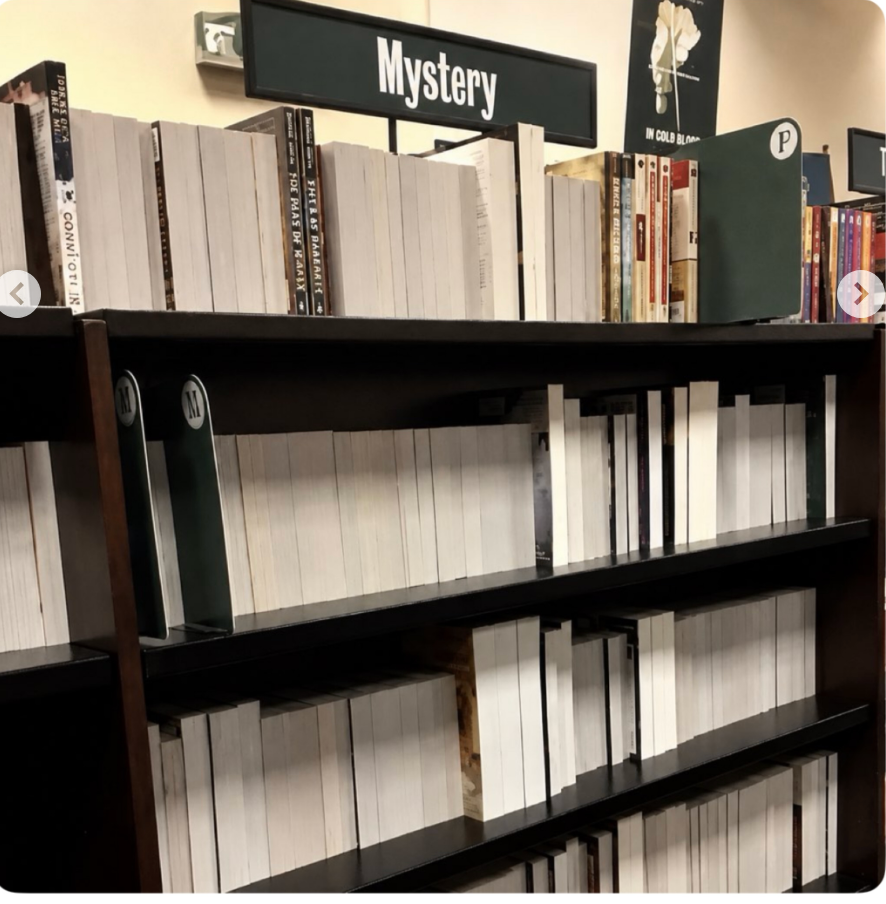
MSM 710: There Once Was a Book From Nantucket

Shawn, Dave, and Troy (cartoon versions), sitting at picnic table with Nantucket in the background.

Summary:

Shawn and Troy talk about talk about AI, time traveler, resources and more. Dave stresses High Quality like he always brings. 

Jokes:

Why did the iPhone go to the dentist? 

  • He had a blue tooth.

I needed detergent and a news magazine. I took too long to get to the store, and when I made it, both were sold out.

  • Time and Tide wait for no man.

A thief tried to steal the paintings at the Louvre in Paris. He was caught two blocks away when he ran out of gas. He said: I had no Monet to buy Degas to make the Van Gogh. But I tried because I had nothing Toulouse.


Will glass coffins ever become popular?

  • Remains to be seen.

If you could have dinner with anyone from history, who would it be?

  • I’d choose someone who likes to pick up the tab!

My friend is a professional sleepwalker.

  • He is living the dream.

Walking past a farm, I saw a sign that read ‘Duck, Eggs.’

I assumed it was an unnecessary comma…

Then it hit me.


What do you call a bunch of rabbits walking backward in a single-file fashion?

  • A receding hare line.

Purple is my favorite color!

I like it more than blue and red combined.


What was a more important invention than the first telephone?


Middle School Science Minute  

by Dave Bydlowski (k12science or davidbydlowski@mac.com)

K12Science Podcast: HQIM – High Quality Instructional Materials

I was recently reading the July/August 2026 issue of “Science Scope” a publication of the National Science Teaching Association.

In this issue I read an article written by Patty McGinnis. She wrote an article entitled “HQIM in Practice.”

Over the last decade, U.S. researchers have linked high-quality instructional materials (HQIM) and positive student learning outcomes. Examples include:

  • Open SciEd
  • Amplify Science
  • Smithsonian Science for the Classroom
  • Inquiry Hub
  • HMH Science Dimensions

Reports from the Front Lines

  • uncheckedThe Innovators
  • uncheckedThinking about making a local hosted AI . . . Podcast 711 – Next Show
  • uncheckedAI Literacy
  • uncheckedMichigan Legislature votes to extend certification deadlines for CTE teachers.  
  • uncheckedShawn’ PD  

The Social Web

Dublin City University   @dublincityuni.bsky.social

How can Ireland’s curriculum reform succeed if principals have no time to lead? New research from Dr. Sabrina Fitzsimons and Prof Catherine Furlong reveals high burnout among school leaders. Read the opinion piece in The Journal: launch.dcu.ie/4xgybXC #DCUResearch

Dublin City University    @dublincityuni.bsky.social

Is cursive handwriting still worth teaching in a world of laptops and touchscreens? Dr Sinéad McCauley Lambe from DCU Institute of Education joined Newstalk to explain why putting pen to paper remains essential. Listen to the full interview: launch.dcu.ie/4xlKPoe

Eric Curts @ericcurts.bsky.social

What’s New in Google for Schools? 🗓️ Join us online for our monthly GEG-Ohio meeting Monday, August 31st at 1pm ET 📰 Latest GoogleEDU updates 🧰 Helpful tips & resources ❓ Q&A 👉 Details here docs.google.com/document/d/1… #EduSky #EduSkyAI #EdTech #GoogleEDU

Eric Curts @ericcurts.bsky.social

Fantastic day at Leland Public School sharing my “Wrestle Rap Reflect” framework where students: 💪 Wrestle with content independent of AI 💬 Rap with AI to enhance & extend learning 🤔 Reflect on their use of AI to incorporate it All of my PD resources: bit.ly/curts-pd  

Resources:  

Stretch AI

Example Interaction: 

Your Prompt:  

I am interested in your ideas in strategies that integrate engagement-focused practices to replace objective posting in my classroom.  

Stretch’s Answer:  

Focusing on engagement-focused strategies that move beyond posting objectives can invigorate your classroom by making learning more student-centered, relevant, and meaningful. Here are some research-backed approaches you can integrate to spark authentic engagement:

  1. Start with Essential, Open-Ended Questions or Problems
    Rather than displaying specific daily objectives, introduce lessons with compelling “big questions” or real-world problems tied to student interests and current events. This invites curiosity and cognitive engagement, encouraging students to explore and wrestle with ideas rather than aiming solely to meet a posted goal (Three Ways to Engage Students in Any Lesson; New Thinking About Student Engagement).

    Example: Instead of “I can identify the Bill of Rights,” open with: “How do the rights guaranteed in the Bill of Rights shape our everyday freedoms today?” then let students investigate, discuss, and create responses.
  2. Give Students Choice and Voice in How They Learn and Demonstrate Learning
    Empower students to decide on how they want to explore a topic or show their understanding—through digital storytelling, debates, art projects, or coding challenges—to increase ownership and motivation. Flexible pacing, learning spaces, and paths allow learners to connect what they learn to their own interests and strengths (The Techy Teacher / When Students Drive the Pace, Space, and Path; Yes, You Can Motivate Your Students).

    Example: For a history unit, students might choose to create a podcast, develop a graphic novel, or lead a multimedia presentation on the same content.
  3. Focus on Collaborative, Authentic Learning Experiences
    Build lessons around tasks that have an authentic audience or real-world application, such as presenting to peers, authentic stakeholders, or publishing work online. This creates relevance and social motivation. Collaboration encourages behavioral and cognitive engagement through peer dialogue and shared inquiry (Three Ways to Engage Students in Any Lesson; What Students Have to Say About Improving Engagement).

    Example: Have students debate modern issues related to constitutional rights, then share reflections or solutions with community members or via classroom blogs.
  4. Use Reflective and Metacognitive Practices to Develop Engagement
    Invite students to reflect on their interests, learning strategies, and progress, encouraging self-regulation and deeper cognitive engagement. Instead of passively absorbing objectives, they monitor their own growth and set personal goals (New Thinking About Student Engagement; Yes, You Can Motivate Your Students).

    Example: Use exit tickets or journals where students reflect on what questions they still have or where they want to dig deeper.
  5. Adopt Engaging Language and Interaction Patterns
    Shift your teacher talk from compliance-oriented phrases (“Be ready to show me…”) to engagement-oriented ones (“Be ready to share your ideas…”), encouraging authentic participation and ownership (Small Shifts in Teacher Talk Make a Big Difference; Your Words Matter).
  6. Integrate Student Passions and Relevant Technology
    Connect learning to student interests (e.g., gaming, social media, pop culture) and use tech tools that facilitate creativity and collaboration. This relevance boosts motivation significantly (Three Ways to Engage Students in Any Lesson; Engagement is Everything, Especially Now).

These strategies emphasize authentic, dynamic learning experiences that foster behavioral, cognitive, and emotional engagement without relying on static posted objectives. They help students see learning as relevant, social, and self-directed—key elements for motivation and achievement.

Which of these approaches resonate most with your classroom style or current challenges? I can help you break down any into attainable steps or scaffold them for your specific content area.


Privacy reminder: When discussing classroom examples or student work, please avoid using any personally identifiable information.

Key Sources:

You can find Stretch AI over at stretchai.iste.org.  

Time Traveler

When was a word first used in print? You may be surprised! Enter a date below to see the words first recorded on that year. 

https://www.merriam-webster.com/time-traveler

Reading Maps

Journeys from fiction drawn on the real world

https://readingmaps.com

AXIS The Culture Translator – News

  • Australia’s much-touted social media ban for teenagers is falling apart (paywall) as state authorities find it impossible to outsmart the tech prowess of fifteen-year-olds. Naur! 
  • China’s big box office winner this week was made on a shoestring budget. The plot is a dream about a cow, or a dream of a cow, or perhaps a cow’s dream. The movie was praised for its “craftsmanship.” 
  • According to data from Eventbrite, events advertising shared hobbies (think mahjong or birdwatching) as “meet cutes,” or chances to meet potential romantic partners, increased by 117% over the last year. 
  • Fanfiction publishing platform Wattpad, a longtime haven for teens experimenting with fanfiction, updated its content guidelines. Some users were convinced (incorrectly) that Wattpad would no longer host sexually explicit content and fled to another platform called AO3. 

Mathsy Puzzles

https://puzzles.mathsy.space/ 

I Study Successful People. They Have One Habit in Common.

Most people understand the importance of asking for help in a life-or-death crisis. We know we should wave to the lifeguard during a riptide or call 911 if our house catches fire. But in our personal and professional lives, Americans are encouraged to pursue rugged individualism over interdependency. 

You might think I’d love the image of the solo striver triumphing over every challenge. After all, I’m a psychologist who wrote a book called “Grit” about the necessity of passion and perseverance for achieving long-term goals. 

Without exception, every high performer I’ve studied credits a host of supporters for success. Research has found that a willingness to ask for help is crucial to achievement.

Studies show that knowing when to ask for help is an essential skill for children’s learning and achievement.

From an early age, we suffer from what cognitive psychologists call the illusion of self-sufficiency, overlooking how much we owe our skills to other people.

Being a successful self-starter doesn’t mean pulling yourself up by your bootstraps. It’s raising your hand and asking a teacher to explain, once again, a concept you still don’t understand. It’s calling up a former boss for advice. It’s announcing to your team that you’re stuck on an important problem and need their collective brain to solve it. It’s not just stoically making the best of a bad situation — it’s proactively making your situation more supportive. Don’t assume you’re being a burden when you reach out asking for help. Research shows we consistently underestimate how happy it makes others to lend a hand.

https://www.nytimes.com/2026/08/28/opinion/successful-people-help.html?unlocked_article_code=1.81A.zyqa.NqJBufICo-dN&smid=nytcore-ios-share&utm_source=substack&utm_medium=email

Web Spotlight:

Bill Gates was an AI optimist. Now he’s scared of what could go wrong.

For years, Microsoft co-founder and philanthropist Bill Gates said he was optimistic that the world would become a better place thanks to artificial intelligence. He imagined the technology freeing people from work and speeding up inventions that would fight diseases and climate change.

https://archive.is/esGtO

The turbulent AI era is here. The choices we make now are critical.

When I first learned about computers at age 13 I was fascinated by the idea of making them more intelligent and able to perform things that, at the time, only humans could do. Although the term “AI” was used from around the time I was born, the technology has only made significant progress in the last decade. It is now incredibly capable and it is continuing to improve at a mind-blowing rate. AI for the first time can replace and even exceed human cognition.

https://www.gatesnotes.com/work/make-ai-work-for-everyone/reader/a-turbulent-ai-era-and-critical-choices-to-make

Modern Sumerian

The goal of Modern Sumerian is to help revive the language as a living means of expression. By building on the surviving texts and introducing new vocabulary for the modern world, the project aims to make it possible to use Sumerian not only to understand the past, but also to communicate ideas about life today.

https://modernsumerian.org

Report of MIT’s Ad Hoc Committee on AI Use in Teaching, Learning, and Research Training

In January 2026, MIT charged the Committee on AI Use in Teaching, Learning, and Research Training, to assess how instructors and students are currently using generative AI, identify innovations it allows and challenges it presents in teaching and assessment, and propose an AI use policy.

Click the Play button below to listen to the show!

MSM 709: If It’s Wet and Not Yours …

MSM 709: If It’s Wet and Not Yours …

Summary:

Shawn and Troy talk about going back to school, AI in education, and more. Dave takes the kids out, er, outside.

Jokes:

What kind of trousers does a ghost hunter wear?

  • Just a paranormal jeans

What do you call a man with 3 eyes?

  • Seymour

Jokes about defection aren’t usually my favorite, but they are a solid #2. 


If you’re attacked by a mob of clowns…

Go for the juggler.


Never challenge death to a pillow fight.

  • Unless you’re prepared for the reaper cushions.

The Energizer Bunny just got arrested.

They charged him with battery.


The robbers took everything from my house, but I’m most upset they took my mirror. I can’t see myself without it.


I’m never again donating money to anyone collecting for a marathon.

They just take the money and run!


Did you know there’s no official training for a garbage collector? 

They just pick it up as they go.


Did you know that 10 plus 10 and 11 plus 11 equal the same thing?


Middle School Science Minute  

by Dave Bydlowski (k12science or davidbydlowski@mac.com)

K12Science Podcast: Taking Students Outside

I was recently reading the May/June, 2026 issue of “The Science Teacher,” a publication of the National Science Teaching Association. 

In this issue I read an article written by Gregory MacDougall. He wrote an article entitled “Taking Students Outside: A Framework for Making Science Real.”

Gregory shared a four-part framework for outdoor science instruction:

1. Explore the school grounds with purpose.

2. Connect standards to outdoor phenomena.

3. Plan specific student actions using the science and engineering practices.

4. Extend learning through reflection and action.

https://k12science.net/taking-students-outside/

Reports from the Front Lines

The Social Web

Dublin City University   @dublincityuni.bsky.social

Transitioning back to school can feel overwhelming for neurodivergent children. Dr

Leanne Connolly of DCU Institute of Education

shares tips on using visual schedules, adjusting bedtimes, and practising everyday skills to ease anxiety. Read in Irish Examiner: launch.dcu.ie/4bU81kS

MiddleWeb @middleweb.bsky.social

REVIEW: TOOLS TO BUILD STUDENTS’ MATH AGENCY Rather than prescribing one way to teach, Kristen Smith offers smart ideas & practical frameworks teachers can match to their own contexts, says Amy Leach. #edusky #iteachmath #math  @routledgebooks.bsky.social  #mtbos www.middleweb.com/54039/cultiv…

AMLE @amleorg.bsky.social

We are proud to announce the 2026 Class of AMLE Schools of Distinction! 🎉Gather ideas for successful middle school best practice in our mini PD library at amle.org/sod. We can’t wait to celebrate these schools at #AMLE26: The Annual Conference for Middle Level Education in Nashville this November!

Brickfield Education Labs @brickfield.bsky.social

Resource spotlight: Accessible images, by WebAIM There are many additional accessibility principles and techniques regarding images. Explore some techniques on how to create accessible images Visit: webaim.org/techniques/i… #BrickfieldTips #Accessibility

Eric Curts @ericcurts.bsky.social

New PD Session – AI Prompts for Language Arts – www.controlaltachieve.com/2026/08/ela-… ✨ Loads of AI prompts for literacy, reading, writing & language 📄 Free resource document 💻 Free slideshow #EduSky #EduSkyAI #EdTech

Strategies:  

ACE in Math: Three Questions That Show Real Understanding

Here is a simple way to use ACE during conferring, tutoring, or homework help:

ACE StepAsk ThisListen For
Articulate“What is this problem asking?”The student can explain the situation in plain language
Connect“Why did you use that operation?”The student can give a reason, not just name a rule
Extend“Can you make up a problem like this?”The student can use the idea in a new situation

https://blog.tcea.org/ace-in-math-three-questions-that-show-real-understanding

Resources:  

MyNotes: Cognitive Surrender

https://mguhlin.org/blog/2026-07-14-mynotes-cognitive-surrender

Students are anxious – and it’s no surprise, since we are teaching them to be that way

https://theconversation.com/students-are-anxious-and-its-no-surprise-since-we-are-teaching-them-to-be-that-way-285575

The Rithm Project

Showing parents and students the relationship between humans and AI.  The Spark Project has resources to use with both parents and students.  The AI Effect is a resource game to play with students to get them to talk about evaluating the use of AI in schools.  

https://www.therithmproject.org/products  and https://drive.google.com/file/d/1q3dXSuMKPGApjIapxFga1UBwGxJme9kl/view?usp=sharing for their free AI Research Conversation Cards.  

Scriblit

My Short Answer is now Scriblit.  Same AI writing support activity with some new features and still district level purchase only for the full suite of tools.  

https://scriblit.com

Documentary Heaven

Brainrot Posters for Middle School

Social Studies based posters addressing middle school brainrot . . . 

https://www.teacherspayteachers.com/Product/Brainrot-Classroom-Rules-Posters-for-Middle-School-Civics-US-History-17318535

Web Spotlight: 

What Do Students Lose When They Stop Writing?

https://archive.is/bGiYM

Stop Defining Human Skills by What AI Cannot Do

Every list of essential human skills I have read in the last three years was assembled the same way. Someone looked at what the current AI models could not do, wrote those things down, and called it a framework.

  • In 2023 the list included long-form writing. Then it did not.
  • In 2024 it included coding. That one is going fast.

https://www.ajjuliani.com/blog/stop-defining-human-skills-by-what-ai-cannot-do

Longitudinal effect of early social media use on standardized learning outcomes during school career

This study uses difference-in-differences models to evaluate the impact of early social media use on academic performance among children aged 7–16 years. A dataset comprising 5,227 students from northern Italy was constructed by merging data from a questionnaire on lifetime digital media habits with longitudinal standardized test scores in Italian, English and mathematics. Participants who created a personal social media account in 6th, 7th or 8th grade were separately matched with late adopters who initiated their first social media account in the 9th grade or later. The findings provide compelling evidence that early engagement with social media adversely affects learning outcomes. Additional findings on the effects of early social media use on other academic outcomes for which we do not have longitudinal data are in line with our main findings. We also find supporting evidence that a substantial part of this negative effect is mediated by students’ smartphone pervasiveness in key moments of the day.

https://www.nature.com/articles/s41562-026-02522-4

‘I hate what AI is doing to the minds and happiness of the young’: Katherine Rundell on the view from the classroom

Education is at a crossroads, argues the author and academic. Should we embrace new technology in the name of efficiency, or is it time to fight back?

https://www.theguardian.com/books/ng-interactive/2026/aug/08/i-hate-what-ai-is-doing-to-the-minds-and-happiness-of-the-young-katherine-rundell-on-the-view-from-the-classroom

Facebook Billionaires Walkout on Impoverished Students

The Generative AI Learning Penalty: Evidence from Chinese Secondary Education

Using 30 months of panel data on 26,811 Chinese students in grades 7-12, we study how generative AI affects homework productivity and learning. The data combine monthly closed-book exams, high-school and college entrance exams, and homework scores and completion time across nine subjects. We exploit staggered AI adoption in a difference-in-differences design. AI adoption raises homework scores by 18% and reduces completion time by 30%, but lowers monthly exam scores by 20% within six months. High-stakes entrance-exam scores fall by 18 and 24%, with the full penalty emerging only after about two years. The losses are largest in social science subjects, followed by STEM and languages, and are especially large for junior students, high-achieving students, and boys. The learning losses are concentrated among roughly 80% of AI users whose behavior is consistent with homework outsourcing, as indicated by exceptionally short homework completion time coupled with high homework scores. AI users who maintain similar homework completion time as non-AI users experience small learning losses.

https://papers.ssrn.com/sol3/papers.cfm?abstract_id=6868618 

Click the Play button below to listen to the show!

MSM 708: Gradual Release in Middle School

MSM 708: Gradual Release in Middle School

Summary:

Shawn and Troy talk about AI, learning, executive functioning, and more. Dave builds literacy. (*Note there is a short time of scratchy audio, not the whole show)

Jokes:

I before e except after c has been disproved by science.


Believing in 12.5% of the Bible makes you an eight-theist.


My friend lost her job as a set designer…

She wasn’t very happy about it, but left without making a scene…


I said to the gym instructor: Can you teach me to do the splits? He said: How flexible are you? I said: I can’t make Tuesdays.


Teacher: Give me a sentence using the words defense, defeat, and detail…

Me: When a horse jumps over defense, defeat go before detail…


If the Internet had a boat, where would they park it? 

  • In Google Docs.

Just saw a guy running down the road with a cape on, so I shouted, ‘Hey! Are you a superhero!?’

He yelled, ‘No, I didn’t pay for my haircut!’


Can you believe it says in the Bible that men should make their wife’s coffee every day?

Yep, it’s right there in Hebrews.


I blame Mother Earth for all earthquakes. 

  • It’s her fault.

What do you have if you meet a cranky sheep and cow?

  • Animals in a Baaaaaad Moooooood

This space is for puns only. Anyone posting videos of themselves playing music with friends should consider themselves banned.


When your pet bird sees you reading the newspaper, does he wonder why you’re just sitting there, staring at carpeting?


Ever caught yourself wondering…

How much does a Grecian earn?


Middle School Science Minute  

by Dave Bydlowski (k12science or davidbydlowski@mac.com)

K12Science Podcast: Building Science Literacy

I was recently reading the May-June, 2026 issue of “Science and Children” a publication of the National Science Teaching Association. 

In this issue, I read the Science 101 column written by Matt Bobrowsky. It was entitled “Q: How Can I Build Science Literacy for Lifelong Learning (Using Thermal Insulation)?”

We can build science literacy by teaching students that science is a process of asking questions, testing ideas, using evidence, and explaining results — skills they will use far beyond the classroom.

https://k12science.net/building-science-literacy/

Reports from the Front Lines

The Social Web

Eric Curts @ericcurts.bsky.social

Are you attending #ISTELive? Add to the shared resource doc here: bit.ly/iste26-share 🎉 Mixers, Events, Meetups 🧑 Attendee Information 🗣️ Promote Your Sessions 🍽️ Restaurants & Attractions ✋ Questions 🧰 Learning Resources #ASCDAnnual #EduSky #EdTech

@isteofficial.bsky.social

Bernie Goldbach “topgold” @topgold.ie  @kolebri.bsky.social

while watching students write with AI, some researchers saw their subjects seek out red threads of personal outlines, discarding AI suggestions theconversation.com/college-stud…

MiddleWeb @middleweb.bsky.social

NEW: Imagine Teacher Sharing Across 5 Generations When one generation of teachers dismisses another, both lose the chance to listen, learn, and grow in our intergenerational workplaces, writes Dr. Debbie Silver. #edusky #edleadership #teachersky #principalsky www.middleweb.com/53842/imagin…

Larry Ferlazzo @larryferlazzo.bsky.social

This Week’s Free & Useful Artificial Intelligence Tools For The Classroom larryferlazzo.edublogs.org/2026/07/28/t…

AMLE @amleorg.bsky.social

As the new school year approaches, invest in yourself with AMLE’s virtual experiences for middle level educators. You’ll find opportunities to learn, connect, and stay engaged on the AMLE Events Calendar: amle.org/events

Resources:

Google Earth & Nano Banana 

Take images on Google Earth and transform them using Nano Banana 2.  For example, go to the Roman Forum in Rome and use the Nano Banana integration to take it back to 4 BC.  Keep in mind that it modifies the current image, not recreate the Earth so that it is an exact historical representation of the Roman Forum in Rome in 4 BC.  

https://blog.google/products-and-platforms/products/earth/nano-banana-google-earth-image-generation

Buzz – Slack for Agents

“Buzz is a free, open source team workspace built by Block (Jack Dorsey’s company) and released on July 21, 2026. It looks like Slack: channels, threads, DMs, voice. With one fundamental difference: AI agents aren’t integrations or bots. They’re team members with their own cryptographic identity, their own permissions, and their own audit trail. It also ships code repositories, which puts it in competition with GitHub too.”  

https://4geeks.com/en/blog/ai-powered-learning/what-is-buzz-jack-dorsey-slack-alternative

National History Day 2027

“The theme for National History Day® (NHD) 2027 is Innovation in History: Impact, Influence, Change. Innovation goes beyond creating new tools or devices to finding new ways of thinking, organizing, and influencing society. To put it simply, innovation, at its core, is about change and the impact of that change.”

https://nhd.org/en/contest/theme/

Web Spotlight:

The “August-Ready” Digital Cleanout: Organize Your Teaching Files This Summer

https://blog.tcea.org/the-august-ready-digital-cleanout-organize-your-teaching-files-this-summer

Click the Play button below to listen to the show!