MSM 356:  AMLE, Poetry, Blended Sixth Graders.

MSM 356:  AMLE, Poetry, Blended Sixth Graders.


Jokes You Can Use:


Last night I had a bad dream. I dreamt I was a muffler.

  • I woke up exhausted.


Before they invented drawing boards, what did they go back to?


What do you call a part time band leader?

  • A semi-conductor


There was this limo driver who was in business for 25 years without a single customer…

  • All that time and nothing to chauffeur it.


Middle School Science Minute  

by Dave Bydlowski (k12science or davidbydlowski@mac.com)

Best STEM Books — Part 2


I was recently reading the February, 2017 issue of “Science Scope,” a magazine written for middle school science teachers, published by the National Science Teachers Association.  


In this issue, I read an article on the best STEM Books for 2017, for students in grades K-12, as recommended by the National Science Teachers Association.  In this second of a two part series, we look at 5 of the recommended books that are appropriate for middle school students.  Titles include:

Steve Jobs: Insanely Great

Super Gear: Nanotechnology and Sports Team Up

Trailblazers: 33 Women in Science Who Changed the World

Welcome to Mars

Women of Stone and Steel


http://k12science.net/Podcast/Podcast/Entries/2017/4/12_Middle_School_Science_Minute__Best_STEM_Books_Part_2.html


From the Twitterverse:  

AMLE‏ @AMLE

These novels teach learning from loss & overcoming adversity, great for #middleschool http://edut.to/2nNcgsC  via @Edutopia #growthmindset

MiddleWeb‏ @middleweb

NEW: Poetry Writing Made Fun–10 Cool Teaching Ideas. @CherylTeaches #elachat @ncte #poetrymonth #nwp #educoach @amle https://www.middleweb.com/34549/poetry-writing-made-fun-10-teaching-ideas-for-april/ …

AMLE‏ @AMLE

#Quote from today’s AMLE Newsletter. Get the newsletter w/ free Associate Membership http://bit.ly/2mAtbtX

Kelly Malloy‏ @kellys3ps

10 Wordless Videos That Teach Problem Solving – Could also be used as writing prompts or to practice re-telling http://buff.ly/2pgFHmu

AMLE‏ @AMLE

Removing Imaginary Boundaries Around Content – Teacher and students benefit from an integrated curriculum http://bit.ly/2p5pIYJ  #mschat

Kenneth Ward‏ @kennethdward

Why I Read to My Middle School Students #oklaed #mschat  https://www.weareteachers.com/read-middle-school-students/  


Tan Huynh‏ @TanELLclassroom

3 types of #scaffolding for all SS. #ellchat #chatesl #ellchat_bkclub #ell #educhat #teachchat #WIDA #k12 #ESOL http://wp.me/p7NKW2-nl

#mschat every Thursday at 8:00 pm Eastern Standard Time.  And as Troy says, “The Twitter never stops!”  


Strategies:


Blended Learning


  1. Blended Beats Virtual
  2. Choose and Train the Right Teachers
  3. Student Engagement is Essential
  4. Parents Need to Be Educated, Too
  5. You Need Support Over Time
  6. Decide What Scaling Means to You

http://www.gettingsmart.com/2017/04/6-best-practices-for-expanding-a-blended-learning-initiative/


Homework Alternatives


http://www.teachthought.com/pedagogy/alternatives-to-homework-a-chart-for-teachers/


Resources:


College-Ready Sixth Graders

Mike Petrilli, Big Cheese at the Fordham Institute, a reliably reformy thinky tank, is concerned. While he allows that some students and families are uber-stressing about the whole college thing, the rest of us should be in a greater state of panic:


We need the majority of parents and kids to be more stressed out. We need to shake them out of their complacency and tell them: You and your kids are heading toward a coming-of-age catastrophe, but you can avoid it if you act now! [emphasis his]


http://curmudgucation.blogspot.com/2017/04/college-ready-sixth-graders.html


Interactive Word Wall

An Interactive word wall can transform spaces in your classroom. They provide a way for students to engage with content in an authentic matter and promote a sense of curiosity among your students.

http://classtechtips.com/2016/11/09/create-interactive-word-wall-scannabletech%EF%BB%BF/


Random Thoughts . . .


Personal Web Site

MSM 355: The Ron King Award Show

MSM 355: The Ron King Award Show


Jokes You Can Use:


Why was Peter Pan banned from using any Airline?


My books all piled on top of me, I’ve only got my shelf to blame.

I read this book about Mount Everest… It was quite the cliff hanger!


Two engineers were standing at the base of a flagpole, looking at its top. A woman walked by and asked what they were doing.

“We’re supposed to find the height of this flagpole,” said one, “but we don’t have a ladder.”

The woman took a wrench from her purse, loosened a couple of bolts, and laid the pole down on the ground. Then she took a tape measure from her pocketbook, took a measurement, and announced, “Twenty one feet, six inches,” and walked away.

One engineer shook his head and laughed, “A lot of good that does us. We ask for the height and she gives us the length.”


Eileen Award:  

  • Twitter: Ron King (Special LifeTime award)


Advisory:


Habituation

As human beings, we get used to “the way things are” really fast. But for designers, the way things are is an opportunity … Could things be better? How? In this funny, breezy talk, the man behind the iPod and the Nest thermostat shares some of his tips for noticing — and driving — change.

https://www.ted.com/talks/tony_fadell_the_first_secret_of_design_is_noticing


Creativity

The process of being creative can be fun and take on different “looks”.  The Swingle Singers are a vocal group that jump starts the creative writing juices with a writing exercise.  They get three words in an envelope.  They pair up and have to come up with a song that builds off of those three words.  Here’s an example:  Tree, Friend(s), and Attack.    https://www.facebook.com/TheSwingles/videos/10155002322541421/


National Day…

April 8th

http://www.nationaldaycalendar.com/


Mindfulness makes a difference in schools


Relaxation techniques calm K12 students and staff, leading to better grades and better behavior.


“We decided to respond to our students’ anxiety, rather than have to deal with the behavioral challenges,” Hanscom says.

Districts that succeed in making mindfulness a regular part of the school day—and an impactful part of students’ lives—start by training the adults in their buildings to become competent practitioners, says Saltzman, whose Menlo Park, California-based mindfulness practice operates training programs in schools.

And a little time spent on mindfulness at the beginning of class can pay off. “A teacher may think, I can’t add another thing to my day,” Saltzman says. “But what teachers find is, if they start class with five minutes of mindfulness—movement, breathing, journaling—most teachers will report ending up with more teachable time.”

“There were just so many layers of yuck to get through before we could get to academics,” Achterhoff says. “If we don’t address the trauma, then the kids are going to become stunted in academic growth.”

Teachers who use the techniques report improvements in behavior, and that students often ask to take short yoga or breathing breaks so they can refocus on instruction.

https://www.districtadministration.com/article/mindfulness-makes-difference-school  


Middle School Science Minute  

by Dave Bydlowski (k12science or davidbydlowski@mac.com)

Best STEM Books, Part 1


I was recently reading the February, 2017 issue of “Science Scope,” a magazine written for middle school science teachers, published by the National Science Teachers Association.  


In this issue, I read an article on the best STEM Books for 2017, for students in grades K-12, as recommended by the National Science Teachers Association.  In this first of a two part series, we look at 5 of the recommended books that are appropriate for middle school students.  Titles include:

  1.  Emmet’s Storm
  2.  Genetic Engineering: Science, Technology, and Engineering
  3.  A Global Warming Primer: Answering Your Questions About the Science, the Consequences, and the Solutions
  4.  Red Madness: How a Medical Mystery Changed What We Eat
  5.  Sabotage: The Mission to Destroy Hitler’s Atomic Bomb


http://k12science.net/Podcast/Podcast/Entries/2017/3/27_Middle_School_Science_Minute__Best_STEM_Books_Part_1.html

Lithuania Update for Dave

From the Twitterverse:  

Scott McLeod‏ @mcleod

Strategizing Your BYOT Implementation, Part 1 | @mguhlin http://bit.ly/2npImKu  #edcolo #iaedfuture


MiddleWeb‏ @middleweb

REVIEW: An essential guide to becoming an ELA teacher. @HeinemannPub #educoach #elachat @ncte #mschat #teachered https://www.middleweb.com/34545/making-the-journey-as-an-ela-teacher/ …


AMLE‏ @AMLE

#MiddleSchool educators, submit an article to AMLE Magazine & share your sch & classrm ideas that make a difference


Jerry Blumengarten‏ @cybraryman1

My PLN (Personal Learning Network) page https://www.cybraryman.com/pln.html  #nt2t Build a PLN of passionate educators who are willing to connect & share

Rick Wormeli‏ @rickwormeli2

Scratching My Head: Project 180, Day 129 http://www.letschangeeducation.com/?p=1704  via @MonteSyrie


Jessica Van de Kemp‏ @jess_vdk

Helpful ‘closure’ activities for teachers and students: http://edut.to/2mOfYOA  via @finleyt @edutopia #edchat #hschat #mschat


Jasper Fox Sr.‏ @JasperFoxSR

Calling for a “Timeout” on Rubrics and Grading Scales http://jfox.cc/2crkJc3  essential reading frm: @rickwormeli2


David Geurin‏ @DavidGeurin

12 Rules Of Great Teaching – http://buff.ly/2p8QhIP  via @TeachThought

Paul Chenoweth‏ @bruingeek

I approve of this message:

#mschat every Thursday at 8:00 pm Eastern Standard Time.  And as Troy says, “The Twitter never stops!”  


Strategies:


How to support wiggly students

In fact, according to Nea.org, “A 2008 study found that children actually need to move to focus during a complicated mental task. The children in the study—especially those with attention-deficit/hyperactivity disorder (ADHD)—fidgeted more when a task required them to store and process information rather than just hold it. This is why students are often restless while doing math or reading, but not while watching a movie, explained Dr. Mark Rapport, the supervisor of the study and professor of psychology at the University of Central Florida in Orlando.”


  1. Redirect
  2. Experiment.
  3. See what’s on the market for support.


http://smartbrief.com/original/2017/04/how-support-wiggly-students


No Grade Is Too Early for Flexible Seating

A decade ago, I watched college students break out for small group work on hallway benches, on the floor in the corner, and standing at tables. I noticed that kindergartners could learn while standing, kneeling, huddling under a table, and even sitting in a wooden cubby. I saw my principal take a reading group to the office, where students loved to cram themselves beside the copier, between UPS boxes, and under a table. All this got me thinking: Why do we work at desks? Why stop students from wiggling? Could we purposefully educate students to recognize the locations they work best in?


Plan your transition to flexible seating with:

  • a variety of workspaces
  • clear expectations for behavior
  • guidelines for where/how students may work
  • consequences for abuse of the seating options

When developing your seating options, consider the needs of different activities:

  • clipboards for writing
  • flat surfaces for word work sorts
  • comfort for pleasure reading
  • stability for electronics

Offering just one or two seating options may put your students in the same boat as traditional seating. Just as traditional seating doesn’t work for everyone, flexible seating may not either.


https://www.edutopia.org/blog/no-grade-is-too-early-flexible-seating-john-s-thomas

Resources:

WriteAbout

WRITE. Find creative inspiration to write. Make their writing better. Have fun writing. Share their writing. Read other students’ writing. Respond to writing. Write some more.

https://www.writeabout.com/


Web Spotlight:


Random Thoughts . . .  


Personal Web Site


MSM 354:  The “Rat Hole” Show and a Half


Jokes You Can Use:


What’s the difference between a Hippo and a Zippo?


What always runs, but never walks, often murmurs, but never talks, has a bed but never sleeps, has a mouth but never eats?


Two men are in a desert. They’re both wearing backpacks. One of the men is dead. The man who is alive, has his pack open. The dead man’s pack is closed. What is in their packs?


What has rivers with no water, forests but no trees, and cities with no buildings?


I am the beginning of the end, and the end of time and space. I am essential to creation and I surround every place. What am I?


The manufacturer doesn’t need it, the buyer doesn’t want it, and the user doesn’t know that they are using it. What is it?


You leave home, make three left turns and return home where you find two men wearing masks. Who are they?


If you are running in a race, and you pass the person in second place, what place are you in?


You can easily touch me, but you can’t see me. You can throw me out but not away. What am I?

Advisory:


The Invisible Gorilla

https://www.youtube.com/watch?time_continue=4&v=vJG698U2Mvo

http://www.theinvisiblegorilla.com/videos.html


Appolo Robbins – The Art of Misdirection

Evelyn Glennie


Middle School Science Minute  

by Dave Bydlowski (k12science or davidbydlowski@mac.com)

CoCoRaHS


I was recently reading the February, 2017 issue of “Science Scope,” a magazine written for middle school science teachers, published by the National Science Teachers Association.  


In this issue, I read the the Citizen Science article, “Citizen Science for a Rainy (or Snowy) Day: The Community Collaborative Rain, Hail and Snow Network.” It was written by Jill Nugent.  The article describes the CoCoRaHS Network, a nonprofit network hosted by Colorado State University with support from NOAA.  The goal of the network is to report weather data that will then be used by meteorologists.  For more information, please visit:

http://www.cocorahs.org


http://k12science.net/Podcast/Podcast/Entries/2017/3/23_Middle_School_Science_Minute__Citizen_Science-CoCoRaHS.html


From the Twitterverse:  

Scott McLeod‏ @mcleod

What We Ask of Our Students and What we Do | @conprin http://bit.ly/2olWQuR  #cpchat #edadmin


Eileen Harrity‏ @EileenHarrity

Eileen Harrity Retweeted edutopia

Interesting video of a London school that focuses on wellbeing, PBL, & oracy (like literacy, but for oral presentation of info).

Miguel Guhlin‏ @mguhlin

Immersive Reader Samples  https://t.co/mnPT4b9tEU  


Sean Marie Sweeney‏ @ssweeney602

Help ESL students learn vocabulary using the app Aipoly Vision @aipoly http://aipoly.com/  #edtech


Snagit‏ @Snagit

BREAKING NEWS! New product offering from TechSmith​, the makers of Snagit:


Seesaw‏ @Seesaw

Engage students by creating a listening station for your classroom today! http://bit.ly/2mkYdot

#mschat every Thursday at 8:00 pm Eastern Standard Time.  And as Troy says, “The Twitter never stops!”  


Strategies:


Read This Before You Ever Make Fun of Comic Sans Again


http://narrative.ly/read-this-before-you-ever-make-fun-of-comic-sans-again/


Fonts and Dyslexia

  1. CONCLUSIONS AND FUTURE WORK The main conclusion is that font types have an impact on readability of people with dyslexia. Good fonts for people with dyslexia are Helvetica, Courier, Arial, Verdana and CMU, taking into consideration both, reading performance and subjective preferences. Also, sans serif, monospaced, and roman font types increased significantly the reading performance, while italic fonts decreased reading performance. In particular, Arial It. should be avoided since it significantly decreases readability.

http://dyslexiahelp.umich.edu/sites/default/files/good_fonts_for_dyslexia_study.pdf


A DSA Assessor noted student preference for 1.5 line spacing. It is likely that line length, line spacing and font size are just as important. Bigelow and Holmes make this point in their 2014 review of research which found no evidence for a best typeface for dyslexia. Arnold Wilkins showed that children aged 7 to 9 read better with a bigger font size

Comic Sans is the most popular Microsoft font for children. However, some dyslexic adults consider it looks childish. They love it or hate it. It was designed for comic strips. It is not considered professional in the publishing or academic worlds. There is even a ‘ban comic sans’ web! It meets all dyslexic ‘likes’ except mirrored b and d.


https://bdatech.org/what-technology/typefaces-for-dyslexia/


Based on the evaluation of 48 dyslexic subjects ages 11-50, reading 12 texts with 12 different fonts, they determined that reading performance was best with sans serif, monospaced, and roman fonts used in the study. They also found that reading was significantly impaired when italic fonts were used.

As someone who has wrestled with the issue of font choice and legibility for years, I was not surprised at the poor performance of OpenDyslexic. Although the font has been widely promoted as being designed for dyslexics, I find the font clunky and difficult to read, and others I have talked to had mixed reactions (some liked it, others not).

At the same time, I question an assumption underlying the researchers’ conclusion that font design is paramount. It seems to me that their research showed simply that the most commonly used fonts were also the ones that were the easiest for their subjects to read.  I remember how my son struggled as child with cursive, and his own insistence for using 14 pt. Times New Roman for all of his own written work.  I think familiarity with the type face and individual letter forms may be particularly important for dyslexic readers.  It may be that dyslexics are far more sensitive to minor variations in letter shape, form, and spacing. That they did best with the font sets that they were most likely to have been exposed to in the past does not necessarily mean that those fonts are the best for everyone.

https://blog.dyslexia.com/good-fonts-for-dyslexia-an-experimental-study/


Dsylexie Font

Free for home use, special pricing for schools.

https://www.dyslexiefont.com/en/


List of Fonts

https://www.dyslexic.com/fonts/


OpenDyslexia

http://opendyslexic.org/


Potential Google Fonts

https://fonts.google.com/specimen/Slackey

https://fonts.google.com/specimen/Chelsea+Market


3 Things to Know About “Dyslexic Fonts”

What if people with dyslexia could read more easily by switching to a special font? That’s the promise behind several typeface designs created in recent years. Here are three things to know about all fonts:

1) While font design can impact reading effectiveness, reading time and perceptions of legibility, this holds true for all readers including those who have dyslexia and those who do not.

2) It’s important to compare apples to apples. Many factors need to be taken into account when comparing fonts including text characteristics, text size, line and character spacing and computer display settings.

3) There are tradeoffs. For example, research points to a relationship between fonts, reading accuracy and reading speed. Some studies show fonts that are read faster may also read less accurately.

Still thinking about switching fonts? Whether you have dyslexia or not, experimenting with fonts may be worthwhile and boils down to personal preference. Above all, it’s important to remember for those who have dyslexia there are no quick fixes and switching fonts is not a substitute for a Structured Literacy approach to reading instruction.


https://dyslexiaida.org/3-things-to-know-about-dyslexic-fonts/


I made my classroom look like the real world…and test scores soared


The school year is a simulation of adulthood where students work, create, and learn about personal finance and entrepreneurial skills. They experience real-world situations and gain insights into global affairs. Students tend to view my classroom less as a “classroom” and more of an interactive city where all projects intertwine to create an ecosystem of businesses and homes.

Each student has the opportunity to become an entrepreneur, politician, banker, and more. They are given $1,000 in Johnsonville cash to begin their lives. Students must buy a house or rent an apartment, earn wages, and manage their finances. As the children buy and sell items I donate, they learn math skills along with life lessons.

Students are in control. Other teachers trying PBL often tell me, “my kids can’t do it” or “it’s a lot of work.” I think the real issue here is teachers not wanting to give up control of their classrooms. PBL gives me the freedom to facilitate and encourage critical thinking. Additionally, I find students work better when the teacher isn’t hovering over them. PBL promotes students to think creatively and build the 21st-century skills they need to be successful in today’s job market.


http://blog.ed.ted.com/2017/02/22/i-made-my-classroom-look-like-the-real-world-and-test-scores-soared/


Resources:

Opened.com

Assessment resource with lesson plans and over 700,000 games, audio, lesson plans, assessments and more . . . some for free.  


ESSA Resources

The website is produced by the Center for Research and Reform in Education (CRRE) at Johns Hopkins University School of Education, in collaboration with a distinguished Technical Work Group and a Stakeholder Advisory Group. It is information solely intended to be useful to educators and the public and has no official status.

https://www.evidenceforessa.org/


Material Review

EdReports.org is an independent nonprofit designed to improve K-12 education. EdReports.org increases the capacity of teachers, administrators, and leaders to seek, identify, and demand the highest-quality instructional materials. Drawing upon expert educators, EdReports.org’s evidence-based reviews of instructional materials and support of smart adoption processes will equip teachers with excellent materials nationwide.


http://www.edreports.org/#?f=&o=0


Music Creation

Soundation is a powerful online music studio with professional features like recording, effects, virtual instruments and over 700 free loops and sounds.


Soundation Chrome is the latest version of our online studio and is developed using Google Native Client for Chrome web browsers. This means a faster and more stable environment with lower latency and CPU usage and does not require Flash. Soundation Chrome has an entirely new audio engine and we made it as “backward compatible” as possible with the flash version of Soundation Studio so it looks and loads all your previously created songs.

https://soundation.com/


BandLab is the easy-to-use, all-in-one, social music creation platform.


https://www.bandlab.com/


Web Spotlight:


Erosion


Images of Change — http://cleanet.org/resources/42813.html

Dig This! Erosion Investigation — http://ngss.nsta.org/Resource.aspx?ResourceID=481

Investigating Erosion — http://ngss.nsta.org/Resource.aspx?ResourceID=511


I Learned Nothing, I Just Googled The Parts of the Cell

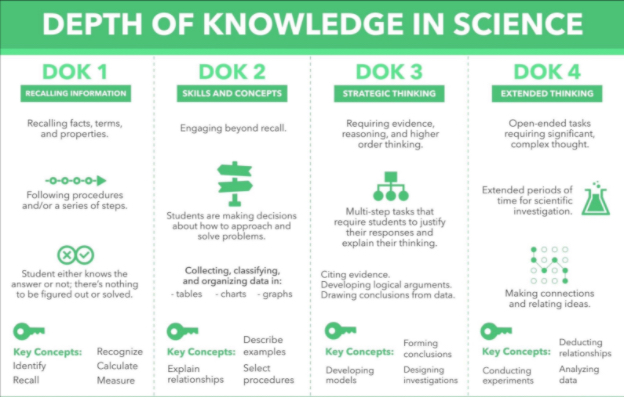
Can we get real? There are a lot of well-intentioned assignments and projects that frankly have very little LEARNING that goes with them. Create a poster of the solar system. The kid spends a lot of time (and money on supplies) with the outcome that they can (hopefully) identify the 7 planets. This is a DOK 1 task… and maybe even DOK 0.

http://alicekeeler.com/2017/03/26/learned-nothing-just-googled-parts-cell/

Random Thoughts . . .  


And Now for Something Completely Different:  https://www.facebook.com/LRT.sestadienis/videos/1761409750815614/

Play this in class one day as they come in.  Just for fun.  


Personal Web Site


MSM 352:  Almost no Oscar, Almost …Vocabulary, Comics and MAMSE

MSM 352:  Almost no Oscar, Almost …Vocabulary, Comics and MAMSE


Jokes You Can Use:


This sentence contradicts itself… no, wait, actually it doesn’t.


The Law of Volunteering”

If you dance with a grizzly bear, you had better let him lead.


“The Law of Avoiding Oversell”

When putting cheese in a mousetrap, always leave room for the mouse.


“The Law of Common Sense”

Never accept a drink from a urologist.


“The Law of Reality”

Never get into fights with less attractive people, they have less to lose.


“The Law of Self Sacrifice”

When you starve with a tiger, the tiger starves last.


“Weiler’s Law”

Nothing is impossible for the man who doesn’t have to do it himself.


“Law of Probable Dispersal”

Whatever hits the fan will not be evenly distributed.


“Law of Volunteer Labor”

People are always available for work in the past tense.


“Conway’s Law”

In any organization there is one person who knows what is going on. That person must be fired.


“Iron Law of Distribution”

Them that has, gets.


“Law of Cybernetic Entomology”

There is always one more bug.


At a church in Mississippi, the pastor announced that their prison choir would be singing the following evening. I wasn’t aware there was a prison in the vicinity, so I looked forward to hearing them.


The next evening, I was puzzled when members of the church approached the stage. Then the pastor introduced them.


“This is our prison choir,” he said, “they’re behind a few bars and always looking for the key.”


Eileen Award:  

  • iTunes:  And the Oscar goes to . . . Tsunami_rtr!  

Middle School Science Minute  

by Dave Bydlowski (k12science or davidbydlowski@mac.com)

Systems Thinking


I was recently reading the January, 2017 issue of “Science Scope,” a magazine written for middle school science teachers, published by the National Science Teachers Association.  


In this issue, I read the the Editor’s Desk article, “Systems Thinking Solutions.” It was written by Patty McGinnis, Editor of Science Scope.  The article describes how the cross-cutting concept of systems and system models is critical to science because it fosters understanding of the interconnectedness of system components.


http://k12science.net/Podcast/Podcast/Entries/2017/3/9_Middle_School_Science_Minute__Systems_Thinking.html


From the Twitterverse:  

AMLE‏ @AMLE

#MiddleSchool educators, submit an article to AMLE Magazine & share your sch & classrm ideas that make a difference http://bit.ly/2kQmljC

MiddleWeb‏ @middleweb

Ready to sharpen up your vocabulary instruction? Check out the excellent articles in our collection: https://www.middleweb.com/category/articles/vocabulary-articles/ … #elachat @ncte

Todd Bloch‏ @blocht574

Look who showed up @MI_MAMSE #MAMSE Great to have Pam here in Michigan! Next year it’s you Dru! #mschat

Kelly Malloy‏ @kellys3ps

Easy to make math game for practicing math facts http://buff.ly/2mL2rcV

Diane Ravitch‏ @DianeRavitch

Singapore Will Drop Grades, Reduce Testing http://dianeravitch.net/2017/03/11/64299 …


Mental Floss‏Verified account @mental_floss

“I love deadlines. I like the whooshing sound they make as they fly by.” —Douglas Adams, who was born on this day in 1952


Troy Hicks‏ @hickstro

Dr. Johnston makes me wonder why, WHY we are so focused on Lexile scores and reading logs when a reading life is so much more. #mrapassport


Kelly Malloy‏ @kellys3ps

10 Classroom Discussion Techniques my guest post @RachelLynette ‘s Minds in Bloom blog http://buff.ly/2noJTMF


#mschat every Thursday at 8:00 pm Eastern Standard Time.  And as Troy says, “The Twitter never stops!”  


Strategies:


Teachers create coding course


http://www.hometownlife.com/story/news/local/westland/2017/02/22/teachers-create-coding-course/98231362/


Comics with Google Slides

How to Create Comic Strips in Google Slides.

https://www.youtube.com/watch?v=dcTbckKjvpM


Resources:


Tinycards

Easy way for students to study using Flashcards. Easy to create. Study process is automated with some choices.

https://tinycards.duolingo.com


Strong Passwords

It is more important than ever to have a good password.

http://www.freetech4teachers.com/2017/03/how-to-create-strong-passwords.html#.WMQVmBIrJdA


Web Spotlight:


Working from home


https://youtu.be/Mh4f9AYRCZY


Random Thoughts . . .  

Personal Web Site

MSM 351:  Fire that Fox (or Bringing Shawn’s web to it’s knees), Moodle Use and Grading.


Jokes You Can Use:


What’s the difference between Roast Beef and Pea Soup?  


If fortune tellers know the future, how come it’s so difficult to find a happy medium?


The manager of a large city zoo was drafting a letter to order a pair of animals. He sat at his computer and typed the following sentence: “I would like to place an order for two mongooses, to be delivered at your earliest convenience.”

He stared at the screen, focusing on that odd word “mongooses.” Then he deleted the word and added another, so that the sentence now read: “I would like to place an order for two mongeese, to be delivered at your earliest convenience.”

Again he stared at the screen, this time focusing on the new word, which seemed just as odd as the original one. Finally, he deleted the whole sentence and started all over. “Everyone knows no fully stocked zoo should be without a mongoose,” he typed. “Please send us two of them.”

Middle School Science Minute  

by Dave Bydlowski (k12science or davidbydlowski@mac.com)


Citizen Science — Nova’s Energy Labs


I was recently reading the December 2016 issue of “Science Scope,” a magazine written for middle school science teachers, published by the National Science Teachers Association.  

In this issue, I read the the Citizen Science article, “Power Up Science Learning with NOVA’s Energy Lab.” It was written by Jill Nugent.  The article describes the process by which students and teachers can get involved in a citizen science project — NOVA’s Energy Lab..  For more information, please visit:

http://www.pbs.org/wgbh/nova/labs/about


http://k12science.net/Podcast/Podcast/Entries/2017/2/24_Middle_School_Science_Minute__Citizen_Science-NOVA_Labs.html


From the Twitterverse:  

Dr. Justin Tarte‏ @justintarte

The problem with typical grading methods visualized beautifully here by @tguskey: #sblchat #education #edchat

Graph showing passing as A-D, and failing as F. Passing is thus a large area versus failing being a small area. Another graph shows percentage grading scale where passing is a small area (100-70) and failing is a large area.

Miguel Guhlin‏ @mguhlin

RT An excellent resource for helping students discern fake news: http://ly.tcea.org/xqpmc . #students #cybersecurity via #TCEA

AMLE‏ @AMLE

Middle Level Education Month is in full swing. Shine a spotlight on the great things at your school! #MLEM17 http://bit.ly/1pIIXUK

MiddleWeb‏ @middleweb

See our TOP POST this week? Teaching writing doesn’t have to be scary. @jserravallo #elachat #educoach #nwp #ntchat https://www.middleweb.com/34208/5-ideas-to-make-writing-more-fun-to-teach/ …

Jonathan Oosting‏Verified account @jonathanoosting

Michigan schools can avoid potential closure under a new ‘partnership’ model from state.  

Miguel Guhlin‏ @mguhlin

MT Chrome Extension: AnyoneCanView http://alicekeeler.com/2017/01/26/chrome-extension-anyonecanview/ … http://alicekeeler.com/2017/01/26/chrome-extension-anyonecanview/ … via https://twitter.com/alicekeeler/status/837893838010212352 …


#mschat every Thursday at 8:00 pm Eastern Standard Time.  And as Troy says, “The Twitter never stops!”  


Strategies:


Who uses computers for math drill and practice? [SLIDE]

http://dangerouslyirrelevant.org/wp-content/uploads/2017/03/Scott-McLeod-Slides.007.jpeg


12 structures to keep kids focused when using the internet in class

Listen:  https://www.acast.com/angelawatsonstruthforteachers/s5ep04-twelve-structures-to-keep-kids-focused-when-using-the-internet-in-class  


How to search for publicly shared Google Documents, Presentations, and Spreadsheets.

https://www.youtube.com/watch?v=rYDR4vaLBGE


Resources:

Three Myths About “Reading Levels”


Psychologists love to measure things, and perhaps nothing has been measured as much by psychologists as reading–both texts and readers.  


Such misguided policies and practices are based on three very prevalent myths about reading levels:

Myth #1: Each text has a discrete, accurately measurable reading level.

Myth #2: Each reader has a discrete, accurately measurable level of reading skill.

Myth #3: Readers should (almost always) read texts very near their reading level.


Reading research has repeatedly demonstrated the effects of prior knowledge on reading comprehension; simply put, it is easier to read and understand texts that talk about things you already know a lot about.


https://www.psychologytoday.com/blog/reading-minds/201702/three-myths-about-reading-levels


Web Spotlight:


I AM A CHRONIC ABSENTEE.


A few weeks back, a local news channel here in the Triangle covered an issue that they feel is a major problem:  Teachers who are “chronically absent.”  

Their definition of “chronically absent?”

Any teacher that misses more than 10 days of school in a single school year.

  • 6 for PD and conferences
  • 2 for a sick daughter
  • 1 for being sick “as a dog”
  • 1 to get first hour covered to set up for students.

http://blog.williamferriter.com/2017/03/03/i-am-a-chronic-absentee/


ISS Video Feed

https://www.urthecast.com/live/


Random Thoughts . . .  

Personal Web Site


MSM 350:  It’s a Manic Moodle Monday Test Prepping!

MSM 350:  It’s a Manic Moodle Monday Test Prepping!


Jokes You Can Use:  

Poodle: “My life is a mess. My owner is mean, my girlfriend is leaving me for a German shepherd, and I’m as nervous as a cat.”

Collie: “Why don’t you go see a psychiatrist?”

Poodle: “I can’t. I’m not allowed on the couch.”


A man goes to the doctor for a checkup. The doctor checks him out thoroughly doing various tests. He then goes back to his table and sits down. “I’m prescribing these pills for you,” he says.

Noting the weird name of the prescription, the man asks, “What am I taking now?”

“Oh, I don’t want you to swallow them. Just spill them on the floor twice a day and pick them up, one at a time.”


I wrote a book about birds…

It flew off the shelf.


Advisory:


Are you the Majority?


*Short ad at the end.


Prisencolinensinainciusol

Instead, pick a language you don’t know, but can roughly approximate what it sounds like when spoken. Then, “speak” it, making up a nonsense version of that language as you go along. Now, take your “words” and put it to music which you think is appropriate for that language’s culture. If you do it well, you’ll end up with a song which to a native speaker is gibberish, but to someone who doesn’t know the language sounds like it could be real.


http://nowiknow.com/prisencolinensinainciusol/


Middle School Science Minute  

by Dave Bydlowski (k12science or davidbydlowski@mac.com)


Tapping Into Energy

I was recently reading the December, 2016 issue of “Science Scope,” a magazine written for middle school science teachers, published by the National Science Teachers Association.  

In this issue, I read the the Editor’s Desk article, “Tapping Into Energy.” It was written by Patty McGinnis, Editor of Science Scope.  The article describes how the topic of energy is one that touches every middle school science classroom regardless of the science discipline taught.

http://k12science.net/Podcast/Podcast/Entries/2017/2/17_Middle_School_Science_Minute__Tapping_Into_Energy.html


From the Twitterverse:  

Jordan Hubbard ‏@_MsHubbard  

Jordan Hubbard Retweeted Jack Berckemeyer

Bahah love my 8th graders.

Jordan Hubbard added,

Jack Berckemeyer @JBerckemeyer

If you teach middle school you know that 8th graders invented alternative facts – just saying 🙂

Big History Project ‏@BigHistoryPro

If you teach history, you teach writing: http://bh-p.co/2jBN9ql  #satchat #edchat

#mschat every Thursday at 8:00 pm Eastern Standard Time.  And as Troy says, “The Twitter never stops!”  

Stacy St. Clair ‏@StacyStClair

Another president’s take: – at Tribune Tower

Dr. Justin Tarte ‏@justintarte

If you’re looking for a list of educators to follow on #twitter, I’d recommend starting here: http://goo.gl/m3Nlul  #knobpride #education


Glenn Robbins ‏@Glennr1809

Hey #PLN please follow & RT to show one of my great teachers the power of Twitter PD! @AmyLeeBrewin

History News! ‏@historynews

Fashions for February 1813 http://twonerdyhistorygirls.blogspot.com/2017/02/fashions-for-february-1813.html … #twitterstorians

Aaron Duff, M.Ed. ‏@education_geek

Students will tell you…if you ask! #WritetoLearnMO #edchat #elemchat

Todd Distelrath ‏@tdistelrath

Anti-Common Core bill looks to replace MI standards with old Mass. standards. Mass. currently uses CC. http://on.freep.com/2lbZtv6  via @freep


#mschat every Thursday 8:00 pm.  Join Todd Bloch for a great conversation!  

Strategies:


Sharing Resources, Preparing for tests


Discussion of sharing resources and preparing for tests.


26 Research-Based Tips You Can Use in the Classroom Tomorrow


https://www.edutopia.org/article/26-research-based-tips-you-can-use-in-classroom-tomorrow-todd-finley


Resources:


Presidential Historians Survey

C-SPAN’s academic advisors devised a survey in which participants used a one (“not effective”) to ten (“very effective”) scale to rate each president on ten qualities of presidential leadership: “Public Persuasion,” “Crisis Leadership,” “Economic Management,” “Moral Authority,” “International Relations,” “Administrative Skills,” “Relations with Congress,” “Vision/Setting An Agenda,” “Pursued Equal Justice for All,” and “Performance Within the Context of His Times.”

Surveys were distributed to historians and other professional observers of the presidency, drawn from a database of C-SPAN’s programming, augmented by suggestions from the academic advisors. Ninety-one agreed to participate. Participants were guaranteed that individual survey results remain confidential. Survey responses were tabulated by averaging all responses in a given category for each president. Each of the ten categories was given equal weighting in arriving at a president’s total score.


https://www.c-span.org/presidentsurvey2017/


Learn about the past Presidents of the United States


https://www.google.com/culturalinstitute/beta/project/american-democracy


Women in History

A collection of interviews with people who were there at key moments in women’s history


http://www.bbc.co.uk/programmes/p01jb8q3


7 Google Forms


http://www.educatorstechnology.com/2017/02/7-great-google-forms-templates-to-use.html


Web Spotlight:


Random Thoughts . . .  

Personal Web Site


MSM 349:  Teach those video and audio skills.

MSM 349:  Teach those video and audio skills.


Jokes You Can Use:


“There are so many cemeteries in your neighborhood.”

“I know, people are just dying to live here.”


The magazine about ceiling fans went out of business…

… due to low circulation.


One day, I saw a friend of mine crying over a bag of chips.

I asked him what’s wrong and he said that he was just following the instruction written on the bag of chips.

“Tear here to open!”


George Washington was such a great president.

He never blamed any of the country’s problems on the previous administration.


My sister explained to my nephew how his voice would eventually change as he grew up.

Tyler was exuberant at the prospect.

“Cool!” he said. “I hope I get a German accent.”

Eileen Award:  

  • iTunes:  Anonymous Listener


Advisory:

FEAR has two meanings: Forget Everything and Run, or Face Everything and Rise.

Americans

How are we different than the rest of the world?

http://www.fashionbeans.com/content/odd-things-about-america-that-americans-havent-realized/?loc=0

Middle School Science Minute  

by Dave Bydlowski (k12science or davidbydlowski@mac.com)


Science Cafes


I was recently reading the November, 2016 issue of “Science Scope,” a magazine written for middle school science teachers, published by the National Science Teachers Association.  


In this issue, I read the the article, “Science Cafes.” It was written by Arianne Bazilio, Amy Ryan, and Jennifer Welborn.  The article describes an affordable, easy-to-implement model that introduces young girls to STEM-related topics, careers, and role models.


http://k12science.net/Podcast/Podcast/Entries/2017/2/2_Middle_School_Science_Minute__Science_Cafes.html


From the Twitterverse:  

ReadWriteThink.org ‏@RWTnow

Civil rights activist Rosa Parks was born today in 1913. Students consider her legacy in this lesson plan: http://bit.ly/brRi2u


Bill Ferriter ‏@plugusin

This was a good @lifehacker read: Everything You Need to Shoot Good-Looking Video With Your iPhone – http://bit.ly/2kGZ9my  #edtech


Matt Miller ‏@jmattmiller

Google Classroom: Check In with Students http://ift.tt/2k754BI  via alicekeeler #DitchBook #gsuiteedu


George Couros ‏@gcouros

How Being Bored Makes You More Creative

https://t.co/CupKYArSMk


Tom Loud, Ed.S ‏@loudlearning

Dinosaurs Didn’t Read! Don’t Risk It! #edchat #education

Will Richardson ‏@willrich45

How is Finland building schools of the future? http://buff.ly/2k3DF3x  Interesting.


Ted Fujimoto ‏@tedfujimoto

How Schools Build A Positive Culture Through Advisory via @TeachingChannel http://ow.ly/WWSwv  #edreform #edchat #stemed #edpolicy #stem


EdTech K–12 Magazine ‏@EdTech_K12

Help your #students create solid @Google Portfolios by following these steps:

https://t.co/oCoXcghqq8

Mahara:  https://mahara.org/  


#mschat every Thursday at 8:00 pm Eastern Standard Time.  And as Troy says, “The Twitter never stops!”  


Strategies:


Positive Notes

A simple idea built on a suggestion from my friend Chris Tuttell, Kudos Cookies are short, handwritten notes of praise paired with a sweet treat.  I write anywhere from two to eight notes every morning — depending on how much time I have after arriving at school — and make deliveries all day long.

The good news is that Matt Townsley and Santo Nicotera have found a solution.  Both are starting every faculty meeting with the same agenda item:  Writing positive notes to two kids that are hand delivered the next morning.

http://blog.williamferriter.com/2017/02/04/want-better-faculty-meetings-start-here/


Teaching Good Study Habits, Minute by Minute

Take studying, for example. If you are a parent of a struggling or resistant learner, you’ve probably heard more than one person suggest, “She just needs to study more.” Most kids think this means filling in a study guide or rereading a chapter. But many don’t learn by writing or reading. Their strengths lie in the visual, kinesthetic, musical, or social realm. How, then, are we to help our children develop their studying skills?

https://www.edutopia.org/blog/good-study-habits-minute-by-minute-heather-lambert


Resources:


Twisted wave

Audio editor. Available online or for Mac and iOS. (Think of GarageBand).

Need to register for a free account. Free account is limited to 5 minute projects and one hour total. Projects are kept for 30 days.


https://twistedwave.com/


Hemingway App

Interesting writing feedback for students.

“Now, when we say “grade level,” we aren’t saying that’s who you’re writing for. In fact, Ernest Hemingway’s work scores as low 5th grade, despite his adult audience. What our measurement actually gauges is the lowest education needed to understand your prose. Studies have shown the average American reads at a tenth-grade level — so that’s a good target.”

http://hemingwayapp.com/

http://hemingwayapp.com/help.html


Google Forms

Use them to collect information for yourself.

http://ditchthattextbook.com/2017/01/30/quick-google-forms-time-savers-for-teachers/


Web Spotlight:


Charter Schools spend MORE on administration

A new report finds that New Orleans schools spend more on administration and less on teaching than than they would have if they had not undergone a transformation to charter schools after Hurricane Katrina.

The drop in instructional expenses — $706 per student — is due mainly to lower salaries and reduced benefits for instructional staff, Harris and Buerger found.

But salaries make up just a third of the instructional spending drop.  Half of it is due to reduced spending on benefits.

http://thelensnola.org/2017/01/17/study-says-new-orleans-schools-spend-more-on-administration-and-less-on-teaching-after-charter-transformation/


Random Thoughts . . .  


Personal Web Site


MSM 348:  Goldilocks and the Three . . . err Forebears!

Jokes You Can Use:


Hey, Thanks for defining “many” for me. It really means a lot.


French guy (showing me his yachts): This is Un. This is Deux. This is Trois. This is Quatre. This is Six.

Me: Where’s the 5th?

FG: Cinq.


And the award for best neckwear goes to..

Well would you look at that, it’s a tie


I let a Pasta Chef borrow my car and he returned it all denty


Mozart was a great composer, but now that he’s dead he’s a great decomposer.


Why do we call it “hiring a hitman” and not “ordering takeout”


“You have to look at the big picture” – Aggressive museum guard


*Abe Lincoln on trial*

Judge: How do you find the defendant?

Foreman: We find the defendant in a cent.


Eileen Award:  

  • Twitter:  Holly Berchet-Hall

Advisory:

Forebears

“So, Where are you from?” Use a geographic “heatmap” of last names to find out!  

http://forebears.io/surnames  


Middle School Science Minute  

by Dave Bydlowski (k12science or davidbydlowski@mac.com)

eBird


I was recently reading the November, 2016 issue of “Science Scope,” a magazine written for middle school science teachers, published by the National Science Teachers Association.  


In this issue, I read the the Citizen Science article, “Fly Into Schoolyard Citizen Science with eBird.” It was written by Jill Nugent.  The article describes how classrooms can join 100,000 users providing accessible bird data to the online global community.  For more information, please visit:

http://ebird.org/content/ebird/

http://k12science.net/Podcast/Podcast/Entries/2017/1/25_Middle_School_Science_Minute__Citizen_Science-eBird.html


From the Twitterverse:  

Larry Ferlazzo ‏@Larryferlazzo

Our School Is Not “Flush With Cash” & Our Students Are Not “Deprived Of All Knowledge” http://larryferlazzo.edublogs.org/2017/01/20/our-school-is-not-flush-with-cash-our-students-are-not-deprived-of-all-knowledge/ …

OJ DeJonge MS ‏@OJ_Orioles

Congrats to all of the participants in the Geo Bee, and thank you to the Social Studies dept. for their hard work! #OJpride

Kids on stage with speaker at podium.

Matt Miller ‏@jmattmiller

Stop doing too much: The ‘minimum effective dose’ for educators http://ditchthattextbook.com/2014/04/14/stop-doing-too-much-the-minimum-effective-dose-for-educators/ …


John R. Sowash ‏@jrsowash

Multitask with ease on your #Chromebook! http://bit.ly/2j3V9ga  #techtips #edTech


MiddleWeb ‏@middleweb

MiddleWeb Retweeted MindShift

Handy reflection and conversation tool for coaches and instructional partners… #educoach #alpartners #coteachat

Infographic of Coaching Competencies

Diane Ravitch ‏@DianeRavitch

Peter Greene Confesses: Trump is Right: I am Flush with Cash and I Don’t Teach Anything! http://ln.is/dianeravitch.net/201/1L01K …

https://dianeravitch.net/2017/01/21/peter-greene-confesses-trump-is-right-i-am-flush-with-cash-and-i-dont-teach-anything/


#mschat every Thursday at 8:00 pm Eastern Standard Time.  And as Troy says, “The Twitter never stops!”  


Strategies:


Students with Scattered Minds


Explicit instruction about executive function and how to improve it is especially useful for students with learning challenges, as they can benefit the most from learning to rein in and consciously direct their “scattered minds.”

https://www.edutopia.org/blog/strategies-students-scattered-minds-donna-wilson-marcus-conyers


Play-doh Art

* Why is your creation art?  Review your notes and materials and write an ABC paragraph responding to this question (Answer the question; Back it up with a quote as evidence; make a further Comment or Connection to elaborate on your position.

http://larryferlazzo.edublogs.org/2017/01/22/play-doh-ib-theory-of-knowledge-student-hand-out-videos/

Resources:


6 Practices that “Work” to Accelerate Student Learning

In education, we are often inundated with programs, curriculums, and frameworks that are “guaranteed to increase student learning”. Promises of a silver bullet that will fix all learning difficulties find their way to teachers and administrators alike.


  1. Teacher credibility (.90 effect size) Trust, competence, energy, enthusiasm, and consistency are among the top characteristics students consider when determining if their teacher is credible and if they are going to choose to learn from them.
  2. Teacher-Student Relationships (.72 effect size) Positive teacher-student relationships involve trust, fairness, open communication and maintenance to sustain and impact student learning.  
  3. Classroom Management (.52 effect size) Students understand expectations and are consistently held to those expectations. Promotes healthy relationships with teachers and peers.  
  4. Self-Reported Grades/Student Expectations (1.44 effect size) Students set their own goals, monitor their own achievement, and reflect upon their process of learning.
  5. Teacher Clarity (.75 effect size) Learning targets are clear and articulated with success criteria. Students should be able to answer: What am I learning today? Why am I learning this? How will I know that I learned it?
  6. Feedback (.75 effect size) Just-in-time feedback identifies where the student is at, what the expectation is, and actions they can take to close the gap.


https://shaelynnfarnsworth.com/2017/01/18/6-practices-that-work-to-accelerate-student-learning/


30 Of The Best Books To Teach Children Empathy


http://www.teachthought.com/pedagogy/50-of-the-best-books-to-teach-children-empathy/

Web Spotlight:


A new movement to treat troubled children as ‘sad, not bad’

The concept behind these so-called “trauma-informed schools” is supported by research showing that traumatized students — those who have been exposed to repeated violence, abuse and deprivation — maintain such high levels of vigilance and anxiety that they cannot flourish at school until they can calm themselves.

http://hechingerreport.org/a-new-movement-to-treat-troubled-children-as-sad-not-bad/


Random Thoughts . . .  


Personal Web Site


MSM 347:  Practice is Best Practice

MSM 347:  Practice is Best Practice


Jokes You Can Use:  


Student: “I’m cold”.

Teacher: “Go stand in the corner, it’s usually about 90 degrees there”.


What do you call a belt made of watches?

A waist of time.


Why can’t bicycles stand on their own?

They are two tired.


What’s the best thing about living in Switzerland?

Well, their flag is a big plus.

Flag of Switzerland hanging from a building.

How long is a Chinese name.

Middle School Science Minute  

by Dave Bydlowski (k12science or davidbydlowski@mac.com)

Literacy Engagement


I was recently reading the October, 2016 issue of “Science Scope,” a magazine written for middle school science teachers, published by the National Science Teachers Association.  

In this issue, I read the the article, “Literacy Engagement and Its Role in the Science Classroom.” It was written by Kaitlyn McGlynn and Janey Kozlowski.  In the article they talk about the importance of helping students unlock science content through reading engagement.

http://k12science.net/Podcast/Podcast/Entries/2017/1/5_Middle_School_Science_Minute__Literacy_Engagement.html


From the Twitterverse:  

Derek McCoy ‏@mccoyderek

9 Fundamental Digital Skills for 21st Century Teachers

Poster with Digital Skills

Dru Tomlin ‏@DruTomlin_AMLE

A6. A6. Convos w/ other Ts/admins/colleagues, Twitter (#mschat too), & have This We Believe 2 remind me what a Gr8 middle school is #satchat

Meredith Johnson ‏@mjjohnson1216

A1. Love this chart that explains personalization, differentiation and individualization for the learner. #satchat

Tony Vincent ‏@tonyvincent

Recap for iOS, Android & Web is a free way to collect short selfie videos from students. http://letsrecap.com

Christopher Weiss ‏@ChrisWeissCT

RT @Alex_Corbitt Powerful 4-Step Learning Sequence (by @4OClockFaculty) #edchat #education #edtech #engchat #sunchat #satchat #leadupchat

Will Richardson ‏@willrich45

5 Big Ideas In Education That Don’t Work http://buff.ly/2ivJ6d4  Shocking.

Dru Tomlin ‏@DruTomlin_AMLE

A6. And of course I turn to http://www.amle.org  and @AMLE when I need middle grades help! Got everything 4 #middleschool #satchat

Oliver Schinkten ‏@schink10

10 Skills All Students Need to Be Successful https://learning.linkedin.com/blog/education/10-skills-all-students-need-to-be-successful … on @LI_Learning

Brad Currie ‏@bradmcurrie

All It Takes is 100 Minutes a Week #Satchat

edutopia ‏@edutopia

Create a rockstar rubric with this editable template: http://edut.to/2ipbf2f .


https://docs.google.com/document/d/1OCpYFYkcIwOwa0d5BCcTH5xahQ6GiaS1PnP0O3lqMsY/edit#

#mschat every Thursday at 8:00 pm Eastern Standard Time.  And as Troy says, “The Twitter never stops!”  


Strategies:


New Year’s Resolution: I’m Moving ALL Assessment into the Classroom

This may sound like a crazy resolution given that most teachers spend hours of time outside of school assessing their students’ work. However, there are three reasons I’d argue we should NOT spend our time outside of class grading:

  1. Our prep time is better spent designing creative and engaging lessons.
  2. Real-time feedback and assessment are way more effective.
  3. We don’t get paid for the time we spend grading outside of class.

http://catlintucker.com/2017/01/new-years-resolution/


Practice is Best Practice

As I have sat down with students who are not doing well in my class over the past 17 years, one recurring conversation has gone something like this: “Mr. Harrison, I’m studying for your tests, but I’m still not doing well on them. I don’t know what else to do.” I would reply, “Well, how exactly are you ‘studying’?”

The responses have usually gone something like this: “Well, I read over the study guide, I read over the notes, I read the book…”

http://techcoaches.dearbornschools.org/2017/01/11/practice-is-best-practice/


Ten things we may be doing wrong in middle school


https://medium.com/@irasocol/ten-things-we-may-be-doing-wrong-in-middle-school-510bc0b9f069#.u5syivqc5


How To Make Writing Report Cards Easier

You can make writing your report cards quicker and easier by completing one simple action right now!

You need to match your assessment tasks to your report card.

http://www.evidencebasedteaching.org.au/how-to-make-writing-report-cards-easier/

Resources:


Mars Challenge Winners

Look at the winning submissions.

http://ajjuliani.com/thousands-students-participating-marschallenge-maker-project/

All Entries:

https://drive.google.com/drive/u/0/folders/0B3IX5e8RaR6xekN4bE96UWZ2OEE


Web Spotlight:


Poet: I can’t answer questions on Texas standardized tests about my own poems

Badly worded or poorly conceived questions on standardized tests are not uncommon (remember the question about a “talking pineapple” on a New York test in 2012?). But here’s something new: The author of source material on two Texas standardized tests says she can’t actually answer the questions about her own work because they are so poorly conceived.

https://www.washingtonpost.com/news/answer-sheet/wp/2017/01/07/poet-i-cant-answer-questions-on-texas-standardized-tests-about-my-own-poems/?utm_term=.e224738a5e14


Academic Write Center

Lots of resources. You might want to share this with kids, or know about it for plagiarism.

https://academichelp.net/


How Design Thinking Became a Buzzword at School

At a recent teaching conference in Richmond, Virginia, a session on “design thinking” in education drew a capacity crowd. Two middle-school teachers demonstrated how they had used the concept to plan and execute an urban-design project in which students were asked to develop a hypothetical city or town given factors such as population, geography, the environment, and financial resources.

Design thinking, like Carol Dweck’s work on fixed and growth mindsets and Angela Duckworth’s research on grit, are best understood in context, as a complex and nuanced approach to learning rather than a checklist of executable tasks. Dweck was so alarmed by the rampant oversimplification of fixed and growth mindsets that she wrote an article for Edutopia to clear up common misconceptions about her work. Just as Dweck’s work can’t be conveyed adequately in a Life Hack infographic, and Duckworth’s research is apt to be misunderstood when reduced to a listicle, design thinking seems likely to fail as an educational tool when communicated in terms of “Five Simple Steps.”

https://www.theatlantic.com/education/archive/2017/01/how-design-thinking-became-a-buzzword-at-school/512150/


Are you a blithering fool? Here’s 10 words to make you sound smarter

http://www.freep.com/story/news/local/michigan/detroit/2017/01/03/wayne-state-word-warriors-smarter/96100822/


EVO

Since 2000, the Electronic Village Online (EVO), has been offering free professional development workshops for English language educators around the world. Organized by volunteer coordinators, with five-week sessions conceived and facilitated by teams of volunteer moderators, the EVO is open to anyone (TESOL members and non-members alike) with a computer or smart phone and an internet connection. No academic credit is offered for either moderating or participating in an EVO session; it is a labor of love–the love of learning, and the love of sharing what we have learned.

The EVO was originally conceived as a project of TESOL’s Computer-Assisted Language Learning Interest Section (CALL-IS). Almost since the beginning, IATEFL members and SIGs have also been involved in the EVO, as participants, moderators, and coordinators.

http://evosessions.pbworks.com/w/page/10708567/FrontPage


Random Thoughts . . .  

Personal Web Site


MSM 346:  Goodbye 2016, Strategies and a Funeral.

Jokes You Can Use:


Why couldn’t the butterfly go to the fancy New Year’s Eve dance?

It was a moth ball!


Q: What did the janitor yell when he jumped out of the closet?

A: “Supplies!”


A New Year’s resolution is something that goes in one year and out the other.


An optimist stays up until midnight to see the new year in…

A pessimist stays up to make sure the old year leaves.


“I don’t know what more they want? They give me questions I don’t know, I give them answers they don’t know.”


So, how do you get down off this elephant?

You don’t. You get down off a goose.

Advisory:


The Case Against Sugar

https://aeon.co/essays/sugar-is-a-toxic-agent-that-creates-conditions-for-disease


The Present

What do you see in others?

Steve Jobs on Asking


New Laws for 2017 (and some old ones)  

Silly laws still on the books.  

New California Laws for 2017

Because we teach Middle School . . .

Quilted Northern Commercial  

Middle School Science Minute  

by Dave Bydlowski (k12science or davidbydlowski@mac.com)

PHENOMENAL ENGAGEMENT


I WAS RECENTLY READING THE OCTOBER, 2016 ISSUE OF “SCIENCE SCOPE,” A MAGAZINE WRITTEN FOR MIDDLE SCHOOL SCIENCE TEACHERS, PUBLISHED BY THE NATIONAL SCIENCE TEACHERS ASSOCIATION.  


IN THIS ISSUE, I READ THE THE ARTICLE, “PHENOMENAL ENGAGEMENT.” IT WAS WRITTEN BY SUSAN GERMAN.  IN THE ARTICLE SHE DISCUSSES HOW TO ENGAGE STUDENTS THROUGH THE USE OF RELEVANT SCIENTIFIC PHENOMENA.  


http://k12science.net/Podcast/Podcast/Entries/2016/12/15_Middle_School_Science_Minute__Phenomenal_Engagement.html


From the Twitterverse:  

Tanya Snook ‏@tanyapsnook

This is what it is about. Kids will move mountains for teachers they respect and like.

Students work hardest quote.

Mark Dunk ‏@unklar

xkcd: 2017 http://buff.ly/2hDiKW6

Jon Gordon ‏@JonGordon11

Make 2017 a great year!

Michael Beschloss ‏@BeschlossDC

Abraham Lincoln issued his Emancipation Proclamation tomorrow 1863—here from his early handwritten draft:

Common Sense Media ‏@CommonSense

Wondering what to download for the kids tonight? Here are 10 NYE-themed movies for ages 3-17: http://bit.ly/2iAtEup

#mschat every Thursday at 8:00 pm Eastern Standard Time.  And as Troy says, “The Twitter never stops!”  


Resources:


ListenWise

Based on NPR podcasts, this site provides the podcast segments and lesson plans. The basics are free. There is a tie in with Socrative as well. (You get a code that you can use to Import a quiz into Socrative. You must have a teacher account with Socrative, then go to Quizzes, Add a Quiz, import and enter the code). The questions that I looked at were pretty short and simple. Still, this could be a great option to get some stories for kids to listen to. It also brings out the possibilities of using podcasts (NPR in particular), for kids to listen to and react. Tie this into reading skills. Naturally, I would use Moodle to provide students that audio and follow up questions.


There is a premium option that includes interactive transcripts, student accounts and more. Pricing is not straightforward though (you need to request a quote, there are no costs listed).

https://listenwise.com/


Primary Sources Sets at DPLA


We’ve talked about DPLA (Digital Public Library of America) before. Now, they also have primary source sets.

https://dp.la/primary-source-sets/

Web Spotlight:


Counting on Your Fingers

How high can you count on your fingers? (Spoiler: much higher than 10) – James Tanton


4 Non-Negotiables for Schools

http://georgecouros.ca/blog/archives/6939


TED Periodic Videos

http://ed.ted.com/periodic-videos


Time For These Seven Edu Funerals

These things are so embedded in the culture, frameworks, policies, practice and mindsets of our schools and educational organizations, that many educators just blindly accept them, implement them and perpetuate them…..all regardless of their lack of success. Indeed, there is often overwhelming data or evidence that these things are not only unsuccessful, but often counterproductive.

  1. Homework As We Know It.
  2. Lecturing, Note Taking.
  3. Non-Digital Approaches
  4. Textbooks – Digital or Not.
  5. Factory-Style Classrooms.
  6. Final Exams.
  7. Fear & Compliance.


http://changingislearning.blogspot.com/2016/12/time-for-these-seven-edu-funerals.html


GUEST POST: A Student Tries out the Six Strategies for Effective Learning

I put these six evidence-based strategies to the test for the past six weeks. I used a different strategy each week to prepare for my weekly Research Methods quizzes, examining my own experience using each strategy, the difficulty (regarding time or thought) that went into it, as well as how I perceived the overall effectiveness of the strategy, as well as my own results with using it.

  1. Spaced Practice
  2. Retrieval Practice
  3. Elaboration
  4. Interleaving
  5. Concrete Examples
  6. Dual Coding


http://www.learningscientists.org/downloadable-materials/

http://www.learningscientists.org/posters

Random Thoughts . . .  

A New Year’s Message from Mr. David:  

DEAR Friends,

The Boarding on Flight 2017 has been announced……

Hope you have checked in only the best souvenirs from 2016 in your luggage….

The BAD and SAD moments if carried, must be thrown away in the garbage on arrival …….

The flight will be for 12 months long.

So, loosen your seat belts, jingle and mingle.

The stop-overs will be :


✳Health,

✳Love,

✳Joy,

✳Harmony,

✳Well-being

✳Peace.


Refueling will be at

👍Giving

👍Sharing   

👍Caring.


The Captain (God) offers you the following menu which will be served during the flight…….


✅ Cocktail of Friendship,

✅ Supreme of Health,

✅ Grating of Prosperity,

✅ Bowl of Excellent News

✅ Salad of Success,

✅ Cake of Happiness,


All accompanied by  bursts of laughter…

But remember, you will enjoy these meals and the journey better if you talk, share, smile and laugh together. Sitting silent and sullen will make the flight seem longer.


Wishing you and your family 👪 an enjoyable trip on board of flight 2017…..


💥✨😖💃🏃👫💑👯❤💓📩💗💍☔⛄🌊🌈🌁🌴🌹🌷🍀


Before the Flight 2016 ends,

Allow me to Thank All  my Amazing  Friends

Who Made 2016 Beautiful For me. I Pray that you all be Blessed With an Awesome Year Ahead.

😘😍💝🎁🎊🎉🎈


Personal Web Site