MSM 234: There is a squirrel eating your internet connection.

Presented in collaboration with the Association for Middle Level Education.

Jokes You Can Use:

http://rack.3.mshcdn.com/media/ZgkyMDEzLzAyLzAxLzZiL1FUZTVoZ2cuMTczNWYuanBn/b9ee4fce/fb8/QTe5hgg.jpg

Which side of the chicken has more feathers?
What do you call a man who shaves 20 times a day?
Why should you never trust an atom?
What do you call Santa’s little helpers?
What did the hat say to the hat rack?

Eileen Award:


  • Facebook:  Karen Decker


Advisory:


Money Tips for Parents & Teens

http://dailyinfographic.com/money-101-for-parents-teens-infographic

The Radio Show

http://www.brainpickings.org/index.php/2013/01/29/radio-an-illustrated-guide-ira-glass-jessica-abel/
The $2 ebook is available here: https://store.thisamericanlife.org/ProductDetails.asp?ProductCode=RADIO%3AANILLUSTRATEDGUIDE

Water Changes Everything

http://www.coolinfographics.com/blog/2012/12/31/water-changes-everything.html

Magic Trick

http://www.youtube.com/watch?feature=player_embedded&v=tlQiuCeezUA

Politeness

http://www.youtube.com/watch?feature=player_embedded&v=nhekhBKkDXw

Middle School Science Minute

by Dave Bydlowski (k12science or davidbydlowski@mac.com)

I was recently reading the NSTA Ready Reference Guide for Safer Science, Volume 2, written by Ken Roy, director of environmental health and safety for Glastonbury Public Schools in Glastonbury, CT. Within the book are topics dealing with “Safer Science” and questions that teachers have sent him regarding “Safer Science.”  The focus of this podcast is on a question from a teacher regarding the teaching of science in a mathematics classroom.

By the way, I added a Twitterverse to my bi-monthly Michigan Science Matters Network eBlast.  Check it out at:
http://www.msta-mich.org/educator-support/84-science-matters/256-science-matters-e-blast-january-24-2013

From the Twitterverse:

* ConnectEDU ‏@ConnectEDUInc
“Change happens at the speed of trust” #learnlaunch13
* Larry Ferlazzo ‏@Larryferlazzo
The Best Ways To Deal With Rudeness In Class http://larryferlazzo.edublogs.org/2013/02/02/the-best-ways-to-deal-with-rudeness-in-class/#.UQ0oJY43ax4.twitter …
* Richard Byrne ‏@rmbyrne
Blubbr – Create Interactive Quizzes Using YouTube Clips http://ow.ly/hlOGY
* Karen Horne ‏@mrskhorne
@syded06 Now I have discovered google docs (and free!) I rarely use Microsoft office, the purchase of a chromebook was the icing on the cake
* Will Richardson ‏@willrich45
“The Coming KIPP Bubble” http://buff.ly/11sEGkH  Long, but interesting. #edchat #education
* Will Richardson ‏@willrich45
Posted: The Missing Layer http://buff.ly/11u35pY  Sincerely interested in your comments/thoughts. #education #edreform #edchat
* Scott McLeod ‏@mcleod
DI: Learning no longer has to stop #edtech
* Mark Barnes ‏@markbarnes19
Quizpoo Is An Easy & Unique Tool For Making Online Tests – Quizpoo lets you create, without requiring registration, … http://ow.ly/2uD2tN
* Sheri Edwards ‏@grammasheri
CCSS: Teaching Argument vs. Evidence | MiddleWeb #midleved http://www.middleweb.com/5719/ccss-teaching-argument-vs-evidence/ …
* Scott McLeod ‏@mcleod
Rigor v. Vigor. Let’s change the conversation here in Iowa! #iaedfuture #plaea
#mschat every Thursday at 8:00 pm Eastern Standard Time.

Resources:

Reading Rockets

Reading, and a love for reading, begins at home. The Reading Tip of the Day widget offers easy ways for parents to help kids become successful readers
http://www.readingrockets.org/sharing/widgets/tipoftheday/

iCivics

iCivics prepares young Americans to become knowledgeable, engaged 21st century citizens by creating free and innovative educational materials.
In 2009, Justice Sandra Day O’Connor founded iCivics to reverse Americans’ declining civic knowledge and participation. Securing our democracy, she realized, requires teaching the next generation to understand and respect our system of governance. Today iCivics comprises not just our board and staff, but also a national leadership team of state supreme court justices, secretaries of state, and educational leaders and a network of committed volunteers. Together, we are committed to passing along our legacy of democracy to the next generation.
In just two years, iCivics has produced 16 educational video games as well as vibrant teaching materials that have been used in classrooms in all 50 states. Today we offer the nation’s most comprehensive, standards-aligned civics curriculum that is available freely on the Web.
http://www.icivics.org/

Web Spotlight:


The One Math Skill You Need to Succeed at Work


  • The key to improving today’s workforce could lie in the elementary school math class, new research shows.
  • lack of a specific math skill in first grade correlated to lower scores on a seventh-grade math test
  • United States Center for Educational Statistics revealed that one in five adults lacks the math competency expected of an eighth-grader
  • specific numerical skill as a target, we can focus education efforts on helping deficient students as early as kindergarten and thereby give them a better chance at career success in adulthood
  • identified was “number system knowledge,” which is the ability to conceptualize a numeral as a symbol for a quantity and understand systematic relationships between numbers.
  • The study found that having this knowledge at the beginning of first grade predicted better functional mathematical ability in adolescence.
  • “Poor understanding of mathematical concepts can make a person easy prey for predatory lenders,” he said. “Numerical literacy, or numeracy, also helps with saving for big purchases and managing mortgages and credit-card debt.”
  • 180 13-year-olds who had been assessed every year since kindergarten for intelligence, memory, mathematical cognition, attention span and achievement.

http://www.businessnewsdaily.com/3856-how-elementary-math-class-can-improve-today-s-worker.html?

Where the iPhone 5 Kicks the Mars Rover’s Butt

“You’re carrying more processing power in your pocket thanCuriosity,” Ben Cichy, chief flight software engineer, told an audience at this year’s MacWorld. Specifically:

  • Processors: Curiosity’s is 132MHz; the iPhone 5’s is 1.3 GHz.

  • Memory: Curiosity’s has 128 MB; the iPhone 5 has 1 GB.

  • Storage: Curiosity holds 4 GB; iPhone 5 holds 64 GB.

  • OS: Curiosity runs Wind River VxWorks 6.7 Real-time OS; the iPhone runs iOS 6.

One of the team’s biggest challenges is having to script instructions for Curiosity within a 12 to 16 hour window. Each day, after the lander downloads the latest batch of data to the 100 scientists watching her movements, the team determines what they want her do next and make sure that their goals align with Curiosity’s capabilities. Then the software team writes the necessary script and sends it off via uplink. Because of the roughly 14 minutes it takes for the instructions to reach Mars, all of this has to be done within the window, when Curiosity is sleeping.
http://slashdot.org/topic/bi/mars-rover-curiosity-less-brainpower-than-apples-iphone-5/

Teach This! Teaching with lesson plans and ideas that rock 01/29/2013

Posted by Vicki Davis

http://coolcatteacher.blogspot.com/2013/01/teach-this-teaching-with-lesson-plans_29.html

The Google Science Fair is an online science competition open to students ages 13-18 from around the globe. We’re looking for ideas that will change the world. To get started, all you’ll need is a Google account.

http://www.freetech4teachers.com/2013/01/google-wants-to-hear-from-teenage.html

News:

Data: No deus ex machina


  • Data-based decision-making is all the rage. Secretary of Education Arne Duncan (2009) has emphatically declared, “I am a deep believer in the power of data to drive our decisions. Data gives us the roadmap to reform. It tells us where we are, where we need to go, and who is most at risk.”
  • Data expose inequities, create transparency, and help drive organizational improvement.
  • But something is amiss – push to narrow schooling to test scores and graduation rates
  • the data—which are relatively crude, consisting mostly of reading and math scores—are unequal to the heavy weight they’re asked to bear.
  • Data can be a powerful tool. But we must recognize that collecting data is not using data; that data are an input into judgment rather than a replacement for it; that data can inform but not resolve difficult questions of politics and values; and that we need better ways to measure what matters, rather than valuing those things we can measure
  • Ellwood Cubberley (1919), cheered such assessments, insisting, “We can now measure an unknown class and say, rather definitely, that, for example, the class not only spells poorly but is 12 percent below standard” (p. 694)
  • Standardized tests have meant nothing less than the ultimate changing of school administration from guesswork to scientific accuracy. The mere personal opinions of school board members and the lay public … have been in large part eliminated.
  • In the 1960s and 1970s, proponents of data and accountability again insisted that they had it right.
  • Lessinger was hardly alone; more than 4,000 books and articles on data and education accountability were published in the late 1960s and early 1970s
  • Yet in 2001, No Child Left Behind’s architects started from the bipartisan conviction that U.S. schooling was nearly bereft of good data.

http://www.aei.org/article/education/k-12/leadership/data-no-dues-ex-machina/

CA Gov. Jerry Brown: “I would prefer to trust our teachers”

California Jerry Brown just gave his State of the State address.

  • We seem to think that education is a thing—like a vaccine—that can be designed from afar and simply injected into our children.
  • I would prefer to trust our teachers who are in the classroom each day, doing the real work – lighting fires in young minds.

http://larryferlazzo.edublogs.org/2013/01/24/ca-gov-jerry-brown-i-would-prefer-to-trust-our-teachers/

Why You Truly Never Leave High School

  • There are some people who simply put in their four years, graduate, and that’s that. But for most of us adults, the adolescent years occupy a privileged place in our memories, which to some degree is even quantifiable: Give a grown adult a series of random prompts and cues, and odds are he or she will recall a disproportionate number of memories from adolescence
  • Yet there’s one class of professionals who seem, rather oddly, to have underrated the significance of those years, and it just happens to be the group that studies how we change over the course of our lives: developmental neuroscientists and psychologists.
  • For years, we had almost a religious belief that all systems developed in the same way, which meant that what happened from zero to 3 really mattered, but whatever happened thereafter was merely tweaking.”


  • “If you put adults in a similar situation”—meaning airlifted into a giant building full of strangers with few common bonds—“you’d find similar behaviors.” Like reality television, for instance, in which people literally divide into tribes, form alliances, and vote one another off the island. “And I think you see it in nursing homes,” says Faris. “In small villages. And sometimes in book clubs.” And then I realized, having covered politics for many years: Congress, too. “It’s not adolescence that’s the problem,” insists Faris. “It’s the giant box of strangers.”
  • As adults, we spend a lot of time in boxes of strangers. “I have always referred to life as ‘perpetual high school,’
  • Today, we also live in an age when our reputation is at the mercy of people we barely know, just as it was back in high school, for the simple reason that we lead much more public, interconnected lives. The prospect of sudden humiliation once again trails us, now in the form of unflattering photographs of ourselves or unwanted gossip, virally reproduced. The whole world has become a box of interacting strangers.
  • Maybe, perversely, we should be grateful that high school prepares us for this life. The isolation, the shame, the aggression from those years—all of it readies us to cope. But one also has to wonder whether high school is to blame; whether the worst of adult America looks like high school because it’s populated by people who went to high school in America. We’re recapitulating the ugly folkways of this institution, and reacting with the same reflexes, because that’s where we were trapped, and shaped, and misshaped, during some of our most vulnerable years.
  • one datum was interesting: At 24, the princesses had lower self-esteem than the brainy girls, which certainly wasn’t true when they were 16.
  • Until Facebook, the people from my high-school years had undeniably occupied a place in my unconscious, but they were ghost players, gauzy and green at the edges. Now here they were, repeatedly appearing in my news feed, describing their plans to attend our reunion. And so I went, curious about whom they’d become. There were the former football players, still acting like they owned the joint, but as much more generous proprietors. There were the beautiful girls, still beautiful, but looking less certain about themselves. There was my former best pal, who’d blown past me on her way to cheerleaderhood, but nervous in a way I probably hadn’t recognized back then. I was happy to see her. And to see a lot of them, truth be told. We’d all grown more gracious; many of us had bloomed; and it was strangely moving to be among people who all shared this shameful, grim, and wild common bond. I found myself imagining how much nicer it’d have been to see all those faces if we hadn’t spent our time together in that redbrick, linoleum-­tiled perdition. Then again, if we hadn’t—if we’d been somewhere more benign—I probably wouldn’t have cared.


Tony private schools aren’t paying their teachers based on test scores

My child should not be responsible for anyone’s pay based on one test on one day. . . . I keep checking the tony private schools to see when they are going to pay their teachers based on test scores and I have yet to find one that thinks this is credible nor do any believe in this data-driven model of high stakes testing for their students.
http://dangerouslyirrelevant.org/2013/01/tony-private-schools-arent-paying-their-teachers-based-on-test-scores.html

MSM 233: BaaaNaaaNaaaa, Quote the Movie

Presented in collaboration with the Association for Middle Level Education.

Jokes You Can Use:

Why is 6 afraid of 7?
What do you call a pencil without lead?
What is Mozart’s favorite fruit?
How do you make an octopus giggle 10 times?
Why do gorilla’s have big nostrils?

Eileen Award:


  • Scoopit:  Jim Farmer
  • Twitter:
  • Facebook:  C. Joan Seager
  • Google+:
  • iTunes:
  • eMail:

Advisory:

Ordering a Pizza by Phone

in 1974.
http://www.youtube.com/watch?feature=player_embedded&v=94d_h_t2QAA#!

Living to 100

The Living to 100 Life Expectancy Calculator uses the most current and carefully researched medical and scientific data in order to estimate how old you will live to be. Most people score in their late eighties… how about you?
http://www.livingto100.com/

Middle School Science Minute

by Dave Bydlowski (k12science or davidbydlowski@mac.com)

I was recently reading the January, 2013 issue of “Science Scope,” a magazine written for middle school science teachers, published by the National Science Teachers Association.

I went on to read the Editor’s Roundtable, written by Inez Liftig.  The title of the editorial is, “You Can’t Wing It.”  The purpose of the editorial is to emphasize the skills that are needed by teachers.

By the way, I added a Twitterverse to my bi-monthly Michigan Science Matters Network eBlast.  Check it out at:
http://www.msta-mich.org/educator-support/84-science-matters/256-science-matters-e-blast-january-24-2013

From the Twitterverse:

* Chris Christensen ‏@christensen143
Lots of good stuff from @edutopia today! Five Ways to Use Online Portfolios in the Classroom http://ow.ly/h4L08  #edtech #edchat
* Will Richardson ‏@willrich45
Technology at Home: Developing the Social Self http://buff.ly/Wjfjmi  Nice parenting piece by @rushkoff via @edutopia
* Nathan Triplett ‏@NathanTriplett
Today is Michigan Statehood Day! 176 years ago, January 26, 1837, President Andrew Jackson signed the act admitting Michigan to the Union.
* Larry Ferlazzo ‏@Larryferlazzo
Bill Gates Endorses Merit Pay & Says We Need To Measure “Value Being Added By Colleges” http://larryferlazzo.edublogs.org/2013/01/25/bill-gates-endorses-merit-pay-says-we-need-to-measure-value-being-added-by-colleges/#.UQPXy6QsNYc.twitter …
* Susie Highley ‏@shighley
EduCore – Tools for Teaching Common Core – Free ASCD resources (funded by Gates Found) #ccss
* pammoran ‏@pammoran
reading “The School Principal as Effective Leader” … new case study by Wallace Foundation http://tinyurl.com/azcy2ww
* Monte Tatom ‏@drmmtatom
Teaching Objects – A Lesson Planner That Integrates Google Drive http://flip.it/OV6HT  #fhuedu642 #fhuedu320 ~ for @MSMatters followers
* Monte Tatom ‏@drmmtatom
Digital Tools for the Common Core | MiddleWeb http://flip.it/rO11K  #fhuedu642 #fhuedu320 ~ for @MSMatters followers
* Monte Tatom ‏@drmmtatom
Embracing social media use in schools with a toolkit for administrators http://flip.it/Eu5DS  #fhuedu642 #edtech ~ for @MSMatters followers
* Scott McLeod ‏@mcleod
New bookmark: Subtext iPad app enables classroom collaboration around digital texts
#mschat every Thursday at 8:00 pm Eastern Standard Time.

Resources:

Subzin

Find quotes from movies quickly and easily.
http://www.subzin.com/

Free Online OCR

Convert pdf, jpgs and more to editable documents.
http://www.onlineocr.net/default.aspx

Mission US

Mission US is an interactive adventure game designed to improve the understanding of American history by students in grades 5 through 8. Mission 1: “For Crown or Colony?” explores the reasons for Revolution through the eyes of Loyalists and Patriots in 1770 Boston. Mission 2: “Flight to Freedom” explores resistance to slavery along the Kentucky-Ohio border in the years preceding the Civil War. Additional missions will follow in the coming years.
http://www.mission-us.org/

Google Cultural Institute

http://www.google.com/culturalinstitute/home

Web Spotlight:

Hollywood Hates Math

A super cut of Math in movies.
http://www.youtube.com/watch?feature=player_embedded&v=3uYBoWH3nFk

Learn Something New

Take a class online. Based out of London. The idea is to share knowledge from those who have been doing something. Billed as helping the next generation.
http://www.theamazings.com/

Crisis-I Feel Like Switching Careers

By Megan Allen
I was feeling beaten down, judged, and downtrodden by people outside my field who don’t understand what teachers do every day
The truth—I’m not the only one.
So many wonderful teachers I know are having similar thoughts. This should send off red flags to our legislators, administrators, and parents
Teachers must have TIME TO TEACH.
We must use data correctly
create a culture of support without intimidation
rethink our definition of success.
Administrators and teachers must stand up and say enough is enough.
Administrators must shelter their teachers
refocus on what is important in education
http://transformed.teachingquality.org/blogs/01-2013/crisis-i-feel-switching-careers

Take Control of a Noisy Class

This could be useful for basic classroom management. There are 3 videos to watch.
http://www.behaviourneeds.com/noisyclass/video-1/

Mindset Examples

This video is from the Vook “Mind in the Making: The Essential Life Skills Every Child Needs Volume. Download this Vook here: and experience all of the fascinating findings and helpful tips to your child’s development.
http://www.youtube.com/watch?feature=player_embedded&v=TTXrV0_3UjY

Picasso, Kepler, and the Benefits of Being an Expert Generalist

One thing that separates the great innovators from everyone else is that they seem to know a lot about a wide variety of topics. They are expert generalists. Their wide knowledge base supports their creativity.
As it turns out, there are two personality traits that are key for expert generalists: Openness to Experience and Need for Cognition.
http://99u.com/articles/7269/Picasso-Kepler-and-the-Benefits-of-Being-an-Expert-Generalist

News:

Palaeolithic Park? Harvard professor seeks ‘adventurous’ woman to give birth to baby Neanderthal


  • A Harvard professor is looking for an “adventurous” woman to give birth to a baby Neanderthal.
  • Although the 58-year-old is not certain his plan would work, he says he is now ready to put theory into practice.
  • Professor Church’s plan is to create artificial Neanderthal DNA based on the genetic code found in bone samples, then put this DNA into stem cells
  • Professor Church is one of the scientists who helped initiate the Human Genome Project that successfully mapped human DNA
  • Professor Church believes Neanderthals were highly intelligent
  • Human cloning is illegal in many countries, but as Professor Church is theoretically dealing with a Neanderthal, not a Homo Sapien, existing laws may not apply.

http://www.independent.co.uk/news/science/palaeolithic-park-harvard-professor-seeks-adventurous-woman-to-give-birth-to-baby-neanderthal-8460273.html

iPad App:

European Exploration: The Age of Discovery

Explore the new world as a European power in the 15th Century by funding and sending expeditions out into the unknown. Hire captains, build ships and outfit voyages to learn of the wonders of the new world. Expeditions can be dangerous however, so be careful or else Europe may never hear of your discoveries!
https://itunes.apple.com/us/app/european-exploration-age-discovery/id393625741?mt=8

HotKeys

Turn your iPad into a visual keyboard shortcut master controller.

https://itunes.apple.com/us/app/hotkeys/id374164481?mt=8

Bonus Material:

13+ Things Your Kid’s Principal Won’t Tell You
Straight from the principal’s office: Use these tips for a better school year.

1. If you want to talk to me about a problem, schedule a morning appointment, when I’m fresh.
By the afternoon, I can get pretty frazzled.

2. You’re right, that teacher does stink.
I’m actually in the process of firing her. Legally, I can’t tell you that, though, so that’s why I’m sitting here quietly while you complain.

3. Of course I’m going to disapprove of a child missing class for vacation.
What I won’t tell you is that I encouraged my own daughter to pull her kids out of school to visit me during my break.

4. We had a young man struggling to focus during year-end tests.
“My underwear is on backward,” he said. That’s the problem with all this testing: We’re being judged by assessments taken by kids who may have their underwear on backward.

5. You think that what happens at home stays at home?
We hear about your financial problems, your nasty fights, your drinking problem. We end up knowing way too much about everybody.

6. The child you see at home?
That’s almost never the one we see at school.

7. Don’t tell me your child would never lie to you.
All kids make mistakes, and great students are often the ones most afraid to tell their parents when they screw up.

8. When we have a child who throws things or tries to hit when she’s angry…
…her parents inevitably say, “I don’t have a problem with her at home, because I spank her.”

© Jupiterimages/Creatas/Thinkstock
9. My biggest pet peeve?
Parents who complain to me before talking to the teacher.

10. Don’t ask me to make a teacher forgive a homework assignment or not to teach a specific subject.
We don’t dictate to teachers; we work with them.

11. I’ve had a few students who were bullies.
We suspend them again and again, but it’s very tough to expel a student. The truth is, they have a right to an education.

12. Kids are easy.
It’s the parents who are tough. They’re constantly trying to solve their kids’ problems for them.

13. What do I love about this job?
I can influence and inspire kids and adults, help work through problems, and find solutions. And every day I can pop into a classroom where something interesting is going on. What other job gives you all of that?

14. C’mon parents, this is your child’s homework, not yours.
We know what a seventh-grader can do, and we know what an adult with an engineering degree can do, so please don’t do your child’s work for him. Kids need to make mistakes and struggle through things; it’s how they learn.

15. Principals never know what the day will hold.
One minute you’re mopping up vomit, the next you’re in a special ed meeting, and the next you’re dealing with two kids who got in a fight. Then you shovel snow off the sidewalk in front of school, you meet with teachers to decide whether to change the language arts curriculum, and you play basketball with a group of kids. And that’s just in the first two hours.

16.The last thing I want to do on the sidelines of a basketball game or during intermission at the school play is have a conference with you about your child.
If you have something to talk to me about, come by my office during the day or even better, make an appointment.

17. If you and your child don’t like his teacher, tough luck.
Think of it as a lesson: In school, as in life, sometimes you have to learn to deal with things you don’t like.

18. When an unruly student gets sent to my office, my favorite strategy is not to engage right away.
I just let them sit there in agony while I keep working. It gives them a chance to calm down and de-escalate. Try it at home; it works.

19. For years, folks have said that if you can’t do anything else, you can always go into education.
The truth is, we’re not the leftovers, and this is what most of us wanted to do. I had been accepted to law school, but I chose this.

© iStockphoto/Thinkstock
20. Our favorite kids aren’t necessarily the ones with the highest IQs.
What we really value is hard work.

21. Since the economy has gotten bad, it seems that more parents are taking any job they can get, working crazy hours and neglecting their children.
Then a lot of them try to make up for that by coming to their child’s rescue when there’s an issue with a teacher, coming in here and hollering at us.

22. As a principal, you’re expected to know about bus routes, curriculum, communication, school lunches, adolescent development, conflict management, learning disabilities, and more.
You have to be an expert on everything, sometimes in the same 20 minutes.

MSM 231: Pidgeons, Pick Pockets, Bi Icycles and Brains.

Presented in collaboration with the Association for Middle Level Education.

Jokes You Can Use:

How does Jack Frost get to work?
Why did the face of Joe go to the party by himself?
What happened when Ali found out his toaster was not waterproof?
How often does Dave Bydlowski make Chemistry jokes?
In fact, he told one the other day…
Why did Cleopatra fall off the swing?
What is orange and sounds like parrots?

Advisory:

Modeling

Share the video with the students. Ask them to describe how the puppy learns to go down the stairs. How can we apply this to our learning?
http://www.youtube.com/watch?feature=player_embedded&v=fDKDC_IUnOA

Brief Interruptions

Challenge the kids to explain how they multi-task. Use the information from this article to help them realize how they can improve their work.
http://msutoday.msu.edu/news/2013/brief-interruptions-spawn-errors/

Sexism in Ads

http://adsvoice.pblogs.gr/2013/01/sexism-in-vintage-ads.html

Misperception

Pickpocket at work. Have the kids pay attention to see what he steals.
http://www.youtube.com/watch?feature=player_embedded&v=OLm_dQzoC5E
Then on Fox news station:
http://www.youtube.com/watch?feature=player_embedded&v=dTa7rC1oUnk
Finally, On NOVA:
http://www.youtube.com/watch?feature=player_embedded&v=fdqSmUnd4cU

Middle School Science Minute

by Dave Bydlowski (k12science or davidbydlowski@mac.com)

I was recently reading the Winter 2012-2013 issue of Green Teacher Magazine, a magazine that cares about Education for Planet Earth.  I read an article entitled “Zambian Girl Inspires Water Action” written by Michelle Macdonald.  It traces the story of a girl named Tikho, who lives in Zambia.  She was asked to share the story of her daily life as it related to water, sanitation and hygiene.  Her story has provided an example for North American youth to recognize local and global water challenges and look for solutions.

From the Twitterverse:

* Miguel Guhlin ‏@mguhlin
For Teachers http://dlvr.it/2nFMZ8
* John Spencer ‏@johntspencer
Which goes back to the Starship Enterprise. Let Data inform rather than drive decisions. #rechat
* Eye On Education ‏@eyeoneducation
What is school for if it is no longer the place to go to acquire knowledge? http://ow.ly/gJryX  @PrincipalPC #cpchat #eduleaders #edchat
* royan lee ‏@royanlee
Just blogged ~ Stop Mystifying Creativity: 5 Things That Might Help #edchat #rechat #5thchat #mschat
* Diane Ravitch ‏@DianeRavitch
Support the Teachers of Seattle http://wp.me/p2odLa-3CA
* Will Richardson ‏@willrich45
10 Predictions for Personalized Learning for 2013 http://buff.ly/ZeF1uN  Most are “personal” not personalized. Interesting list. #edchat
* GOOD ‏@GOOD
Why every school needs an ‘innovation day’ http://ow.ly/gK8Gf
* Monte Tatom ‏@drmmtatom

  1. 26 Ways to Use Comics in the Classroom and 5 Free Tools for Creating Comics http://flip.it/kqvMD  #fhuedu320 #fhuedu508 #eLearning
  2. RT @rmbyrne: Doodlecast Pro Makes It Easy to Create Flipped Classroom Videos http://flip.it/ZTLeb  #fhucid #fhuedu320 #mLearning
  3. Tip of the Day: Looking for a New Lesson Idea? http://flip.it/dtAR4  #fhuedu320 #fhuedu508
  4. Podcastomatic Turns Your Blog Posts Into Podcasts http://flip.it/Ugsjf  #fhuedu642 #fhuedu320
 CAMLE ‏@camlecolorado
Are you smarter than an 8th Grader from 1912? http://bullittcountyhistory.org/bullitthistory/bchistory/schoolexam1912.html … #midleved #mschat
#mschat every Thursday at 8:00 pm Eastern Standard Time.

Resources:

Three Ways to Create a Digital Classroom Library for Your Students

Walk into an English teacher’s classroom, and you might be able to guess how long they’ve been there. Take a look at the classroom library. It takes time to collect hundreds of books for your kids to read, and veteran teachers have worked for years to amass those giant collections.
Luckily, modern technology gives us an alternative: extend your classroom library with free eBooks. There are literally thousands of free eBooks available for your students to read, and with free apps your students can turn their smartphones or tablets into eReaders.
The biggest logistical problem is turning that vast digital catalog into something more personal. You need to use a tool to collect a small number of books that you think your students will be interested in, and then put those books in front of them.

http://www.angelamaiers.com/2013/01/three-ways-to-create-a-digital-classroom-library-for-your-students.html

Three Tools Students Can Use for Collaborative Brainstorming on the Web

One of the first challenges that students face when beginning to work on a group research project is organizing and connecting all of their ideas. These three tools can help students collaboratively organize their ideas on the web.
http://www.freetech4teachers.com/2013/01/three-tools-students-can-use-for.html

Guide to Budgeting

https://a248.e.akamai.net/f/1611/26335/9h/dramsey.download.akamai.com/23572/daveramsey.com/media/broadcast/mytmmo/pdf/guide-to-budgeting.pdf?ictid=btxt.ny13

Creating Comics
Comics apps such as Comic Zeal are compatible with a couple of DRM-free comic book file formats, namely .cbr and .cbz. Those are both compressed formats, related to RAR and ZIP files, respectively.
http://www.macworld.com/article/2023746/convert-image-files-to-comics.html

Web Spotlight:

Why Scratch Club?

By Wesley Fryer On January 10, 2013
Learn more about the IES Scratch Club on scratchclub.yukonps.com. Check out Mason’s Scratch project,“About Me” on the Scratch community website.
http://www.speedofcreativity.org/2013/01/10/why-scratch-club/

Reading Like a History

The Reading Like a Historian curriculum engages students in historical inquiry. Each lesson revolves around a central historical question and features sets of primary documents designed for groups of students with diverse reading skills and abilities.
This curriculum teaches students how to investigate historical questions by employing reading strategies such as sourcing, contextualizing, corroborating, and close reading. Instead of memorizing historical facts, students evaluate the trustworthiness of multiple perspectives on historical issues. They learn to make historical claims backed by documentary evidence.
http://sheg.stanford.edu/rlh

News:

Vending Machine Dispenses MacBooks for Student Use

Providing a solution to students who don’t want to carry a laptop while walking late at night from their dorm or off-campus housing to the library, Drexel introduced a 24-hour, self-service kiosk located in its Hagerty Library that will dispense MacBooks to students, faculty and staff. Drexel is the third university on the East Coast to introduce the vending machine, which holds up to 12 MacBooks that could be checked out free by anyone with a Drexel ID for five hours of use.
http://newsblog.drexel.edu/2013/01/04/vending-machine-dispenses-macbooks-for-student-use/

AMLE Annual Conference Sessions:

Teaching to gender differences.
Brain-based teaching
1.  How do boys and girls learn differently?
2.  What can we do to balance literacy strategies for gender differences?
Women and Men:  New Research
•  One out of three women become more attractive as they grow older.
•  One out of three men become more attractive as they grow older.
•  Men – a better understanding of women
•  Women = give up.
What percentage of a high school class drops out?
26% is the national average
Males in school
•  Make up the majority of high school dropouts.
•  Make up the majority discipline problems.
see paper handout and wiki
The Trouble with Boys
Males in Jails
In 2008, 1 in 18 men versus 1 in 89 in times previous
The Silent Epidemic
1.7-2.3 million dollars in cost to jail a male.
The Minds of Boys
Are there really differences?
Testosterone physically changes the brain at 26 weeks.
Single Gender classrooms:  NASSPE conference (usually in Orlando)
Points to Remember
Nature <———————————–> Nurture
Brain structure is not equal to particular gender behaviors.
Delusions of Gender by Cordelia Fine.
How do we make learning more engaging for boys and girls?
The Minds of Girls
Brain Based Teaching
The corpus callosum is the bundle of nerves that sends signals across the two parts of the brain.  This enables “cross talk” between hemispheres.
A girl’s stronger neural connectors and a larger hippocampus may provide greater use of sensory memory details in speaking and writing.
Speaking of Tone
A couple was driving down a country road and had a just had a fierce argument.  The passed a herd of goats.  Relatives of yours?  Yes, my in-laws.
One simple solution:  Predicting/Summarizing ABCs
“Young girls’ brains tend to mature faster in the front part, which is responsible, among other things, for language learning and controlling aggression and impulsivity.”
“Women actually get a buzz out of hearing their own voices.  The simple of . . . ”
Single Men are like Waffles and Single Women are like Spaghetti
“For women, every thought and issue is connected to every other thought and issue in some way [spaghetti].  Life is much more of a process than it is for men.”
What’s Happening?  book by Bill McBride
Provide activities that allow girls to share and model their better verbal skills.
See his template on pre-reading paper.
With more cortical areas devoted to verbal functioning, girls tend to be better at:  sensory memory, sitting still, listening, tonality, mental crosstalk and complexities of reading and writing.  i.e. the very skills and behaviors often rewarded in school.
“Girl behavior becomes the gold standard.  Boys are treated like defective girls.”
The Minds of Boys
“For boys, the fastest development is in the back of the brain, which performs visual-spatial tasks at which males tend to excel, such as geometry and puzzle-solving.”
The Minds of Teens
Blue=large differences
Purple=little differences
White=very similar
The Minds of Girls and Boys
“Critical thinking and reasoning develop rapidly through adolescence.”
“These are skills that have to be learned and practiced.”
“If teens do not learn to think strategically they may never do so.”
Critical Thinking – Organizing
Students can use phones or email to:
•  Call in reminders to themselves
•  Send emails or text messages about assignments or homework.
•  Listen to podcasts of information.
•  Send text messages to help classmates in collaborative . . .
Critical thinking – Categorizing
The Minds of Teens
“Our jobs as adults is to serve as external frontal lobes.”
Brain-Based teaching
The Minds of Girls
Two gas pedals
Two brake pedals
Girls have more serotonin and tend to make fewer impulsive decisions than boys.
The MInds of Teens
Teenagers don’t always think of the consequences.
Why do we let 16 year olds drive?
The Minds of Boys
Ladies!  Sportka Ford commercial with the pidgeon.
The Minds of Boys and Girls
Boys systematically overestimate their own ability, while girls are more likely to underestimate their abilities.
“One of the most reliable predictors of whether a boy will succeed or fail in high school rests on a single question:  who is the male adult they chose as their mentor?
Fisher, D & Frey, N.  “Motivating Boys to Read.”
•  Always have kids reading for a reason.
Set it up as a problem to solve.
•  Read aloud to kids and speak your thoughts out loud as you read.
•  Give students choices.
Comic Life software

Bill McBride’s contact information is in the packet.
http://billmcbride.pbworks.com/

We need to bring in media.  Movement is good for boys.
Book:  Entertaining Elephant:  Carrying a Load of Feathers by Bill McBride.

MSM 230: The Makings of a Good Teacher

Presented in collaboration with the Association for Middle Level Education.

Jokes You Can Use:

What do you call a 4 foot psychic who escapes from jail?

Why did the mermaid wear seashells?

What concert costs 45¢?

How did the hipster burn his tongue?

What do get when cross the Atlantic with the Titantic?

What did one eye says to the other eye?

Listen to the show for answers  🙂

Eileen Award:

  • Twitter: Richard Ball, Kenna Wilson

Advisory:

Seeing things differently

http://www.thisiscolossal.com/2013/01/brilliant-urban-interventions-by-oakoak-turn-crumbling-city-infrastructure-into-a-visual-playground/

Middle School Science Minute

by Dave Bydlowski (k12science or davidbydlowski@mac.com)

Heat Safety

I was recently reading the December, 2012 issue of Science Scope, a publication of the National Science Teachers Association for middle school teachers.  In the monthly section, “Scope on Safety “written by Ken Roy, director of environmental health and safety for Glastonbury Public Schools in Glastonbury, CT, he wrote about using heat sources safely in the middle school science laboratory.  The article was entitled “Turning Up the Heat on Safety.”  Safety-wise, the hot plate is probably by far the best choice.

From the Twitterverse:

* Dayna Lauckner ‏@Laucknerdig
Profanity is a strong way to express a weak mind
* WORLD Magazine ‏@WORLD_mag
Pakistani girl shot by Islamist militants leaves hospital http://ow.ly/gyUMs
* Will Richardson ‏@willrich45
Creativity, A Literacy http://buff.ly/S92j3p  #edchat #education
* jennyluca ‏@jennyluca
@mcleod: Why So Many Schools Remain Penitentiaries of Boredom http://huff.to/Zmx5Yr  #iaedfuture #plaea” by @MsEnglishTweets
* Huffington Post ‏@HuffingtonPost
Teen creates awesome Twitter account to spread compliments about kids at his school http://huff.to/Z44Bht
* Scott McLeod ‏@mcleod
New bookmark: Battling the “Bad Teacher” Bogeyman

New bookmark: The Mystery of Good Teaching | Education Next

* Miguel Guhlin ‏@mguhlin
Teach with Moodle course available on the MOOCH http://dlvr.it/2lNwvR
* Larry Ferlazzo ‏@Larryferlazzo
Documentary examines Rhee’s legacy in D.C. http://wapo.st/Wts89Z
* Ron Peck ‏@Ron_Peck
NOVA | Ancient Worlds http://www.pbs.org/wgbh/nova/ancient/ … Excellent resource. #sschat #wrldchat
* David Britten ‏@colonelb
RT @OaklandSchools: What Learning Will Look Like in 2013 http://ow.ly/gpunT  via @anniemurphypaul #EdChat
#mschat every Thursday at 8:00 pm Eastern Standard Time.

Resources:

How We Know the Earth is Round

http://www.youtube.com/watch?feature=player_embedded&v=o_W280R_Jt8#!

Banished Word List

http://www.lssu.edu/banished/current.php

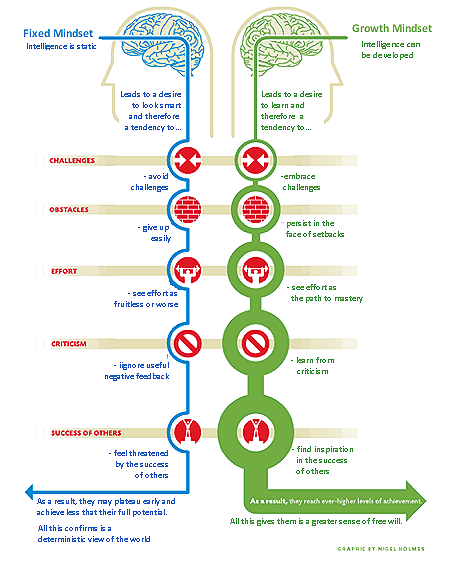
The Power of Mindset

Eduardo Briceño is the Co-Founder and CEO of Mindset Works (http://www.mindsetworks.com), an organization that helps schools and other organizations cultivate a growth mindset culture. The growth mindset was discovered by Stanford professor and Mindset Works co-founder Carol Dweck, Ph.D., and is described in her book Mindset: The New Psychology of Success (http://www.mindsetonline.com). Mindset Works offers Brainology, an innovative blended learning program to teach a growth mindset to students, teachers and schools, as well as teacher professional development and tools (http://www.mindsetworks.com/brainology/).
http://www.youtube.com/watch?feature=player_embedded&v=pN34FNbOKXc

Essay Bank

9000 essays to steal look at.
http://www.essaybank.com/

Web Spotlight:

The Power of Love

The effect of a teacher and the effect in the classroom. Very motivating. Useful for principals especially.
http://www.youtube.com/watch?feature=player_embedded&v=9bSu_Snlbsw#!

Dying teacher’s quest: Did I make a difference?

..nothing to do with my speaking, more to do with my listening…
http://www.usatoday.com/story/news/nation/2012/12/23/inspirational-teacher/1785739/

News:

More Evidence Showing The Dangers Of Using High-Stakes Testing For Teacher Evaluation

Though slogging through academic papers like these often lead me to thoughts of shooting myself, I think this paragraph sums it up and is worth a read:

In sum, the results indicate that a teacher’s effect on test scores and other non-cognitive outcomes are largely orthogonal such that teachers who tend to improve test scores are no more or less likely to improve non-test score outcomes…. It is clear that a teacher’s effect on non-cognitive skills is essentially missed by her effect on test scores.
This implies that roughly half of teachers classified as above average at improving test score will be below average at improving non-cognitive ability and roughly 25 percent of teachers in the top 25 percent of improving test scores will be in the bottom 25 percent at improving non-cognitive ability. Because unexplained variability in outcomes associated with individual teachers is not just noise, but is systematically associated with their ability to improve unmeasured noncognitive skills, classifying teachers based on their test score value-added will likely lead to large shares of excellent teachers being deemed poor and vice versa
…. Another implication is that if teachers must expend less effort improving non-cognitive ability in order to improve cognitive ability, regimes that increase the external rewards for test scores (such as paying teachers for test score performance or test-based accountability) may undermine the creation of students’ non-cognitive skills (Holmstrom & Milgrom, 1991). In light of the large estimated benefits to higher noncognitive skills (particularly for students at the lower end of the earnings distribution) in Table 2, this may be cause for concern.

A cause for concern, indeed….

http://larryferlazzo.edublogs.org/2013/01/04/more-evidence-showing-the-dangers-of-using-high-stakes-testing-for-teacher-evaluation/

Sure, Big Data Is Great. But So Is Intuition.

By STEVE LOHR
Published: December 29, 2012

The problem is that a math model, like a metaphor, is a simplification. This type of modeling came out of the sciences, where the behavior of particles in a fluid, for example, is predictable according to the laws of physics.
Models can create what data scientists call a behavioral loop. A person feeds in data, which is collected by an algorithm that then presents the user with choices, thus steering behavior.
http://www.nytimes.com/2012/12/30/technology/big-data-is-great-but-dont-forget-intuition.html?partner=rss&emc=rss&smid=tw-nytimes&_r=1&

MSM 229: SuperSize this Half Baked Idea…

Presented in collaboration with the Association for Middle Level Education.

Jokes You Can Use:

After trying a new shampoo for the first time, Morris mailed
off an enthusiastic letter of approval to the manufacturer.

Several weeks later he came home from work to a large carton
in the middle of the floor. Inside were free samples of the
many products the same company produced: soaps, detergents,
tooth paste, and paper items… with a “thank you” note from
the manufacturer.
“Well, What do you think?” asked his smiling wife, Ruth.

“I think that next time,” Morris replied. “I’m writing to
General Motors.”

*********************************************

1. Another flight attendant’s comment on a less than perfect
landing: “We ask you to please remain seated as Captain Kangaroo
bounces us to the terminal.”

2. After a real crusher of a landing in Phoenix, the Flight Attendant came
on with, “Ladies and Gentlemen, please remain in your seats until Capt. Crash
and the Crew have brought the aircraft to a screeching halt against the gate.
And, once the tire smoke has cleared and the warning bells are silenced, we’ll open
the door and you can pick your way through the wreckage to the terminal.”

3. Part of a flight attendant’s arrival announcement: “We’d like
to thank you folks for flying with us today. And, the next time you
get the insane urge to go blasting through the skies in a pressurized
metal tube, we hope you’ll think of US Airways.”

********************************************************

Three strings walk into a bar and sit down at a table. The first string walks up to the bartender and says, “Bartender, three beers please.” The bartender looks at the string and says, “I’m sorry, but we don’t serve strings here.” Disappointed, the string walks back to his buddies and explains. The second string says “No problem, I’ll go get our beers.” The second string walks up to the bartender, “Bartender, three beers please.” The bartender says, “Listen man, I told your buddy that we don’t serve strings here.” Empty handed, the second string walks back to his buddies. The third string says, “No problem. Tie me in a knot at one end and fray my ends at the other.” He struts up to the bartender, “Bartender, three beers please.” The bartender proceeds to get him the beer when he suspiciously turns to look at the string and says, “Excuse me, but are you a string?” The string replies, “I’m a frayed knot!”

http://www.middleweb.com/5053/humor-in-the-classroom/

Eileen Award:


  • Scoopit:
  • Twitter: Christina B. Steele, Ryan Becker
  • Facebook:
  • Google+: King Almojuela,
  • iTunes:
  • eMail:

Advisory:

Art Wolfe Photography

Great wildlife photos. Have the kids make stories for each picture. (For fun, search for camoflage).
http://artwolfe.photoshelter.com/

How to Write Letters

Above all, it reminds us that sentiment lives not only in what is being communicated but also in how it is being communicated — an osmosis all the more important today, when cold screens and electronic text have left the written word homogenized and devoid of expressive form.
http://www.brainpickings.org/index.php/2012/12/21/how-to-write-letters-1876/

How Fast Can You Name…

Come up with a common list. Have the students name them as quickly as possible.
http://www.youtube.com/watch?feature=player_embedded&v=xly_lNW_2o4#!

How to Make A Puppet by Jim Henson

Ask the kids if they’ve ever seen the Muppets. This is a 15 minute video.
http://www.youtube.com/watch?feature=player_embedded&v=AC440k6iByA

Middle School Science Minute

by Dave Bydlowski (k12science or davidbydlowski@mac.com)

I was recently reading the December, 2012 issue of Science Scope, a publication of the National Science Teachers Association for middle school teachers.  There was a very interesting article on clouds written by Tina Cartwright, Rommel Miranda, Ronald Hermann, and Deb Hemler entitled, “Clear Skies Ahead: Clearing Up Confusion About Clouds.”

They provided a very helpful semi-dichotomous cloud key that seems very helpful in helping students in the cloud identification process.  A version of the cloud key containing color photos of each cloud type can be found at:

http://wvscience.org/clouds/Cloud_Key.pdf


From the Twitterverse:

* ESSDACK ‏@ESSDACK
One of the best Middle Schools Apps! iTooch #mschat
* Eric Hanson ‏@HansonEP
Great livebinder – iPad Apps http://www.livebinders.com/play/play/119771 … for U.S. History
* Erin Klein ‏@KleinErin
3 Popular Video Creation Tools Being Used By Teachers http://zite.to/12UyDYB
* Wesley Fryer, Ph.D. ‏@wfryer
MT @DMaxMJ: Share & sign this “end testing obsession” petition.Free students 2B learners,teachers 2 teach https://petitions.whitehouse.gov/petition/cease-harmful-public-education-policies-relying-standardized-testing/w8ZrZwVT … #fb
* Scott McLeod ‏@mcleod
New bookmark: A Simple Guide To 4 Complex Learning Theories | @edudemic
* David Britten ‏@colonelb
RT @OaklandSchools: What Learning Will Look Like in 2013 http://ow.ly/gpunT  via @anniemurphypaul #EdChat
* Monte Tatom ‏@drmmtatom
The 20 Best Education Apps & Web Tools Of The Year http://flip.it/ddclh  #fhucid #fhuedu320 #fhuedu642
* Monte Tatom ‏@drmmtatom
25 Tablet Idea to Enhance Learning Experiences http://flip.it/1fUtr  #fhucid #fhuedu320 #fhuedu642
* Monte Tatom ‏@drmmtatom
5 Components to a Quality Education http://flip.it/cstvP  #fhuedu610 #fhuedu508 #fhucid ~ for @MSMatters followers
#mschat every Thursday at 8:00 pm Eastern Standard Time.

Resources:

Books to Read

http://transformed.teachingquality.org/blogs/tempered-radical/12-2012/three-professional-reads-are-worth-your-time

All Cats Have Asperger Syndrome

Kathy Hoopman

http://www.amazon.com/dp/1843104814/

Explania

Welcome to Explania! Watch hundreds of animated explanations, interactive tutorials and instructional videos, and feel free to embed them on your own web pages.

http://www.explania.com/en

Free NASA e-Book

This book is available for download on your iPad with iBooks or on your computer with iTunes.
https://itunes.apple.com/us/book/hubble-space-telescope-discoveries/id588428410?mt=11

BadgeMaker

Make your own ID card, press pass, name tag, unofficial Flickr badge, or any other kind of identification. Print it out, laminate it, wear it with pride! Make any kind of identification* easily in just a few seconds.
http://bighugelabs.com/badge.php

Web Spotlight:

When Creative Musical Genius Meets YouTube

By Wesley Fryer On December 26, 2012
There are some people in this world who have creative, musical genius that absolutely knocks your socks off when you hear and see it. Jon Cozart (Paint on YouTube) is one of those people.
His 104 second video with himself, “Lord of the Rings in 99 Seconds,” has 1.3 million YouTube views to date. It makes the video I created with my kids in the summer of 2011, “The Hobbit In Five Minutes,” look like a far more coarse and amateurish attempt at a 3 novel / movie plot summary.
http://www.speedofcreativity.org/2012/12/26/when-creative-musical-genius-meets-youtube/

What’s the difference between Holland and The Netherlands?

Posted on Sunday, December 23rd, 2012 at 12:11 pm. PT
Written by Shawn King
Have you ever wondered what the difference between “Holland” and “The Netherlands” is? Of course you haven’t – not many have.
But just in case you have even a mild interest, this video by C. G. P. Grey does an amazing job of explaining this odd little quirk of geography. And, for even more explanation of geographic and historical anomalies, check out his“The Difference between the United Kingdom, Great Britain and England Explained”.
http://www.loopinsight.com/2012/12/23/whats-the-difference-between-holland-and-the-netherlands/

TregoED SCAN

So I gave it a go this last marking period and . . . .


Half-Baked Idea . . .

So I got these “electronic resource devices” for my classroom and I tried this idea on the day before Christmas break . . .

MSM 228: Power Hungry Internet- Raspberry Pi . . . Ummm, Pie…

Presented in collaboration with the Association for Middle Level Education.

Jokes You Can Use:

Two prisoners were making their escape over the jailhouse roof when one of them dislodged a tile. “Who’s there shouted a guard. The first prisoner replied with a convincing imitation of a cat’s meow. Reassured, the guard when back to his rounds
But then the second prisoner dislodged another tile. The guard repeated, “Who’s there?”
“The other cat,” answered the prisoner.

A circus owner walked into a bar to see everyone crowded around a table watching a little show. On the table was an upside down pot and a duck tap dancing on it. The circus owner was so impressed that he offered to buy the duck from its owner. After some wheeling and dealing they settled for $10,000 for the duck and the pot.
Three days later the circus owner runs back to the bar in anger, “Your duck is a rip-off! I put him on the pot before a whole audience and he didn’t dance a single step!” “So?” asked the duck’s former owner, “did you remember to light the candle under the pot?”

Teacher: What are the four main food groups?
Students: Canned, frozen, instant, and lite.

A little girl complained that she didn’t want to go back to school.
“But why, Lisa?” asked her mother.
“Well, I can’t read, I can’t write, and they won’t let me talk.”

Eileen Award:

  • Twitter: Bethany Beaudrie, Derek McCoy, Vinnie Stocker
  • eMail:  Dr. John Harrison

Advisory:

Unrelated People Who Look Like Each Other

http://twentytwowords.com/2012/12/13/portraits-of-people-who-arent-related-but-look-like-each-other-6-pictures/

Middle School Science Minute

by Dave Bydlowski (k12science or davidbydlowski@mac.com)

Middle School Science Minute — Citizen Science

I was recently reading the November, 2012 issue of Science Scope, a publication of the National Science Teachers Association.  In the magazine, Jennifer Fee and Nancy Trautmann, wrote an article entitled “Connecting to Your Community Through Birds and Citizen Science.”  Within the article they explained what is meant by the term “Citizen Science.”  They defined a citizen scientist as a person who collaborates with scientists to gather data on projects and contributes to scientific research.

From the Twitterverse:

* Steve ‏@2learn2
Why Nate Silver Can Save Math Education in America http://goo.gl/ZW1QF
* David Tebo ‏@tebotweets
Pantophobia in Education: http://connectedprincipals.com/archives/6837
* Jerry Blumengarten ‏@cybraryman1
My Project Based Learning page: http://cybraryman.com/projectbasedlearning.html … #rechat
* Bill Ferriter ‏@plugusin
This @samchaltain bit on the pros and cons of longer school days should be required reading for #edpolicy wonks: http://ow.ly/fVT6M
* Scott McLeod ‏@mcleod
10 Steps to a Successful School iPad Program #edtech #plaea #ukstl
* nancyflanagan ‏@nancyflanagan
Common Core headed towards a $500 billion scandal. Imagine the horror as state after state reports drastic “drops”… http://prorevnews.blogspot.com/2012/12/common-core-headed-towards-500-billion.html …
* Steve Cushing ‏@Montberte
The Best Social Studies Sites Of 2012 — Part Two http://goo.gl/YVMIw
* Eric Sheninger ‏@NMHS_Principal
Infographic: How Does Digital Learning Contribute to Deeper Learning? http://buff.ly/Zka48g
* Beth Still ‏@BethStill
Guest post by @kris_still on how to be prepared in the event of a crisis. http://bethstill.edublogs.org/2012/12/14/preparing-for-the-worst-case-scenario/ … #nebedu #cpchat
* CBC Toronto ‏@CBCToronto
Ontario teachers confirm 1-day walkout
Monte Tatom @drmmtatom
8 Useful Video Apps for your #iPad flip.it/AphMQ #fhuedu320 #fhucid ~ for @MSMatters followers
#mschat every Thursday at 8:00 pm Eastern Standard Time.

Resources:

Teachers are talent scouts

Spotting talent and helping students see their own gift is one of those things that makes teaching so intoxicating to me. I get to do this? I am a talent scout. Are you?
http://coolcatteacher.blogspot.com/2012/12/teachers-are-talent-scouts.html

Web Spotlight:

Bomb Sight Mapping

The Bomb Sight is using the Bomb Census Maps as the primary data in the tools we are developing. The maps are part of an extensive array of material collected during the Bomb Census Survey 1940 to 1945, organised by the Ministry of Home Security. The records are held in The National Archive (TNA), and we are using the maps with a non-commercial education licence.
http://bombsight.org/#16/51.5034/-0.0987

INFOGRAPHIC: A POWER HUNGRY INTERNET

We know the internet is huge but it’s also growing at a crazy fast pace – doubling in size every 18-24 months! While this is staggering many people fail to think about what it actually takes to keep the Internet up and running every day. As it turns out its actually more than the auto industry and all that energy isn’t being used very efficiently.
http://www.infographicsarchive.com/tech-and-gadgets/infographic-a-power-hungry-internet/

Amazing Anamorphic Illusions!

You’ve got to see it to believe it.
http://www.youtube.com/watch?v=tBNHPk-Lnkk&sns=em

Anatomy of Preservation

This time-lapse video from LSA’s Museum of Zoology takes the bat species Artibeus jamacanensis from specimen to display. The process might be a little stomach-churning, but then again, good science isn’t always mess-free.

As one of the largest university museums in the world, the Museum of Zoology is a crucial resource for use in research, conservation, and education. Studying animals such as Artibeus jamacanensis allows scientists to craft a tangible record of life on Earth.
http://www.youtube.com/watch?feature=player_embedded&v=VwT6RLsYe1c#!

Departing Space Station Commander Provides Tour of Orbital Laboratory

In her final days as Commander of the International Space Station, Sunita Williams of NASA recorded an extensive tour of the orbital laboratory and downlinked the video on Nov. 18, just hours before she, cosmonaut Yuri Malenchenko and Flight Engineer Aki Hoshide of the Japan Aerospace Exploration Agency departed in their Soyuz TMA-05M spacecraft for a landing on the steppe of Kazakhstan. The tour includes scenes of each of the station’s modules and research facilities with a running narrative by Williams of the work that has taken place and which is ongoing aboard the orbital outpost.
http://www.youtube.com/watch?feature=player_embedded&v=doN4t5NKW-k

How long will we live — and how well?

A new analysis looks not only at the number of years we can expect to live, but also at the number of years we can expect to live in good health. In most of the world, life expectancy is longer than it was 20 years ago, but often a smaller percentage of those years will be healthy ones.
http://www.washingtonpost.com/wp-srv/special/health/healthy-life-expectancy/

Taking Responsibility


This was apparently from a group project.
http://i.imgur.com/mEOv7.jpg

AMLE Annual Conference Sessions:

State Affiliate Meeting
Update on the state of AMLE
Where were we last year?
Top Priorities for his first year
Taking steps

Top Priorities for his first year.
People come first
Emphasize the AMLE mission
Develop a vision for customer service
We are the brand
Taking Steps
1.  Through stakeholder input determine if this draft vision aligns to the Mission Statement and Goals of AMLE and what AMLE wants to become.
2.  Prepare the board of trustees to consider adopting a new strategic plan.
3.  Develop measures of success to chart progress of the mission and goals for striving towards the vision.
4.  Annually identify key strategic priority areas and execution plans for accomplishment of these annual priorities.
Where are we now?
Strategic Plan was approved by Board of Trustees in April.
Strategic Plan goals distributed to stakeholders in August
Strategic Plan strategies distributed of stakeholders in September
Structure of Strategic Plan
•Mission, Vision, Core values
•Six goals
•28 Strategies
Updated Mission and Vision
•Mission:  The Association for Middle Level Education is dedicated to improving the educational experiences of all students ages 10-15 by providing vision, knowledge, and resources to educators and leaders.
•Vision:  The Association for Middle Level Education is the leading national and international organization advancing the education of all students ages 10 to 15, helping them succeed as learners and make positive contributions to their communities and to the world.
(Current membership is around 30,000)
Strategic Plan Goals
Goals are numbered, but not according to priority.
•Goal 1:  Increase AMLE’s visibility with educators and policymakers worldwide.
•Goal 2:  Refine research-based professional development programs and services to ensure they are timely and relevant.
•Goal 3:  Develop partnerships and collaborative relationships with affiliates and other coalitions to influence programs and legislation to improve middle level education.
•Goal 4:  Increase membership.
•Goal 5:  Develop a business model and financial plan that places AMLE on sound financial footing and allows flexibility for strategic initiatives.
Goal 6:  Strengthen the board’s capacity to deliver AMLE’s mission and vision.

Commentary:  The focus of the association is now looking at state affiliates as partners in a coalition, not competitors.

Goal 1:  Increase AMLE’s visibility with educators and policymakers worldwide
•1.1:  Promote the significance of middle level education philosophy and practice.
•1.2:  Create web-based delivery models, including social media, for content and communications.
Lots of folks liked the app for the conference.
•1.3:  Make the website current, visually attractive, and user-friendly.
The number of iPad users visiting the site doubles monthly.
•1.4:  Review the efficacy of the current brand and make necessary changes.
Unify the brand logo through a uniform standard of “look”.
Doing a new brand study and it’s representation.
#4 on this list will come before #3.

Goal 2:  Refine research-based professional development programs and services to ensure they are timely and relevant.
•2.1:  Regularly review This We Believe and revise as needed.
•2.2:  Initiate and publish ongoing middle level education research.
•2.3:  Continue to present a high-quality annual conference that offers relevant and timely content.
•2.4:  Develop theme based conferences based on regional or national topics that are research based, relevant, and needs based.
•2.5:  Revise the content of Leadership Institutes to serve new and continuing participants and provide follow-up activities.
•2.6:  Increase partnerships with state departments of education.
Commentary:
Could we commission a study that the characteristics of This We Believe improve school achievement.
How do we get to the point where the association is driving the research in the field?
Our numbers this year are half of the numbers from the last time in Portland.
How do we make the flagship product meet the attendees where they are?
IDEA:  gear our conference to meet the initiatives in the state to get the State Board of Ed on board.
Theme based mini-conferences.
That’s ironic!  Think of the things we’re doing with drive-in conferences in Michigan.
We need to survey districts to find out what their strategies are.
Conference attendees are not always repeaters and so they don’t get the benefit of having repeating presenters.
Revise the content to serve new attendees vs. repeaters.
Goals:
Increasing affiliate capacity
Increasing partnerships with affiliates and teacher preparation and the superintendents at State Depts. of Education.
How do we get a piece of legislation codified in 50 different locals?

Goal 3:  Develop partnerships and collaborative relationships with affiliates and other coalitions to influence programs and legislation to improve middle level education.
•3.1:  Update the “Success inthe Middle” policy guide as a tool for influencing public policy and education standards.
•3.2:  Provide advocacy tools for AMLE members and partners.
•3.3:  Provide resources relevant to targeted education policy issues.
•3.4:  Engage with the Council of Chief State School Officers and the National Governors Association to enhance their understanding of the needs of middle grades youth.
•3.5:  Collaborate with affiliate and coalition leaders, including organizations with missions that foster diversity in education.
•3.6:  Reconsider recommendations from the 2010 Affiliate Task Force Report.
•3.7:  Develop a plan to collaborate with international associations.
Commentary:
There is a legislative piece of software that would be more cost effective to provide to affiliates vs. affiliates purchasing for each state.
Getting Ex. Dir.s at the table with State Boards on implementation legislation.  i.e. Common Core
Goal is to have half of the Affiliate Task Force recommendations done by next year.

Goal 4:  Increase membership.
•4.1:  Determine membership benefits.
Is there a benefit to having a “free” membership?  Enticement.
•4.2:  Evaluate current  membership structures and fees.
•4.3:  Target new-entry educators.
•4.4:  Develop a plan to increase Collegiate Middle Level Association chapters and members.
•4.5:  Develop global membership.
•4.6: Cultivate diverse membership.
Commentary:
Reduce the types of membership.  Too many choices.
Building membership (5) usually listed, not all the teachers in the building.

Goal 5:  Develop a business model and financial plan that places AMLE on sound financial footing and allows flexibility for strategic initiatives.
•5.1:  Develop financial reports that align resources to mission, vision, and core values.
•5.2:  Develop an operating plan to launch an opportunity fund to support new iniatives that align to the  mission, vision, and strategic goals of AMLE.
How would we launch something big if we had the opportunity to?

Goal 6:  Strengthen the board’s capacity to deliver AMLE’s mission and vision.
•6.1:  Prepare board members to advance and articulate AMLE’s messages.
•6.2:  Review the board’s structure, composition, and function and make adjustments, as needed, to support AMLE’s mission and vision and reflect the changing demographics of students and educators.
•6.3:  Provide appropriate and ongoing professional learning for the board.
Commentary:
Board structure and governance needs to be revisited.
Do you need an Executive Board?  If so, your board is too big.
Does your board represent geography or expertise?
Finding more professional development for the board.
Training to be better board members.

Can we reach the summit, together?
These strategies will take time to implement.

Additional dialogue
Questions
Comments

MSM 227: We’re Not New & Noteworthy, We’re Hot!

Presented in collaboration with the Association for Middle Level Education.

Eileen Award:


  • Facebook:  Joyce Capcara Fisher, Nelly Korman, The Simply Scientific Classroom


Jokes You Can Use:

A boy always asks for 50 cents from his mother. So his mother questioned the boy on why he kept asking for 50 cents. The boy replied that his friend told him that if you eat 50 cents worth of peanuts a day you would become smarter. Quickly his mother gave him $5. The boy asks “Why $5”, and the mother replied, “Buy 50 cents of peanut for yourself and buy peanuts for your father with the balance.”

One day the first grade teacher was reading the story of Chicken Little to her class. She came to the part of the story where Chicken Little tried to warn the farmer. She read, “…. and so Chicken Little went up to the farmer and said, “The sky is falling, the sky is falling!”

The teacher paused then asked the class, “And what do you think that farmer said?”

One little girl raised her hand and said,
“I think he said: ‘Holy Mackerel! A talking chicken!'”

The teacher was unable to teach for the next 10 minutes.

A man needing some legal help walks into a law firm. He asks an attorney,
“If I give you $300 per hour to help answer two legal problems I have, will you help me?” The attorney replies “Sure, what’s the other question?”

Advisory:

Perceptions:

Here’s an interesting video. It is an interesting take on perception. Entertaining and instructive. 4:33 long. (via Larry Ferlazzo)
http://www.youtube.com/watch?feature=player_embedded&v=FUv-Q6EgEFI

A blind person describes color

http://www.youtube.com/watch?feature=player_embedded&v=59YN8_lg6-U

What would you do?
Here is a 12-year-old middle school wrestler,Justin Kievit showing a great amount of humility and sportsmanship to his fellow competitor Jared Stevens. I dare you to watch this video and not let out a tear or two.
http://cosbysweaters.com/2012/12/04/middle-school-wrestler-shows-us-all-what-sportsmanship-is-about/

Middle School Science Minute

by Dave Bydlowski (k12science or davidbydlowski@mac.com)

Culturing Microorganisms
I was recently reading the December, 2012 issue of the Science Teacher, a publication of the National Science Teachers Association.  In the magazine, Key Roy, Director of Environmental Health and Safety for Glastonbury Public Schools in Connecticut wrote an article entitled, “Dangers in a Dish.”  In this article he shares the dangers of culturing microorganisms in the K-12 classroom.

From the Twitterverse:

* Monte Tatom ‏@drmmtatom
5 Great Ways for Teachers to Collaborate on Twitter http://flpbd.it/iUJT2  #fhuedu642 #fhuedu320 ~ for @MSMatters followers
* Monte Tatom ‏@drmmtatom
How Teachers Are Using Social Media Right Now http://flpbd.it/of7jF  #fhuedu642 #fhuedu320 ~ for @MSMatters followers
* Diane Ravitch ‏@DianeRavitch
Setting Schools Up to Fail http://wp.me/p2odLa-36b
* Scott McLeod ‏@mcleod
New bookmark: 20 Tech Trends for 2013
* Scott McLeod ‏@mcleod
New bookmark: An iPad Workflow for the Classroom Using Google Drive & Pages, Keynote, or Numbers & Notability | …
* Monte Tatom ‏@drmmtatom
The 50 Most Popular Books For Teachers http://flip.it/hE0io  #fhuedu508 #fhuedu320 #fhupsy306
* Monte Tatom ‏@drmmtatom
Top 10 Bookmarking Websites for Teachers http://flip.it/kg7gV  #fhucid #fhuedu642 #fhuedu320
* International Center ‏@RigorRelevance
Have You Flipped Your Faculty Meeting Yet?by @PeterMDeWitt
* Monte Tatom ‏@drmmtatom
Common Core Big Idea 5: Consider Meaningful Assessment http://flip.it/FXoEz  #fhuedu610 #fhuedu508
* WORLD Magazine ‏@WORLD_mag
Debt and destruction: Insights into America’s rise illuminate the causes of her unraveling http://ow.ly/fVOHF  @MarvinOlasky
#mschat every Thursday at 8:00 pm Eastern Standard Time.

Resources:

Gallery of FakeBook Profiles

Some good examples of fake FaceBook profiles.
http://www.classtools.net/main_area/fakebook/gallery/

Sign Up Genius

If you are a group leader and find yourself organizing volunteers, meals, service projects, or events… we want to make your life a lot simpler! Now you can coordinate it all online… FREE!
http://www.signupgenius.com/

Introduction to the Living Wage Calculator

In many American communities, families working in low-wage jobs make insufficient income to live locally given the local cost of living. Recently, in a number of high-cost communities, community organizers and citizens have successfully argued that the prevailing wage offered by the public sector and key businesses should reflect a wage rate required to meet minimum standards of living. Therefore we have developed a living wage calculator to estimate the cost of living in your community or region. The calculator lists typical expenses, the living wage and typical wages for the selected location.
http://livingwage.mit.edu/

Web Spotlight:

Books to Read

‘Tis the time of year that many people pick up additional books to read. Here are some thoughts:
http://www.brainpickings.org/index.php/2012/12/04/best-psychology-philosophy-books-2012/

Whole Novels

I’m writing a chapter of my book on Whole Novels–in which students read an entire novel more or less on their own before having substantive discussions about it–about support and differentiation for diverse learners. The classes at my school could not be more diverse, with reading levels spanning from second or third grade through first year college.  It’s rewarding and mind-blowing!
http://transformed.teachingquality.org/blogs/shoulders-giants/11-2012/my-co-teachers-weigh-whole-novels

7 Habits of Effective Teachers who use Technology:
We’ve all heard about Stephen Covey’s 7 Habits of Highly Effective People. Some teachers out there may have heard of the 7 Habits of Highly Effective Teachers. Below are our 7 habits of highly effective teachers who use technology:
1) They always start with the why.
2) They are malleable and can easily adapt.
3) They embrace change.
4) They share, share, and then share some more.
5) They think win-win-win-win.
6) They are extremely thorough and think two steps ahead.
7) They actively care.
http://blog.alwaysprepped.com/the-7-habits-of-highly-effective-teachers-who-use-technology/

News:

The Weight of Obesity

Obesity has become an epidemic in our society called developed, according to the OECD. What is the extent of this phenomenon ? Which countries are most affected ?
http://visual.ly/weight-obesity

Top 10 Bad Tech Predictions

Think today’s pundits and scientists can really forecast the future? Not if history is any lesson. Relive the folly of predictions past with 10 particularly ill-fated tech prophecies that did not stand the test of time.
http://www.digitaltrends.com/features/top-10-bad-tech-predictions/

STEM Students Must Be Taught to Fail

As a mechanical engineering professor at Northwestern University, I believe that that’s precisely what we should be teaching our students in STEM (science, technology, engineering, and mathematics) subjects: how to fail. Right now, we do not explicitly teach our students how to fail so that they can get right back up. That’s in direct conflict with our goal: to prepare students to play competitively upon graduation. If our students are going to stop deadly pandemics, solve the energy crisis, and cure world hunger and poverty, they will have to be prepared to fail, over and over—and more important, they will need to know how to learn from those failures. STEM innovator Albert Einstein recognized that falling is an inevitable part of innovation; he’s quoted as having said, “A person who never made a mistake never tried anything new.” Another STEM innovator, Marie Curie attributed her success the fact that, as she put it, “I was taught that the way of progress was neither swift nor easy.”
http://www.usnews.com/opinion/articles/2012/11/23/stem-students-must-be-taught-to-fail

2 Mesa students forced to hold hands as punishment for fighting

Two high schoolers in Mesa, Arizona were given a choice of punishment after getting into a fight at school — Be suspended or sit in the courtyard all day holding hands. You can see what they chose…
The Mesa school district wants everyone to know that they don’t condone this type of corrective strategy and will be discussing it with the principal who sentenced these boys to public humiliation.
http://www.abc15.com/dpp/news/region_southeast_valley/mesa/two-mesa-students-forced-to-hold-hands-as-punishment-for-fighting

MSM 225: Advisory! Advisory! Advisory!

Presented in collaboration with the Association for Middle Level Education.

Eileen Award:

  • Scoopit:
  • Twitter: Paige Johnson
  • Facebook:
  • Google+:
  • iTunes:
  • eMail:


Jokes You Can Use:

One reason the Military Services have trouble operating jointly is that they don’t speak the same language. For example, if you told Navy personnel to “secure a building,” they would turn off the lights and lock the doors. The Army would occupy the building so no one could enter. Marines would assault the building, capture it, and defend it with suppressive fire and close combat. The Air Force, on the other hand, would take out a three-year lease with an option to buy.

A woman worries about the future until she gets a husband.
A man never worries about the future until he gets a wife.
A successful man is one who makes more money than his wife can spend.
A successful woman is one who can find such a man.

Advisory:

You are Predictable

Make the board ahead of time, or put it on a Promethean Board.
http://www.youtube.com/watch?feature=player_embedded&v=DaWcL3oOd-E

Business Cards

Have the kids design business cards for famous people, fictional characters, historical figures, etc.
http://thisisnthappiness.com/post/35780275184/business-cards

10 Bets that you can win

Use these to create a challenge for students. Encourage them to think together. This can help prime the thinking. These are really just problem solving opportunities.
http://www.tastefullyoffensive.com/2012/11/another-10-bets-you-will-always-win.html

Perceptives

On the cover of American Prospect, Joel Sternfeld’s ode to roadside America, was a ghoulish photo. A fireman shops for a pumpkin as the farmhouse — whose fire presumably brought him to this very acres — burns in the background. Its fiery destruction perfectly complemented the wintry leaves, the spoilt pumpkins, and from the foreground, with his hands tightly clasped upon a prized possession, the orange-clad firefighter: an American Nero.
http://iconicphotos.wordpress.com/2012/10/25/joel-sternfeld-mclean-virginia-december-1978/

Middle School Science Minute

by Dave Bydlowski (k12science or davidbydlowski@mac.com)

Reflecting on Data

Recently I gave a talk at a new teacher orientation for the Rouge Education Project, a water quality monitoring project on the Rouge River, in the Michigan counties of Wayne and Oakland.  The purpose of the talk was to share ideas on curriculum.  The two areas I focused in on were:
1.  Inquiry Analysis and Communication
2.  Reflection and Social Implication

To learn more about the Rouge Education Project, please visit:
http://www.therouge.org

From the Twitterverse:

* Monte Tatom ‏@drmmtatom
#iPad in schools 102 http://zite.to/TPKz8R  via @zite #fhuedu320 #fhuedu642

11 Excellent Ways Teachers Can Use Google Docs http://flpbd.it/tH96v  #fhuedu320 #eLearning #fhuedu642

6 Reasons To Get A Tutor http://flpbd.it/6Jxee  #fhuedu610 #fhuedu508

* YouAndI School ‏@YouAndISchool
#Teachers have such an awesome job. Here is a teachers survival kit for everyday living http://tinyurl.com/chnt56h
* Patrick Larkin ‏@patrickmlarkin
Gamification 101: Why A Badge Is Better Than An A via @terryheick #edchat #bhschat
* Miguel Guhlin ‏@mguhlin
10 evernote uses in classroom http://dlvr.it/2VSPF4
* Lisa Dubernard ‏@onboardlearning
Good blog about the “culture of excellence” #satchat http://blog.eboardsolutions.com/accountability/wait-for-superman-or-build-transformation-teams/ …
* Kyle Calderwood ‏@kcalderw
Infographic: The Anatomy of a Great Teacher http://zite.to/T7jkIn  #njed #edtech #edchat
* Sandy Kendell ‏@EdTechSandyK
18 Snapshots Of iPad Integration | #edtech #mlearning @scoopit via @tperranhttp://sco.lt/7ApQbB

10 Ways To Use Technology To Teach #Writing http://edudemic.com/2012/11/10-high-tech-ways-to-teach-writing/ … via @edudemic #edtech #literacy

* EdTechTeacher ‏@EdTechTeacher21
iPad Resources and More iPad Summit Blog Posts
* Audrey Nay ‏@audrey_nay
Great livebinder – Top 5 Reasons 2 Use Your Library http://www.livebinders.com/play/play/119021 … #advocacy #tlchat #ozteachers #nswdec #austl
* Kristen Stringfellow ‏@SouthKingSuper
“Twitter Cheat Sheet (for any “newbies” out there) pic.twitter.com/ne3u3mZY #NCTE12
* Gerald Aungst ‏@geraldaungst
Why while presenting do so many ed conference speakers avoid the very strategies they promote? #irony #fail
* Lee Ann Spillane ‏@spillarke
Save the date 2/6/13 Digital Learning Day @sjhayes8 #ncte12
#mschat every Thursday at 8:00 pm Eastern Standard Time.

Resources:

Circuits

Circuits.io was founded in 2012 by Karel Bruneel and Benjamin Schrauwen. After struggling for years to design and teach to design electronics using existing EDA tool, they felt that electronics design needed an urgent jolt. Learning from how software is designed, they came up with the following magic recipe which is at the heart of circuits.io: (i) allow to easily build on pre-designed electronics modules, (ii) use intuitive tools that hide much of the complexity in software, and (iii) embrace the open hardware movement. Furthermore, we will soon allow easy PCB ordering right from circuits.io, no more messing with Gerber files. We promise that circuits.io will always be free for open hardware designs and that you can export all your designs, we will never lock in what actually is yours.
http://www.circuits.io/

8 GREAT GRADING APPS FOR IPAD

After posting about some of the best gradebook tools for teachers we got an email from one of our readers asking about some grading apps for iPad. We looked into our archive and found a post that we have published almost a year ago containing some great grading apps for iOS users but because thousands of apps have been created since the posting of that list we deemed it important that we do a general scan to review the new emerging grading apps. We found quite many but we only handpicked the ones mentioned below.
http://www.educatorstechnology.com/2012/11/8-great-grading-apps-for-ipad.html

Web Spotlight:

A Cure for the Mania of Multiple Drafts, Multiple Formats, X 100

By Ariel Sacks
In my last post, I described my utter failure to effectively organize and manage my students’ drafting process for writing projects.  This job has become much more complicated over the years with the availability of various technological tools for writing.  New, clear parameters are definitely necessary.
http://transformed.teachingquality.org/blogs/shoulders-giants/11-2012/cure-mania-multiple-drafts-multiple-formats-x-100

Everything That Will Go Extinct In The Next 40 Years

Futurist website nowandnext.com put together this awesome infographic predicting all of the technologies, behaviors, and ideas that will probably be distant memories by 2050.
Among their predictions: no more retirement four years from now, no more secretaries six years from now, and no more free parking or sit-down breakfasts by 2019.
The European Union is seen as surviving the current crisis before extinct in 2039.
http://www.businessinsider.com/everything-that-will-go-extinct-in-the-next-40-years-2012-8#ixzz29zsNrc6U

News:

The [editor of Phi Delta Kappan] concludes by asserting that “every classroom should have excellent teaching every hour of every day.” I would add that every child should also have an excellent parent who serves them excellent food and provides them with an excellent home in an excellent neighborhood. Let’s also add excellent healthcare and excellent supervision every hour of every day as well. If we could accomplish all of that, we would have the highest achieving students on earth.
http://dangerouslyirrelevant.org/2012/11/while-we-wait-for-wise-lawmakers-to-emerge.html

AMLE Annual Conference Sessions:

Dr. Debbie Silver, paid session.

Standard Introduction:
Teach through stories.
The self-reference depends on when the story happened in her life.
Middle school song by Monte Selby:  “Get Back Up Again.”

“He has a relentless commitment to his dream
so he’ll watch and ask
Then walk for books to read
Builds his talent with desire,’
Loads of time and endless fire
Always redefining persevere”

“So he tries and he tries, with a smile, then he cries
Countless falls, break the skin, get back up
Start again and again
Then he stays up late when he knows he shouldn’t
Tells his parents that he couldn’t – quit.”

Middle school is the last best hope for some of these kids.

“What lies behind us and what lies in front of us are but tiny matters as compared to lies within us.”  – Ralph Waldo Emerson
We have kids that have already given up before they got there.
Research is clear, you cannot motivate anybody.  They have to motivate themselves.  (That’s interesting!)
Mindset-The new Psychology of Success by Carol Dweck
Elizabeth’s Story:
Which of the five choices are the right response:
1.  You tell her you thought she was the best.
2.  Tell her she was robbed of a ribbon that was rightfully hers.
3.  Reassure her that gymnastics is not that important.
4.  Tell her she has the ability and will surely win the next one.
5.  Tell her she didn’t deserve to win.
Video:  Charlotte & Johnathan
How do we help students become self-motivated?
Failure has become an entity instead of a state of being.
We need to get kids to understand that falling is part of the process, not the end state of things.
Advertisement video:  CapriSun commercial where the Mom goes and protects the kids to the point of being stupid.
Replace the term Self-Esteem with Self-Efficacy (Bandura)
Self-Efficacy:
What does it do?  It influences:
•The choices we make
•The effort we put forth
•How long we persist when we confront obstacles
•How quickly we “bounce back” from setbacks or failures.
Learned helplessness
When kids have power over their environment, they will blossom.
“Anything easily attained is cheaply held.”
Zone of Proximal Development:  Lev Vygotsky
The greatest way to get people self motivated is to raise the bar just beyond their reach.
Letting students do what they can already, it is demotivating.
Lifting the leg example.
What kids are starved for is adult attention.
The Zip Line Adventure
Cartoon:  Scaffolding
Scaffolding
Describe a scenario in which you were asked to perform a task far beyond your current ability level and no scaffolding was provided.  How did you respond to the challenge?  What happened?
Handout item:  Scaffolding Instruction Guidelines
Deci & Ryan
Helping Kids Be Successful:
•  Autonomy:  Go do it.
•  Competency:  They have to feel they have the knowledge to do it.
•  Relatedness:  Connecting it to other things and people.
The story of Andy:
Cartesian Diver:  You can do it with condiment packages evidently.
Be careful of over effusive praise.
Andy and the drums.
Doug Moreland Band
Seventh Sun
One of Andy’s character traits is his very strong self-discipline.
The ability to delay self-gratification.
Many lack the ability to defer gratification
Video:  The Marshmallow Test
65% of the kids waited.
65% were:
•more socially competent
•more personally effective
•more self-assertive
•Better able to cope with life’s frustrations.
• . . . see handout
210 more points on SATs.
(Mischel, Schoda, and Peake, 1988)
These skills can be taught!
Tips for helping Children with Impulse control
In class do not allow students to raise hands or blurt answers.  When asking for a response require students to wait 10-15 seconds before calling on someone randomly (I pick up from a cup of craft sticks with the name of a different student on each one).
•  Model “think alouds” for the students.
1.  The adult performs a task while “thinking out loud.”  For example, “Before I start to do this activity.  I need to read all the directions.  After I read all of the directions, I will check and make sure all of the materials are here.  Then I will begin with step #1.

3.  The student performs the task while instruction them self out loud.
Teach students the “Stop and Think” 5 step problem solving strategy:
1.  “What am I supposed to do?”  (Figure out what exactly what the problem is.)
2.  “Look at all the possibilities
•  Role play with the students the problem and possible solutions that occur in recurring social events.
•  Use a timer to indicate periods of independent work and reinforce appropriate behavior with positive feedback.
•  Use the words “For now . . . ”
“I don’t want to do this.”  “That’s ok, you’ll do this ‘for now’.”
Steps in Deliberate Practice.
•  Remember that deliberate practice has one objective:  to improve performance. ” People who play tennis once a week for years don’t get any better if they do the same thing each time.”  Ericson has said, “Deliberate practice is about changing your performance, setting new goals and straining yourself to reach a bit higher each time.”
•  Repeat, repeat, repeat.  Repetition matters.  Basketball greats don’t shoot ten free throws at the end of team practice, they shoot five hundred.
•  Seek constant, critical feedback.  If you don’t know how you’re doing, you won’t know what to improve.
•  Focus ruthlessly on where you need help.  while many of us work on what we’re already good at, says Ericsson, “those who get better work on their weakness.”
•  Prepare for the process to be mentally and physically exhausting.  that’s why so many people . . see handout.
Motivation:
Intrinsic and Extrinsic Motivation
Psychological reactance relates to a classic distinction made by motivational psychologists:  the distinction between intrinsic and extrinsic motives.  An activity intrinsically motivating if a person does it voluntarily, without receiving payment or other type of reward.  An activity is extrinsically motivated if it is performed primarily for external reinforcement such as food or money.
The Chit Example:
How to turn play into work:  Lepper and Green (1974)
What are classroom rewards?
•  Extrinsic rewards can be denied as rewards that come from an aoutside source such as the teacher.  Rewards include the obvious bonuses such as prizes, certificates, special privileges, gold stars, stickers, candy gum, redeemable tokens, grades, or even money.  Teacher praise is also considered to be an extrinsic reward as are more subtle signs of approval such as thumbs up signs, smiles, nods, hugs, or pats on the back.
•  Intrinsic rewards can be defined as rewards that are inherent or the natural consequence of behavior.
Activity:  Describe how praise can sometimes do more harm than good.  Give examples from your experience.
Using Classroom Rewards
•  Task-contingent rewards are available to students for merely participating in an activity without regard to any standard of performance (i.e. anyone who turns in a homework paper gets an A.)
-Detrimental to motivation
•  Performance-contingent rewards are available only when the student achieves a certain standard (i.e. anyone who has at least 93% correct responses on the homework paper gets a sticker.)
*  Success-contingent rewards are given for good performance and might reflect either success or progress towards a goal (i.e. anyone who has at least 93% correct responses on the homework paper or improves from their previous score.)
Guidelines for using Classroom Rewards
•Use the weakest reward required to strengthen a behavior.
•When possible, avoid using rewards as incentives.
•Reward at a high rate in the early stages of learning and reduce the frequency of rewards as learning . . .
“It is the nature of man to rise to greatness, if greatness is expected of him.”
-John Steinbeck
Song:  “Fly on the Wall” by Monte Selby
The Key Principles of SFP are these:
A.  We form certain expectations of people or events.
B.  We communicate those expectations with varous cues.
C.  People tend to respond to these cues by adjusting their behavior to match them.
D.  The result is that the original expectation becomes true.
“Hamstrung by unrealized potential.”  Don’t praise anything a child cannot control.
Jordan’s Nike commercial:  “Over and over again I’ve failed in life, and that’s why I succeed.”
Realize that inappropriate praise can do more harm than good.
Attribution theory:  Why do individuals say they fail?
• Task Difficulty
•  Luck
•  Innate Ability or Talent
•  Effort
External (controlled by other than self)
•  Task Difficulty
•  Luck
•  Innate ability or talent
Internal (controlled by self)
•  Effort
Mindset:  The new psychology of success.  Dr. Carol Dweck (2006)
Fixed Mindset (Entity Theory)
Growth Mindset
Dr. Dweck’s Interview Video
Being praised for the easy problems caused students to go back to the easy stuff because they were successful at it.
Students praised for effort, generally were more willing to take on harder tasks.
Implicit Personality Theory.

The Book:  The little girl on the front is a character of a little girl named Stephanie.
We must view young people not as empty bottles to be filled, but as candles to be lit.  (The burning of the ditto transfer paper)

Website:  debbiesilver.com   Password:  iamateacher
I’m number 24.  Randomizer says
EY-88 Code for CEUs.

MSM 224: Spewing Forth: Alternate Show Weeks

Presented in collaboration with the Association for Middle Level Education.

Eileen Award:

  • Scoopit:
  • Twitter:
  • Facebook:  Steve Ralston
  • Google+:
  • iTunes:  Steve Ralston
  • eMail:

Jokes You Can Use:

One Halloween a man was walking down the street and heard a thumping noise behind him. Looking behind him he saw a coffin following him, upright. He was a bit nervous and began walking a little bit faster. The coffin continued, “thumpety thump, thumpety thump”. He began running and the coffin kept up and began opening and closing, “”thumpety thump, thumpety thump clap, “thumpety thump, thumpety thump clap”. Terrified he ran to his front door, and went inside, slamming the door and locking it. The coffin continued, “thumpety thump, thumpety thump – CRASH” it came right through the door, He ran up the stairs, and right behind him, “thumpety thump, thumpety thump clap, “thumpety thump, thumpety thump clap”. He rushed into the bathroom and slammed the door, but the coffin broke through the door – “thumpety thump, thumpety thump crash”. Terrified the man grabbed the first thing he could, a bottle of Robutusin and threw it – and the coffin stopped!

One psychologist greets another on the street: “You’re fine, how am I?”

Socrates came upon an acquaintance that ran up to him excitedly and said, “Do you know what I just heard about one of your students?” “Just a minute,” Socrates replied. “Before you tell me I’d like you to pass a little test. It’s called the Test of Three. “The first test is Truth. Are you sure that what you will say is true? “Oh no,” the man said, “Actually I just heard about it.” “So you don’t really know if it’s true, Socrates said. Now let’s try the second test, the test of Goodness. Is what you are about to tell me about my student something good?” “No, on the contrary..” “So,” Socrates interrupted, “you want to tell me something bad about him even though you’re not certain it’s true?” The man shrugged, rather embarrassed. Socrates continued. “You may still pass though, because there is a third test, the filter of Usefulness. Is what you want to tell me about my student going to be useful to me at all?” “Well it ..no, not really..” “Well, concluded Socates, “If what you want to tell me is neither True nor good nor ever Useful, why tell it to me at all?” The man was defeated and ashamed. This is the reason Socrates was held in such high esteem. It also explains why he never found out what Plato was up to.

Advisory:

Antipodes

http://www.jasondavies.com/maps/antipodes/

Last Wish

Lifelong football fan Danny Webber had one last wish – to meet QB Andrew Luck and the Indianapolis Colts. With help from the Colts organization and wonderful workers at the Heritage House, his wish was granted. Watch as Inside the NFL cameras were there to capture this truly heart-warming story.
http://www.youtube.com/watch?v=uU1sK9HLpFo&feature=youtu.be

Middle School Science Minute

by Dave Bydlowski (k12science or davidbydlowski@mac.com)

Volcano Safety
This podcast is based on the Question of the Month from the Scope on Safety section of the October, 2012 issue of Science Scope, a magazine for middle school science teachers, published by the National Science Teachers Association.  The question of the month is written by Ken Roy, director of environmental health and safety for Glastonbury Public Schools in Glastonbury, Connecticut.

The question of the month deals with the use of ammonium dichromate in the classroom.

We won’t blow our tops on this one.

From the Twitterverse:

* Orion School View ‏@OrionSchoolView
ALL teachers should read this! Ten Commandments For Educators Who Teach Kids on the Autism Spectrum http://enabledkids.ca/?p=2076  via @EnabledKids
* Valerie Lees ‏@ValerieLeessd36
This is what interdisciplinary learning can give us:students offer overnight solution to gas station crises #Sandy http://huff.to/Ydl312  #fb
* Kevin J. Galbraith ‏@KevG
How Are Districts Covering the Tech. Costs of Common Core? http://zite.to/RzLc6h
* Diane Ravitch ‏@DianeRavitch
Do you have your armband? “Just let me teach.” http://www.washingtonpost.com/blogs/answer-sheet/wp/2012/11/01/just-let-me-teach-arm-bands-taking-off/ …
* Scott McLeod ‏@mcleod
China as number two — or even number three
* Catherine Flippen ‏@CatFlippen
Instead of teachers evaluating other teachers, use method called “Idea Bandit”–visit a classroom, “steal” a great idea. #edadmin
* Eye On Education ‏@eyeoneducation
How to Design Open-Ended Assignments to Meet the #CommonCore http://ow.ly/eZncK  #edchat #ccss #engedu #literacy #ccchat
* Emily Wyble ‏@wyblee
#edcampGR presenters switching back and forth on the Apple TV between the iPad mini and the “regular.” Co-teaching possibilities?
* Kevin Creutz ‏@kevcreutz
Three Video Explanations of Why We Change Our Clocks This Weekend via @rmbyrne #edtech
* Larry Ferlazzo ‏@Larryferlazzo
Ideas for English Language Learners | ‘Gangnam Style,’ ‘Emotion Words’ and More http://nyti.ms/Sfnew1
* Scott McLeod ‏@mcleod
New bookmark: Library Of Congress Unveils Massive Common Core Resource Center | @edudemic
* Sandra Wozniak ‏@sanwoz
Are you using elections to teach critical thinking? Great resources #satchat
* Sandy Kendell ‏@EdTechSandyK
How to clean Apple products including iPad | #mlearning #edtech #ipaded @scoopit http://sco.lt/98tt4L
* Rick Wormeli ‏@RickWormeli
School superintendent to Thomas Friedman: Why you are wrong about Race to the Top http://www.washingtonpost.com/blogs/answer-sheet/wp/2012/10/31/school-superintendent-to-thomas-friedman-why-you-are-wrong-about-race-to-the-top/ …
* Sandra Wozniak ‏@sanwoz
HOTS & Bloom’s by @JillBromen on @scoopitGreat critical thinking resources. #gtchat #edchat

Resources:

Higher Order Thinking Strategies and Tools

“The following Online Interactive Thinking Strategies and Tools are designed to provide a scaffold which enables students to think with more depth and structure. When using them, ask students to continually reflect on and justify which Habits of Mind best suit how they are thinking.”

There are some terrific organizers here that would be easy to replicate.
http://learningcurveplanner.com.au/thinking-tools.html

The Victorians Learn to work like a historian

This website introduces primary pupils to historical sources. It helps children to think and work like historians by using objects, images and documents from the collections of the V&A and The National Archives to learn about the Victorian period. Begin with this tutorial to get the best out of the six themed units that follow.
This short starter activity introduces the learning model that guides and supports pupils’ work throughout the resource.
The approach for dealing with sources has been broken down into four steps. A simple mnemonic, L-A-C-E, helps pupils to remember them.
Two online presenters guide pupils through each unit. They introduce a range of different historical sources and ask various prompt questions at each step of the LACE process. There is some variation between these questions, to accommodate the different types of sources used in this resource, but they retain the same focus throughout:
LOOK: Describe what you can see.
ASK: What questions do you need to ask, and answer, to make sense of what you have seen?
CONCLUDE: What have you learned about the issue that you are investigating from this source?
EXPAND: What more would you like to know about? How can you find out?
The steps in the LACE process are not always mutually exclusive. In fact, evaluating evidence is often an iterative process. Pupils may sometimes engage with the different steps in a non-linear way. When this happens it is not a problem. The main purpose of this approach is to encourage pupils to develop different types of questions to progress their understanding of the evidence.

http://www.nationalarchives.gov.uk/victorians/resources.htm
http://www.nationalarchives.gov.uk/victorians/Default.aspx

A visual A-Z of the hidden treasures of language.

As a lover of language and words, especially obscure and endangered words, I was instantly besotted with Project Twins’ visual interpretations of unusual words, originally exhibited at the MadArt Gallery Dublin during DesignWeek 2011.
http://www.brainpickings.org/index.php/2012/07/02/project-twins-unusual-words/

Public Domain Comics

We are the best site for downloading FREE public domain Golden Age Comics. All files here have been researched by our staff and users to make sure they are copyright free and in the public domain. To start downloading just register an account and enjoy these great comic books. We do not charge per download and the goal of the project is to archive these comic books online and make them widely available.
http://digitalcomicmuseum.com/

Web Spotlight:

Can Your Kid Read Graphs and Charts?

As these visual displays become more and more ubiquitous, it is all the more important that students know how to read, interpret, and summarize the information presented. It’s become an essential element of overall literacy.
As students get older, it’s important for them to learn not only how to be intelligent viewers of graphic representations, but wary and cautious viewers. While charts and graphs obviously are a boon to our ability to communicate information about large numbers or complicated relationships, there are also hidden pitfalls.
http://www.theatlantic.com/national/archive/2012/10/can-your-kid-read-graphs-and-charts/263689/


http://tedmccagg.typepad.com/drawings/2012/10/back-in-my-day.html

News:


Ethiopian kids hack OLPCs in 5 months with zero instruction

“We left the boxes in the village. Closed. Taped shut. No instruction, no human being. I thought, the kids will play with the boxes! Within four minutes, one kid not only opened the box, but found the on/off switch. He’d never seen an on/off switch. He powered it up. Within five days, they were using 47 apps per child per day. Within two weeks, they were singing ABC songs [in English] in the village. And within five months, they had hacked Android. Some idiot in our organization or in the Media Lab had disabled the camera! And they figured out it had a camera, and they hacked Android.”

http://dvice.com/archives/2012/10/ethiopian-kids.php

Events & Happenings:

Calendar of Events:

Ohio Middle Level Association:


AMLE Affiliate Conferences:


Classroom 2.0’s Live Calendar.

Classroom 2.0’s Ning Blog: Archived content is available.

MSM 223: RoundTable of TwitterVerse and Student Responses.

Presented in collaboration with the Association for Middle Level Education.

Call for Action:

iTunes

Jokes You Can Use:

A Sunday school teacher asked her little children, as they were on the way to church service, “And why is it necessary to be quiet in church?” One bright little girl replied, “Because people are sleeping.”

Only in America……

1.- …..can a pizza get to your house faster than an
ambulance.
2.- ……are there handicap parking places in front of a skating rink.
3.-……do drugstores make the sick walk all the way to
the back of the store to get their prescriptions while healthy people
can buy cigarettes at the front.
4. -……do people order double cheeseburgers, large fries, and a diet coke.
5. -……do banks leave both doors open and then chain the pens to the counters.
6. -……do we leave cars worth thousands of dollars in
the driveway and put our useless junk in the garage.
7. -……do we use answering machines to screen calls and
then have call waiting so we won’t miss a call from someone we didn’t
want to talk to in the first place.
8. -……do we buy hot dogs in packages of ten and buns in
packages of eight.
9. -……do we use the word ‘politics’ to describe the process so well: ‘Poli’ in Latin meaning ‘many’ and ‘tics’ meaning ‘bloodsucking creatures’.
10. -……do they have drive-up ATM machines with Braille lettering.

There were two buddies, one with a Doberman Pinscher and the other with a Chihuahua. The guy with the Doberman Pinscher says to his friend, “Let’s go over to that restaurant and get something to eat.”
The guy with the Chihuahua says, “We can’t go in there. We’ve got dogs with us.”
The buddy with the Doberman Pinscher says, “Just follow my lead.”
They walk over to the restaurant, the guy with the Doberman Pinscher puts on a pair of dark glasses and he starts to walk in. The bouncer at the door says, “Sorry, mac, no pets allowed.”
The man with the Doberman Pinscher says, “You don’t understand. This is my seeing-eye-dog.”
The bouncer says, “A Doberman Pinscher?”
He answers, “Yes, they’re using them now; they’re very good and protect me from robbers, too.”
The man at the door says, “Come on in.”
The buddy with the Chihuahua figures, “What the heck,” so he puts on a pair of dark glasses and starts to walk in.
Once again the bouncer says, “Sorry, pal, no pets allowed.”
The guy with the Chihuahua says, “You don’t understand. This is my seeing-eye dog.”
The bouncer at the door says, “A Chihuahua?”
The man with the Chihuahua says, “A Chihuahua?????? They gave me a Chihuahua?!”
Steve Cushing ‏@Montberte
I had amnesia once – maybe twice.

Eileen Award:


  • Scoopit:
  • Twitter:  Dr. Catherine Hart
  • Facebook:   Josh Flory
  • Google+:
  • iTunes:
  • eMail:


Advisory:

A $20 Bike Made Of Cardboard Is Headed To Market

http://www.businessinsider.com/20-cardboard-bike-headed-to-market-2012-10

Middle School Science Minute

by Dave Bydlowski (k12science or davidbydlowski@mac.com)

This podcast is based on the Editor’s Roundtable from the October, 2012 issue of Science Scope, a magazine for middle school science teachers, published by the National Science Teachers Association.  The roundtable was written by Inez Liftig.

The purpose of the roundtable was to emphasize the importance of genetics education in middle school.  It is important not only because it plays a prominent role in the new Next Generation Science Standards but also because genetic testing and gene-based medicine will play a large part in their lives.

From the Twitterverse:

*Diane Ravitch ‏@DianeRavitch
Irony in Ohio http://wp.me/p2odLa-2Dp  via @wordpressdotcom
*TeachHUB ‏@TeachHub
5 Things I Wish I Had Known Before I Became a Special Education TeacherPED #spedchat #edchat
* Diane Ravitch ‏@DianeRavitch
Why Foist an Unproven Method on the Entire Nation All at Once? http://wp.me/p2odLa-2CE  via @wordpressdotcom
* Kevin Creutz ‏@kevcreutz
Six Multimedia Timeline Creation Tools for Students via @rmbyrne #edtech
* Tween Publishing ‏@TweenPublishing
The Middle School Student’s Guide to College http://tweenpublishing.uberflip.com/i/65514  via @uberflip #edchat #schools #collegereadiness #tween
* Sandy Kendell ‏@EdTechSandyK
Would love your feedback here if you’ve deployed iPads in any number in a school setting: http://goo.gl/fb/zZVXP  #edtech #edchat #ipaded
* Justin ‏@justinstallings
New tab in Evernote for Educator’s Livebinder: Teacher Pages.  +LiveBinders +Evernote #edtech #edchat  http://www.livebinders.com/play/play_or_edit/245623?tabid=a73e3b38-ac0f-4533-99d2-098683df4c10 …
* Larry Ferlazzo ‏@Larryferlazzo
RT @ChrisWejr: The “Khanification” of Education
* Laura Gilchrist ‏@LauraGilchrist4
Why Learning Should Be Messy | http://blogs.kqed.org/mindshift/2012/10/why-learning-should-be-messy/ …. Via @MindShiftKQED #nkcsedu #midleved #elemed #scichat #sschat #edreform
* Parentella ‏@Parentella
Drugstore Food Deals – Week of October 21 #family
* Jerry Blumengarten ‏@cybraryman1
Sites to teach with Twitter http://cybraryman.com/twitter.html  #satchat
* Todd Bloch ‏@blocht574
@JohnWink90 Here is the link to the Storify archive for tonight’s #mschat http://sfy.co/bACM  Have a great Friday and weekend.

Resources:

Fun Student Responses:

http://hypervocal.com/culture/2012/18-best-students-on-the-internet/

Next YouTube EDU Gurus:

Introducing the YouTube Next EDU Gurus. Want to learn something new? Check out these channels today!
http://www.youtube.com/playlist?annotation_id=annotation_312811&feature=iv&list=PLEoqe4x_0u5PEmoFoQNecNRJMqw2DXYHn&src_vid=KvZcVVV7CrU

Restorative Discipline

When the student-government president here at City Springs Elementary/Middle School turned into the class clown last school year and began treating teachers disrespectfully, administrators had many options for how to deal with him, including sending him home for a few days to cool his heels.
http://www.edweek.org/ew/articles/2012/10/17/08restorative_ep.h32.html?tkn=SUTF2jciDTH8F91y7avjwzZdnR%2B%2BCKn%2Fxmuw&cmp=ENL-EU-NEWS1

Web Spotlight:


Thinking About Cursive in a Digital World

By David Polochanin
“What does a cursive Q look like?” I asked my wife after dinner one recent night. We were helping our 5-year-old daughter form uppercase letters in manuscript when it occurred to me that I did not remember how to form a cursive capital Q.
http://www.edweek.org/ew/articles/2012/10/17/08polochanin.h32.html?tkn=VYMFhjYXlmJFh7XjeraeH5hTUhnjnAgattpv&cmp=ENL-EU-VIEWS1

Events & Happenings:

Calendar of Events:

Ohio Middle Level Association:


AMLE Affiliate Conferences:


Classroom 2.0’s Live Calendar.

Classroom 2.0’s Ning Blog: Archived content is available.