
Summary:
Shawn and Troy talk about AI policies, summer plans, and more. Dave explains why the experts don’t always agree.
Jokes:
My wife said that quilts are better than duvets.
- I told her to be careful making blanket statements like that.
What do you call a mute owl?
- Anything that you want, doesn’t give a hoot.
Someone called me, sneezed and hung up.
- I’m tired of these cold calls.
I’m worried about the genetics experiments involving crabs and cheetahs.
- That could go sideways fast.
Someone asked me what the ninth letter of the alphabet was.
- It was a complete guess, but I was right.
Name a place that you’ve visited that you don’t want to go back to.
- Microsoft Teams Meeting
My post about rice cakes was removed.
- It was ruled as tasteless
Did you know that Stefi Graf has a sister and a brother?
- Polly
- Litho
Middle School Science Minute
by Dave Bydlowski (k12science or davidbydlowski@mac.com)
K12Science Podcast: Why Experts Disagree
I was recently reading the March – April 2026, issue of The Science Teacher, a publication of the National Science Teaching Association.
In this issue I read an article written by Douglas Allchin. He wrote an article entitled “When Experts Disagree.”
Respect the consensus of the relevant scientific experts. That’s the benchmark for reliable science in informing public policy or personal decision-making. But what if the experts disagree? What if there is no genuine consensus? If we cannot confidently sort fact from fiction, what are we to do?
https://k12science.net/why-experts-disagree/
Reports from the Front Lines
- End of the year
- Closing the room
- Emptying the office
- Moodle Prep
- Summer Plans
- ISTE Conference
- Matt Miller’s AI Literacy
- Classroom Policies
- Syllabus
- Co-editing
- Music for when you’re on a Deadline
The Social Web
Irish Learning Technology Association @iltasky.bsky.social
Thanks to all our amazing keynotes at #edtech26 – relisten to the conversation on youtube.com/playlist?lis… #edtech #sotl #academicsky #edusky
MiddleWeb @middleweb.bsky.social
Review: STRATEGIES TO NURTURE CREATIVE THINKING Creativity for Learning provides all teachers with the support they need to build engaging, thought-provoking activities that encourage creative thinking. #edusky @routledgebooks.bsky.social #teachersky #creativity www.middleweb.com/53499/strate…
New: HELPING STUDENTS BECOME SKILLFUL PUBLIC SPEAKERS. All public speaking has two parts: building a talk and performing a talk. In a digital world it’s vital for students to learn how to communicate with impact. #edusky #speech #literacy @erik-palmer.bsky.social www.middleweb.com/53485/helpin…
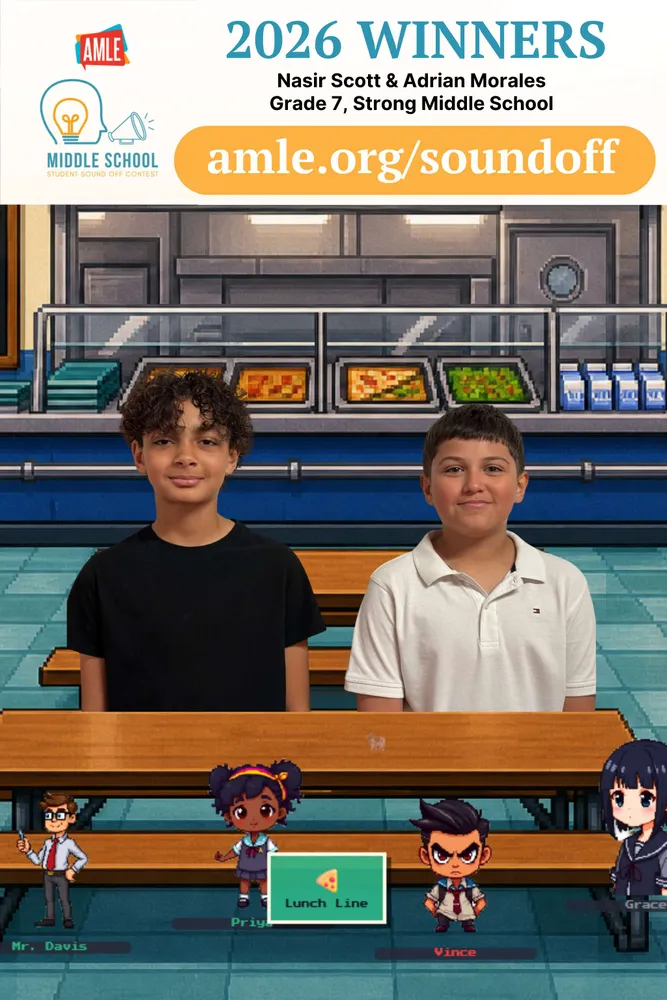
Our 2026 Middle School Student Sound Off winners remind us what happens when we invite young adolescents into real dialogue and decision‑making: they rise with creativity, courage, and insight. 🏆🗣️ Join us in celebrating all our winners, finalists, and honorable mentions: amle.org/soundoff
Eric Curts @ericcurts.bsky.social
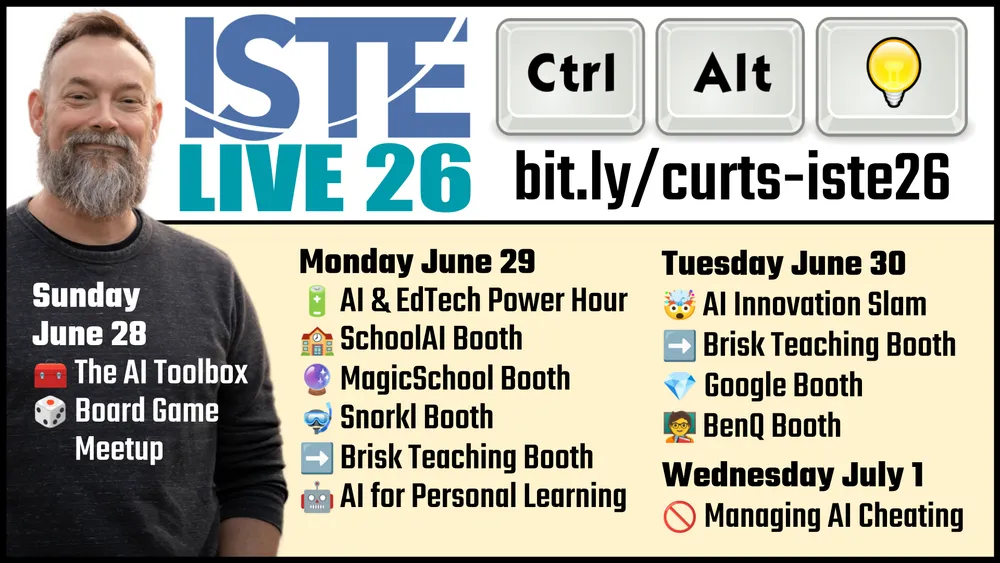
Join me at #ISTELive in Orlando! 🗣️ 12 sessions – bit.ly/curts-iste26 🎲 Board Game Night – bit.ly/iste26bgm 📝 Sharing Doc – bit.ly/iste26-share #EduSky #EdTech #GoogleEDU
Resources:
AXIS: The Culture Translator
Under the Desk
What it is: The world’s leading social media companies are strategically trying to steal kids’ attention during the school day, as evidenced by documents in a class action lawsuit against the tech giants, reports The New York Times.
Why it’s hurting teens: Snapchat sent phone alerts during school hours, prompting teens to “show off your classroom.” Meta created a program to incentivize teens to promote Instagram and hand out merch. TikTok opted not to disable its notifications during the school day, despite recommendations from its own safety team. Even with ongoing conversations about the negative impact that phones have on learning environments, the NYT’s review of documents revealed that the companies purposefully targeted teenagers during school hours. More than 1,400 school districts have now filed lawsuits against Meta, Snap, TikTok, and YouTube in a rising backlash against social media. One of the lead lawyers in the class action suit said, “It is so constantly tempting to these kids to be on a platform that promises endless, infinite, varied entertainment rather than actually focusing on what they should be at school to do.”
Spin the Wheel
Plethora of wheels (pre select to ensure safe for work).
https://spinthewheel.app/wheels
Animated GIF Maker
Add image frames, set per-frame delay and loop count, preview the animation, and download a ready-to-share GIF. Everything runs in your browser — nothing is uploaded.
https://drawsplat.org/solutions/animated-gif
Web Spotlight:
We Have a Distraction Problem. But We’ve Been Solving the Wrong Half of It.
The average time spent on any single screen before switching has dropped from 2.5 minutes in 2004 to around 47 seconds today.
Distraction is not just something that happens to learners from the outside. It is also something that learning environments create from the inside.
If we only talk about the phones and devices, we let schools, workplaces, and learning systems off the hook for their own role in the problem. We also miss the more hopeful argument that the antidote to distraction isn’t restriction. It’s actually engagement.
Research on media multitasking during learning is consistent: when students toggle between academic tasks and devices, learning becomes shallower and spottier. They understand less, retain less, and often don’t realize it’s happening because the feeling of multitasking can mimic the feeling of productivity. I often feel the same way as an adult!
A 2009 study across 27 states found that 49% of students reported feeling bored every day. 17% of those students said they were bored in every single class. More recent Gallup data suggests 74% of students report feeling bored in school regularly. The OECD found that over half of students in developed countries feel bored in at least one class daily.
This is the part of the distraction conversation that makes people uncomfortable, because it asks us to look at learning environments themselves. The compliance-based learning environments with predictable tasks and rigid curricula disconnected from students’ lives and questions fail to engage learners. They actively train learners to zone out, to wait for class to end, to find the path of least cognitive resistance.
The tech companies bear responsibility for engineering products that exploit our cognitive vulnerabilities for profit. That’s real, and it deserves real policy and design responses.
Policy makers and politicians aren’t off the hook here either. They allow tech companies to continually exploit our youth by not regulated safeguards on so many of these devices, platforms, and applications.
But schools, and workplaces, and families also bear responsibility for building learning environments where disengagement is the rational response.
Both things are true. The attention economy preys on disengaged learners, and our learning systems have been producing disengaged learners for a long time.
The High Cost of Silent Classrooms
Last year, I visited a seventh-grade math classroom in a public school in the Bronx. Twenty students sat bent over laptops, working with an A.I. tutor on story problems about converting fractions to decimals. A teacher moved around the room, checking a dashboard that tracked how many tries each student needed to reach the right answer.
On the surface, the classroom was working. Students were engaged, and most of them, eventually, were getting to the right answers.
Screen Time Bans and Limits Are Really A Search for a Healthy Relationship to Technology
It is a quest for a healthy relationship to technology instead of the almost worshipful stance currently held by so many in Ed Tech.
Finally, a healthy relationship to technology is one where devices are not a constant intrusion and distraction; they are simply a toaster sitting in the background and used when needed and not a device constantly beeping like a little child, demanding our attention.
https://the21stcenturyprincipal.blogspot.com/2026/06/screen-time-bans-and-limits-are-really.html
When AI Is Said to Be “Here to Stay” It is Perfectly Right to Question the Fictional Narrative
https://the21stcenturyprincipal.blogspot.com/2026/06/when-ai-is-said-to-be-here-to-stay-it.html
AI in the Classroom: Why There Are No Best Practices Yet
…we’re in such a rush to find “best practices” that research studies that haven’t been published, haven’t been peer reviewed, and haven’t even really been well read (can you say AI summaries?) are going viral. And then, in some cases, they are being retracted. The clearest example: a viral MIT paper claiming AI supercharged scientific discovery drew praise from a Nobel laureate — until MIT itself said it had “no confidence” in the data and asked for it to be pulled from arXiv.
Random Thoughts . . .
Click the Play button below to listen to the show!
Podcast: Play in new window | Download

You must be logged in to post a comment.